
Kitchen item guide
Pastry brush: ChoosingUsing and Caring for It
Choose a pastry brush for controlled egg wash, butter and syrup, then clean it for the food it touched.
DailyLife.pk kitchen equipment collection
Small amounts placed precisely
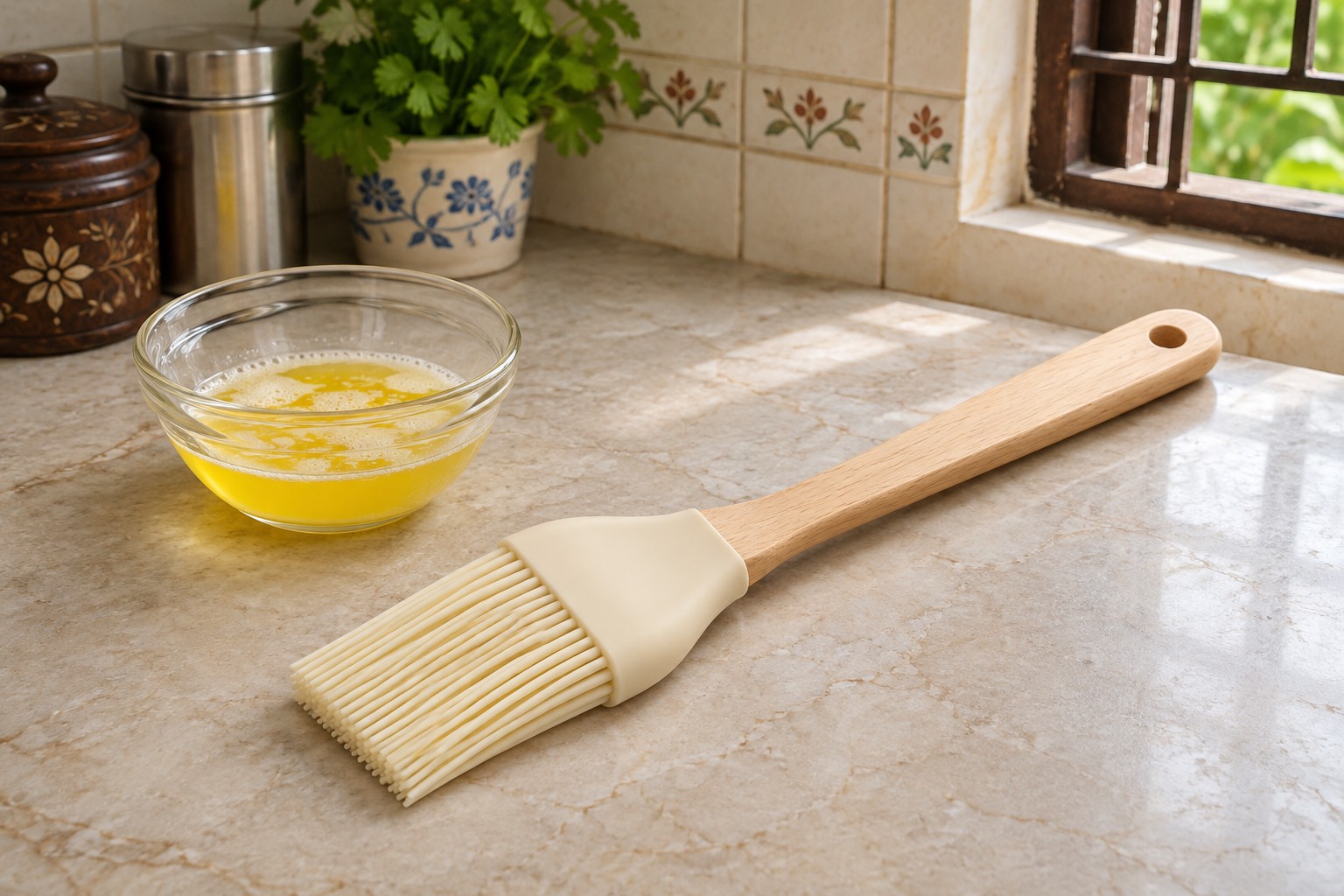
A pastry brush transfers a thin layer of liquid without pouring it over the whole food. Use it for egg wash on chicken patties, butter on pastry layers, syrup on a cake or a light glaze on buns. It is useful when the coating must reach corners while leaving seams and edges under control. A large barbecue mop is usually too blunt for these small jobs.
A food-use brush belongs with kitchen utensils. A clean-looking paintbrush is not equivalent, because its fibres, glues and coatings may not be intended for food contact.
Bristles and handle choices
Natural-bristle brushes can carry a fine liquid layer; silicone bristles are easier to see and inspect individually, but thick fingers may leave streaks on very delicate pastry. The exact design matters. OXO’s silicone brush specification describes tapered outer bristles and liquid-holding central gaps, showing why all silicone brushes do not handle alike.
As an editorial size example, a narrow head around 2 cm suits small patties and pastry seams, while a wider one covers a large cake faster. A one-piece handle reduces joints to clean. A detachable head should lock securely and be removed for washing only as directed.
Brush with light pressure
Decant a small amount of wash or butter into a separate bowl. Dip the tips, draw off excess against the bowl and use light strokes. Too much liquid can pool, glue puff-pastry edges together or run onto a tray. For syrup, spread gradually and let it absorb according to the cake recipe rather than flooding the surface.
Keep the brush used for raw egg or raw-meat marinade separate from one touching ready-to-eat food. FoodSafety.gov’s separation guidance supports preventing raw-food cross-contamination. Do not dip a contaminated brush back into a sauce that will be served without further cooking. Check the brush’s heat rating before applying liquid to very hot cookware.
Check the head before buying
Visit a baking supplier or household shop with your main task in mind: delicate pastry, greasing pans or broader basting. Gently examine whether bristles are secure and the head joins smoothly to the handle. Check food-contact suitability, washing permission and the stated heat limit. “Silicone” alone does not establish that every handle and joint tolerates oven temperatures.
A short handle gives control at the counter; a longer one creates distance from warm food. Neither makes it safe to reach across a flame. Avoid buying a large set if one small brush will meet your routine.
Remove fat and egg thoroughly
Wash promptly before egg or syrup dries around the bristle roots. Work warm soapy water through the head, rinse well and inspect for residue at the joint. Use a dishwasher only when the whole product is labelled for it; a silicone head attached to wood may have different care needs from an all-silicone brush.
Dry with the bristles exposed, not pressed into the bottom of a closed utensil cup. Replace shedding bristles, a cracked head, loose joints or a persistent residue that cannot be cleaned. Do not hide a failing brush among clean baking tools and keep using it until fibres appear on food.
Useful substitutes and limits
For a very small glaze job, the back of a clean spoon may spread the liquid, although it offers less control. A recipe may allow a drizzle instead of brushing. A dedicated brush is more convenient for repeat patties and layered pastry, but it adds another raw-egg contact item to wash. Keep beauty brushes, craft brushes and unknown fibres out of the food routine.
Frequently Asked Questions
Can I use the same brush for marinade and serving glaze?
Use a separate clean brush and uncontaminated glaze for ready-to-eat food.
Are all silicone brushes dishwasher-safe?
No. Check the complete product, including its handle and joints.
Why does egg wash pool?
The brush may be overloaded. Dip lightly and remove excess before touching the pastry.
How we know this
- Type Explainer
- Sources 3 (1 official/academic)
- Reviewed November 2026
- Disputed points None
3 sources
- Silicone pastry brush, OXO
- Pie-making tools and how to use them, OXO
- Four steps to food safety, FoodSafety.gov
Photo credits (1)
- Silicone pastry brush beside a bowl of melted butter., DailyLife.pk, All rights reserved
