
Kitchen item guide
Parat: BuyingUse and Care for a Pakistani Kitchen
Use a wide shallow kneading tray to bring atta dough together while controlling water, mess and storage.
DailyLife.pk kitchen equipment collection
A wide tray for working atta
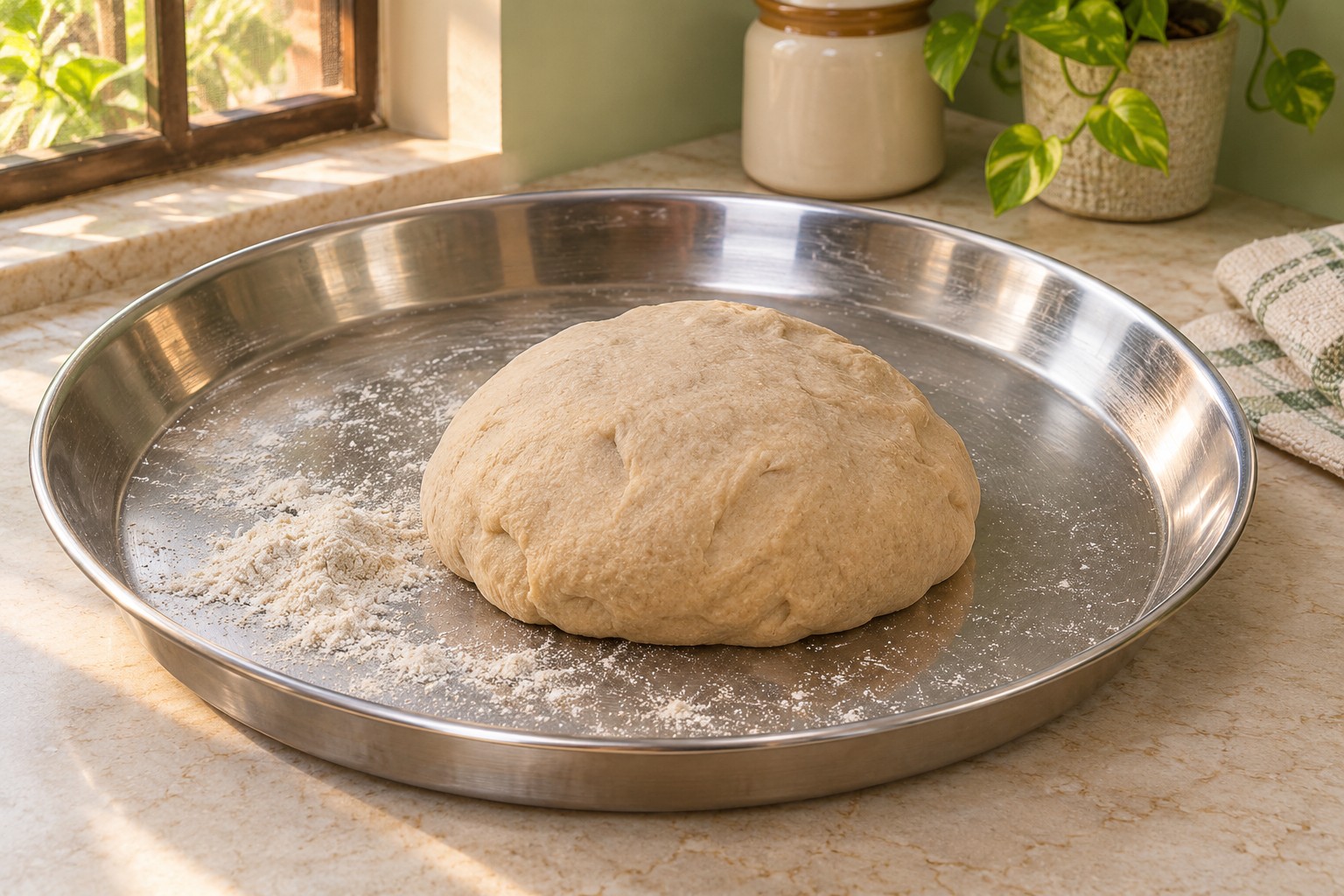
A parat is a broad, shallow tray used for mixing and kneading dough by hand. Its low sides leave room for palms and knuckles, while the rim helps contain flour. In Pakistani homes it can suit daily atta dough for roti, richer paratha mixtures and larger dough batches before a family meal. It is different from a deep mixing bowl: the working area is wide rather than tall. This makes kneading accessible but also means flour and water can spill if the tray is undersized or filled too generously.
Compare steel, coated and traditional trays
Stainless steel is a practical option when the base is rigid and the rim is smoothly finished. Thin metal can flex or turn noisily under kneading pressure; a very heavy tray can be awkward to wash. Other metals, decorative finishes and coated trays require clear food-contact and care information. Do not assume a polished appearance identifies the alloy or proves suitability for acidic ingredients. Check the underside as carefully as the inside for burrs, rough seams and a base that rocks on the counter.
Buy for kneading space, not brim capacity
As an editorial planning example, a tray around 35 centimetres wide may be worth comparing with a larger one for a household that kneads substantial batches. The right choice depends on your hand movement, amount of flour and sink dimensions; no one diameter defines a family size. Put both palms in the empty tray and imagine folding dough toward the middle. Buy from an identifiable kitchenware seller and inspect the rolled rim, base and any coating. A shallow serving tray is not automatically strong enough for repeated kneading.
Add water gradually and gather loose flour
Set the parat on a dry stable surface, adding suitable nonslip support if it slides. Place flour in the middle, make a well and add water in stages. Bring dry edges into the wet portion with fingertips or a bowl scraper, then press and fold the forming dough. Keep a little working space clear so sticky dough can be lifted and folded instead of smeared over the entire tray. Rest the dough as your recipe requires, covered in a suitable clean vessel or cover. Do not add water simply because the wide tray makes dough look small.
Treat dough as an uncooked food
Do not taste raw dough to judge seasoning or texture. FDA identifies raw flour as a possible source of harmful germs and recommends cleaning the tools and surfaces that contact it. Wash hands after kneading and before touching ready-to-eat food. A parat that has held raw meat should be thoroughly cleaned before returning to dough work; a dedicated dough tray simplifies the routine. Lift and empty it carefully so flour does not scatter across a clean salad station.
Dry the rim and inspect the base
Rinse off dough before it sets firmly, wash with an appropriate detergent and brush any concealed rim gently. Dry the underside and edge before nesting with other trays. Persistent water trapped between nested metal vessels encourages marks and makes the storage area unpleasant. Replace a tray with a split seam, sharp damaged rim, flaking food-contact coating or corrosion that cannot be cleaned. A sturdy mixing bowl can substitute for small batches, and a clean worktop can finish kneading, but neither gives exactly the same broad contained workspace.
Frequently Asked Questions
Is a parat necessary for roti dough?
No. A bowl or suitable clean worktop can work; a parat offers a broad contained kneading area.
Can dough be stored uncovered in the parat?
Cover dough appropriately and follow the recipe and food-storage requirements. An open tray allows drying and contamination.
Why does the parat slide?
Check that the base and counter are dry, the tray is flat and the support beneath it is suitable and stable.
How we know this
- Type Explainer
- Sources 2 (2 official/academic)
- Reviewed November 2026
- Disputed points None
2 sources
- Handling Flour Safely, FDA
- Safe Food Handling, FDA
Photo credits (1)
- Wide shallow stainless steel parat holding kneaded atta dough., DailyLife.pk, All rights reserved
