
Kitchen item guide
Metal handi: ChoosingUsing and Caring for It
Choose a metal handi for rounded-pot cooking with clear material specifications, accessible handles and a usable lid.
DailyLife.pk kitchen equipment collection
Shape and Pakistani uses
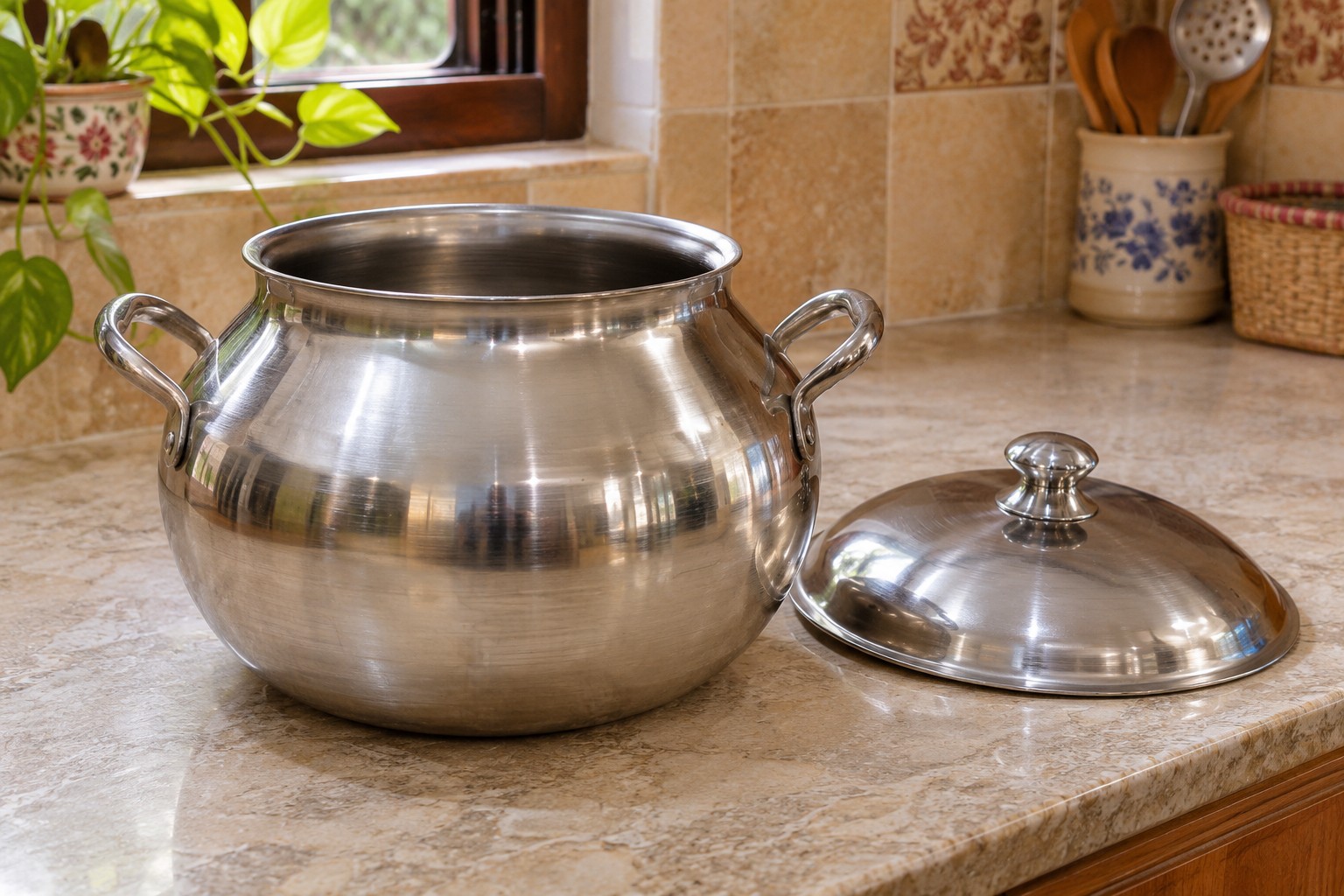
A metal handi has a rounded belly and a mouth narrower than the broadest part of its body. It accommodates covered chicken handi, meat gravy, dal and other dishes that need stirring followed by simmering. Its appearance is often part of table service, but the main buying question is how you can reach inside while cooking. A sharply narrowed neck makes it harder to turn large chicken pieces or sweep a thick masala off the lower wall. Choose the silhouette according to your actual spoon movements, not only the look of the finished dish.
Separate shape from material
A handi may be stainless steel, aluminium, coated metal or copper with a separate food-contact lining. Those are materially different products. Ask whether a silver interior is stainless steel or another lining and how that lining is maintained. A black exterior does not establish cast iron or nonstick construction. Hawkins guidance identifies handi as a distinct shape within a specified cookware range; its instructions should not be applied automatically to a different maker’s vessel. Check the whole assembly, including handle material, lid knob and base layers, for the heat source you intend to use.
An editorial sizing exercise
Compare a 3 litre handi with a 5 litre version as shopping examples, then measure the neck, base and widest body. These figures are not meal yields. Consider whether a normal portion of curry sits deep enough for a simmer while still leaving working space above it. Place the handi beside your other regular pot in your hob measurements: its belly may intrude more than its base suggests. Confirm induction suitability through the product specification. A flat base that feels stable on a display counter also needs to sit properly on your actual gas pan supports.
From bhunai to simmer
Prepare ingredients and choose a spoon that reaches the bottom curve. Add fat and warm the handi within its surface limits, then cook aromatics while drawing the spoon around the base and lower sides. Add meat in a quantity you can turn without levering it against the neck. Once the masala stage is complete, add recipe liquid and reduce heat for the covered simmer. Lift the lid away from your face and stir thick gravies when needed. If the mouth prevents safe access, cook in a wider vessel and use the handi for appropriate service instead of fighting its shape.
Lining and temperature limits
For a copper or otherwise lined handi, inspect the interior before every use and obtain the maker’s instructions for repair if the lining wears through. Health Canada guidance advises against cooking in scratched or uncoated copper cookware. Do not treat an ornamental copper pot as usable cookware. With coated handi, avoid metal scrapers unless specifically permitted and respect heat limits. Neither an attractive lid nor a dough seal makes an ordinary handi a pressure vessel. Never clamp the lid shut or add weight to create pressure, and keep cloth decorations away from hot burners.
Cleaning the shoulder
Cool the pot before cleaning and attend to the shoulder beneath the rim, where masala splashes can dry out of sight. Soaking a compatible metal surface is preferable to reaching inside with a sharp scraper. Rinse handle attachments and dry the lower curve fully. Avoid wedging another heavy pot inside a narrow mouth. Replace a damaged coating or lining according to the maker’s options, and stop using a leaking seam, cracked body or unsafe handle attachment. Cosmetic marks alone do not define lifespan; the ability to clean the surface and use the vessel securely matters more.
Purchase and alternatives
Inspect a sample in a cookware shop for a smooth inner shoulder and a lid you can lift with dry mitts. Online, request an interior view looking toward the shoulder, not just an attractive side view. Ask whether replacement knobs or handles exist and whether the lid is included. A degchi, Dutch oven or broad casserole suitable for the hob can cook most handi recipes with attention to liquid reduction. The handi's rounded body and presentation are advantages when you enjoy using them; the narrower access and extra cleaning reach are real costs. Buy for repeated covered dishes rather than a name alone.
Frequently Asked Questions
Is metal handi always copper?
No. Handi describes a shape; check the metal and food-contact surface.
Can I use it for bhunai?
Yes if the material and access suit the method; keep the spoon moving across the base.
Can worn lining be ignored?
No. Stop and obtain an appropriate repair or replacement decision.
How we know this
- Type Explainer
- Sources 2
- Reviewed November 2026
- Disputed points None
2 sources
- Stainless steel tri-ply cookware manual, Hawkins
- Safe use of cookware and bakeware, Health Canada
Photo credits (1)
- a stainless steel handi, wide round belly and visibly narrower mouth, two small side handles, matching domed lid beside it, DailyLife.pk, All rights reserved
