
Kitchen item guide
Kitchen exhaust fan: choosingusing and caring for it
Understand how a wall exhaust fan removes kitchen air, what installation it needs and how to keep its grille and blades clean.
DailyLife.pk kitchen equipment collection
What the fan actually does
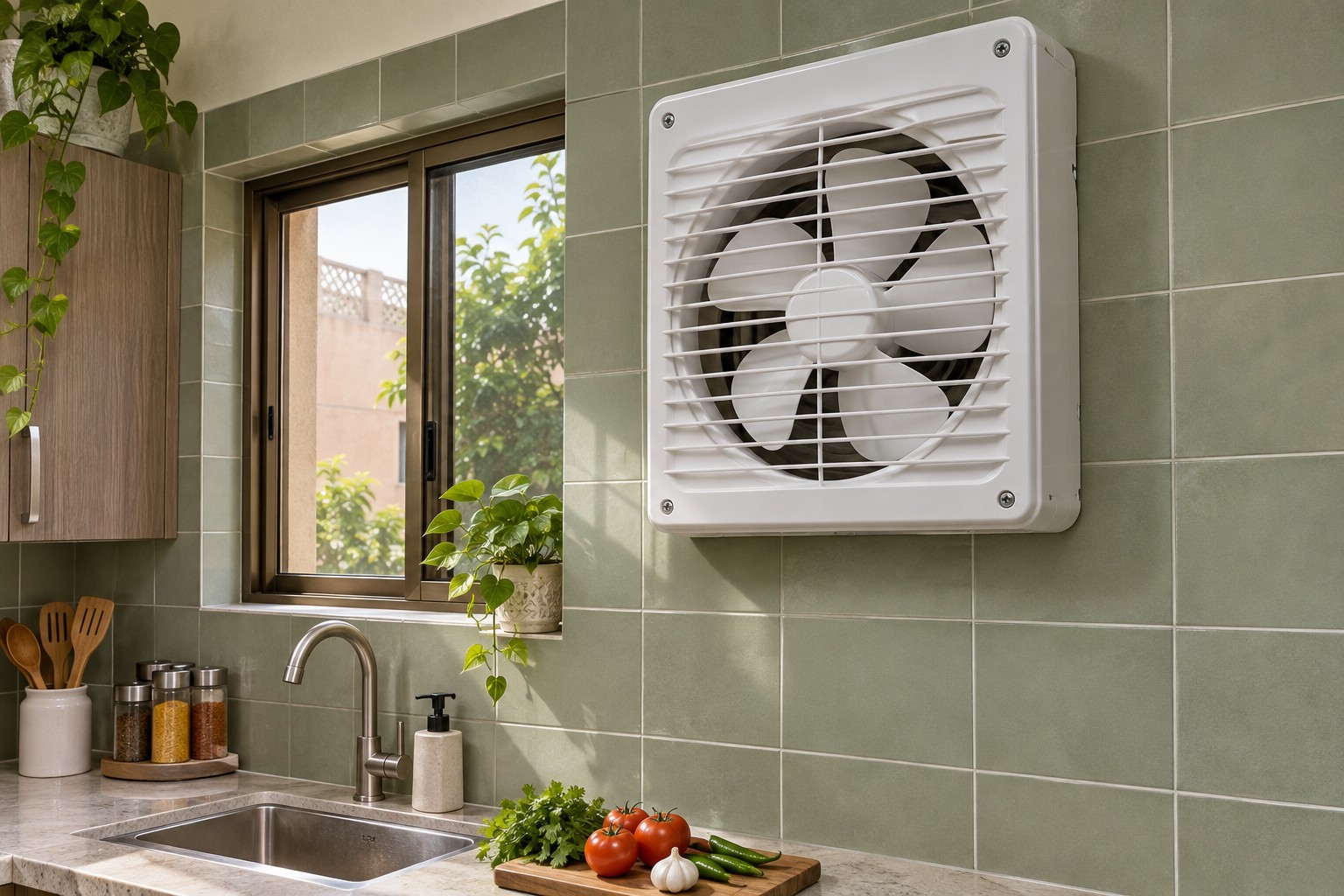
A kitchen exhaust fan moves room air outdoors through a wall, window or suitable duct. It helps remove lingering steam and cooking smells, particularly after simmering daal or frying onions. It is different from a ceiling fan, which mainly circulates air within the room. It is also different from a cooker hood positioned to capture a cooking plume at the hob: a distant wall fan works on air that has already spread through the kitchen.
A simple axial fan is common in a direct wall opening. Ducted installations may need a fan designed to overcome the duct's resistance. Shutters help close the opening when the fan stops; a grille prevents casual contact with the blades. Neither part makes an installation automatically suitable for heavy grease exposure. Choose a model specifically approved for the intended kitchen location and follow its installation limits.
Size and installation decisions
As editorial examples, wall fans with nominal blade sizes around 200, 250 or 300 mm may be encountered, but these sizes are not interchangeable with airflow ratings or the required wall opening. Ask the supplier for actual dimensions, rated airflow, noise data and the mounting drawing. A bigger fan can be noisy or ineffective if its opening and air path are poorly planned.
Buy from an electrical retailer with identifiable spare parts and service support. Have an installer assess the outside outlet, weather protection, secure mounting, wiring and access for cleaning. Exhaust air needs replacement air to enter the room. Where gas appliances or other combustion equipment are present, ventilation and possible backdraught effects require competent assessment. Do not simply install the strongest motor available. An improvised outlet into a roof cavity or an enclosed cupboard does not provide proper outdoor extraction.
Using it while cooking
Switch the fan on early enough to help move cooking moisture away, and keep the designed air inlet route available. Run it for a suitable period after cooking to clear residual steam. Its effectiveness depends on where air enters and exits; a powerful cross-draught can interfere with gas flames, so the layout should be assessed rather than adjusted by guesswork.
Keep hanging cloths, loose bags and curtains away from the grille. Do not use the fan as a storage shelf or cover it with a decorative panel that restricts flow. If smoke or fumes regularly fill the room despite operation, review the extraction arrangement with an installer. A hood over the hob may better capture greasy cooking vapour. A kitchen fan cannot make a faulty gas appliance safe or replace investigation of a gas smell.
Clean with the supply isolated
Grease and dust collect together on a kitchen fan. Inspect the grille periodically and shorten the cleaning interval if buildup appears quickly. Isolate the electrical supply and wait for the blades to stop before touching anything. Remove only the parts the manual identifies as user-removable. Clean permitted surfaces with mild detergent and a soft cloth, and keep water out of the motor and electrical connections.
Dry removable parts fully and reinstall every guard and fixing before use. Avoid petrol, solvent thinners and aggressive cleaning chemicals. Do not bend blades or force a stiff shutter, because imbalance or obstruction can overload the mechanism. A fan mounted high above a counter may need professional cleaning access; balancing on a sink edge is unsafe. If the unit hums without turning, smells hot or trips the supply, switch it off and arrange service.
Repair, limits and alternatives
A rattling grille may indicate a loose fixing; new vibration may also come from dirt or a damaged blade. Persistent noise, cracked blades, failing shutters or corroded mounting points need assessment. Service life depends on motor quality, environment and cleaning access, so there is no single reliable replacement interval. A loose wall mounting deserves attention even when the motor still works.
The appeal of a wall exhaust fan is its relatively simple form and ability to exchange room air. Its drawbacks include noise, outside weather exposure and weaker capture of grease than a correctly designed hood. Opening an appropriate window can supplement ventilation where conditions permit, but it provides variable airflow. Consider a fan during renovation when a direct outdoor route and safe wiring can be planned. Choose a hood or a complete ventilation redesign when source capture is the main problem.
Frequently Asked Questions
Is it the same as a cooker hood?
No. A wall fan exchanges room air; a hood is positioned to capture vapour at the hob.
Can I wash the whole fan with a hose?
No. Isolate it and clean only permitted parts, keeping water away from the motor and electrics.
Does a larger blade always ventilate better?
No. Rated airflow, resistance, placement and replacement-air provision all matter.
How we know this
- Type Explainer
- Sources 3
- Reviewed November 2026
- Disputed points None
3 sources
- Ventilating fan manuals, KDK
- Ventilating fan maintenance instructions, KDK
- Electrical safety in the kitchen, Electrical Safety First
Photo credits (1)
- One square white wall-mounted kitchen exhaust ventilating fan installed high on sage tiled exterior wall beside a small kitchen window, protective front grille and visible stationary fan blades behind it, no cooker hood, wide kitchen context., DailyLife.pk, All rights reserved
