
Kitchen item guide
Juicer: choosingusing and caring for it
Distinguish juice extraction from blending and choose a juicer whose preparation and cleaning routine suits your fruit and vegetables.
DailyLife.pk kitchen equipment collection
Extracting liquid and separating pulp
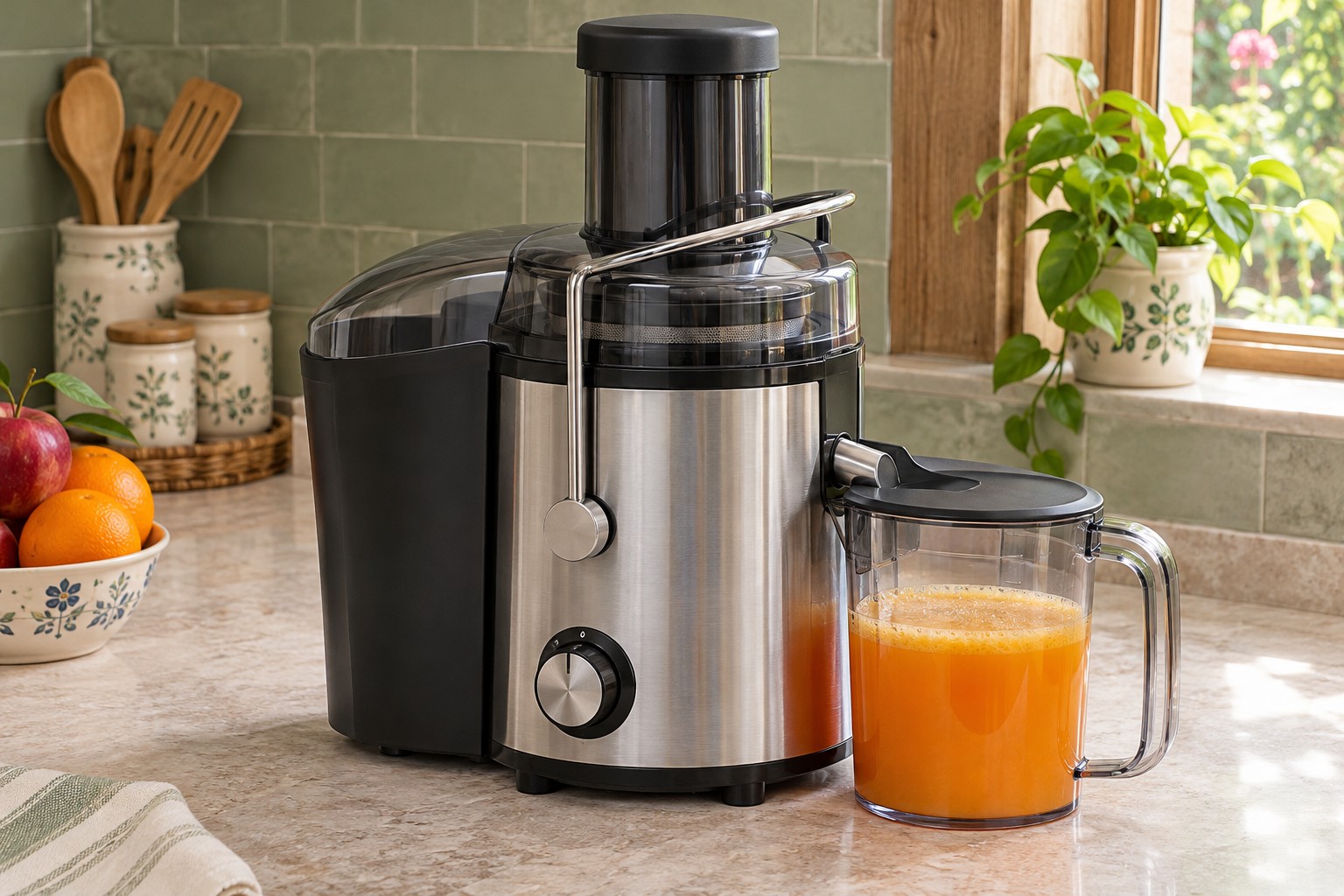
A juicer separates juice from some of the solid material in suitable fruit or vegetables. A centrifugal model uses a fast-spinning cutting and filtering assembly; a masticating or slow juicer uses a screw-type mechanism to press ingredients through its system. A citrus press is a different simpler tool for halved citrus. These machines make different outputs from a blender, which normally retains the prepared ingredients in the mixture.
For a Pakistani kitchen, the decision may centre on seasonal kinnow, apples, carrots or other permitted produce. A citrus press can be enough if the real job is only kinnow juice. Buying a complex extractor for occasional use also creates a cleaning task after each session. No equipment choice is presented here as a nutritional or medical benefit.
Choose around ingredients and cleanup
Check the maker's permitted ingredient list, preparation rules and capacity. Hard pits, stones and unsuitable peel must be removed as directed. A wide feed opening can reduce cutting, but does not make every whole fruit safe to insert. Slow juicers may require specific preparation for fibrous ingredients; centrifugal filters require particular cleaning attention. The exact design matters more than a general label of fast or slow.
As an editorial planning example, map one ordinary household batch: fruit preparation, feeding, juice collection, pulp disposal and washing. Check whether the jug fits under the spout without awkward balancing and whether the pulp container can be removed easily. Inspect filter access and the supplied brush. Ask whether filters, seals, pushers and containers are replaceable locally before choosing an imported model.
Assembly is part of safe operation
Assemble all parts with power disconnected and follow the correct order. The filter or screw must seat fully, and the lid and locking mechanism must close as designed. Philips' assembly guidance identifies the pusher and safety clamps or locking arm as parts of its juicer system. A machine that will not start with a misaligned lid should be assembled correctly rather than having its interlock bypassed.
Place the unit on a dry stable counter with a suitable collection vessel in position. Keep the cord away from wet preparation areas and hot equipment. Inspect centrifugal filters for damage before use and follow the manual's replacement advice. A cracked or distorted rotating filter is not a part to straighten casually at home.
Feed steadily with the supplied pusher
Wash and prepare permitted produce, remove inedible or prohibited parts and cut to the required size. Start the machine according to the manual, then feed at the specified pace with its supplied pusher. Do not insert fingers, knives, spoons or a makeshift wooden tool into the chute. Excess force can overload the machine without improving extraction.
Watch the juice and pulp paths and stop if either becomes blocked. Switch off, disconnect and wait for complete movement to cease before opening or clearing. Philips' blocked-filter advice begins with stopping the juicer and suggests smaller quantities after cleaning. Follow the model's operating and rest limits rather than running a large gathering's entire fruit supply continuously. Treat fresh juice and cut produce as perishable food and follow sound food-handling guidance.
Clean the filter before residue dries
Disassemble only after the motor has stopped and power is disconnected. Remove pulp promptly and rinse permitted food-contact parts. Use the specified brush and cleaning method on the filter without touching sharp surfaces or distorting mesh. Philips' masticating-juicer care guidance is an example of model-specific cleaning; do not transfer dishwasher assumptions between machines. Wipe the motor base and never immerse it.
Dry the parts and store them so seals and mesh cannot be crushed. Replace damaged pushers, cracked containers, worn seals or compromised filters with approved parts. Unusual vibration, leaks into the motor base or burning smells require service assessment. There is no fixed lifespan that every juicer shares. Its advantage is extracting a chosen juice; its disadvantages are produce preparation, separated pulp and multiple parts to wash. A manual citrus press or blender may better match a simpler routine. Buy the extractor only when its actual ingredients, output and cleanup suit your household.
Frequently Asked Questions
Is juice from a blender the same output?
A blender generally keeps the prepared ingredients together; an extractor separates juice and pulp.
Can I use a spoon instead of the pusher?
No. Use the supplied pusher and follow the feeding instructions.
Why should I inspect the filter?
A damaged rotating filter can compromise safe operation and needs the maker’s replacement advice.
How we know this
- Type Explainer
- Sources 4
- Reviewed November 2026
- Disputed points None
4 sources
- Juicer assembly, Philips
- Blocked juicer filter, Philips
- Masticating juicer cleaning, Philips
- Electrical safety in the kitchen, Electrical Safety First
Photo credits (1)
- Stainless centrifugal juice extractor with wide upright feed chute and fitted pusher, separate pulp container at back and juice jug beneath spout, unplugged., DailyLife.pk, All rights reserved
