
Kitchen item guide
Hawan dasta: BuyingUse and Care for a Pakistani Kitchen
Select a mortar and pestle for controlled crushing, with attention to bowl shape, grip and food-contact care.
DailyLife.pk kitchen equipment collection
A contained tool for small quantities
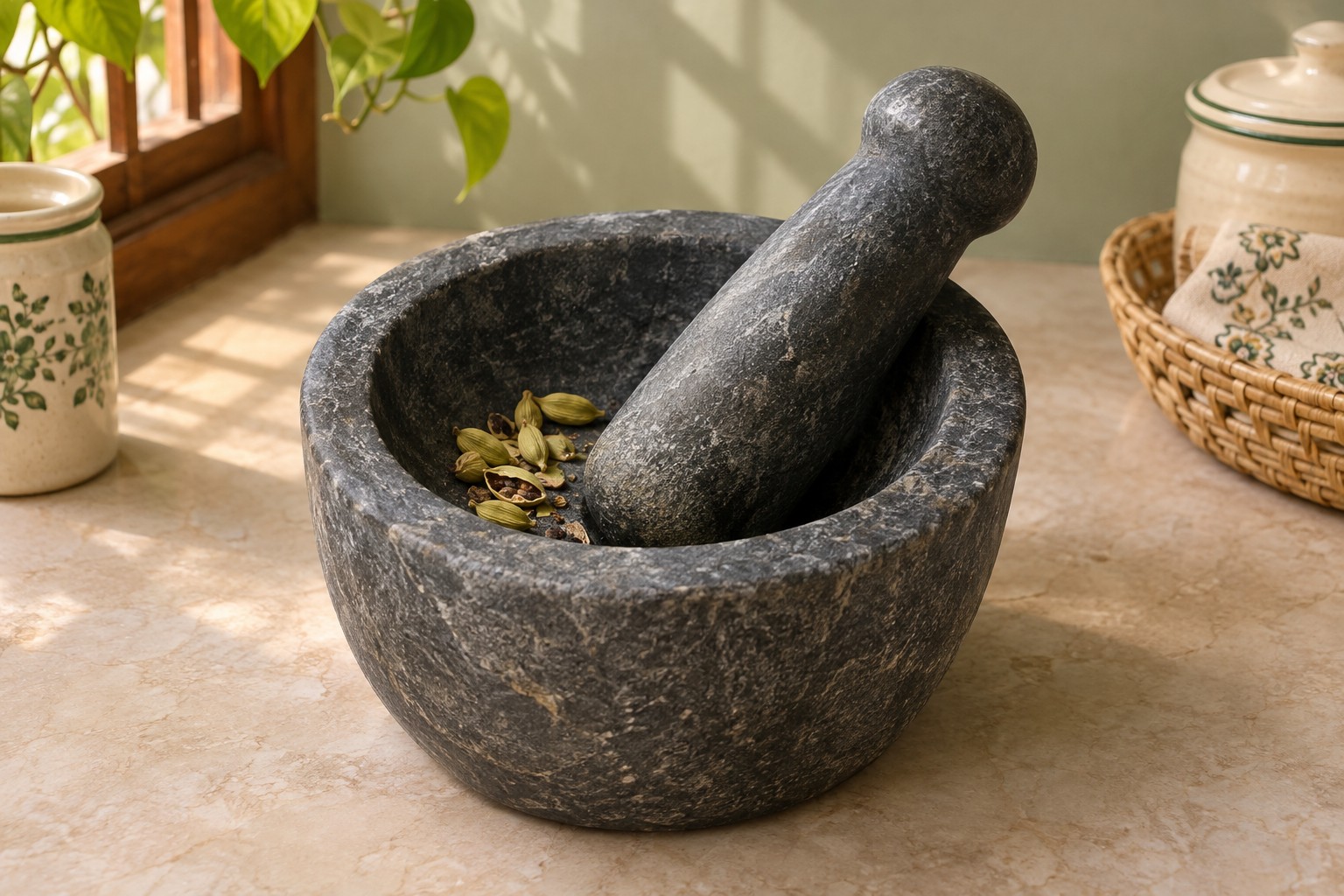
Hawan dasta, also commonly written hamam dasta in kitchen listings, refers here to a mortar and pestle used to crush ingredients in a bowl. The dasta is the hand-held pounding or rubbing tool, and the bowl confines the food. In Pakistani cooking it is handy for cardamom for chai, pepper, garlic, green chilli and small masala mixtures. It can make a coarse crush without reducing everything to a uniform powder. The task is different from chopping with a knife: repeated controlled pressure breaks the ingredients against the bowl.
Match the material to the mixture
Stone versions provide weight and a textured grinding surface; stainless steel is lighter to wash and inspect; wooden versions need careful drying and may retain aromas. Brass or other traditional metals need clear food-contact information and care instructions, especially for acidic mixtures. IKEA describes a hard-marble mortar for crushing spices and other ingredients, providing one example of a purpose-made stone set. It does not establish that every marble object or every decorative mortar is suitable. Avoid chipped glaze, unknown coatings or a rough pestle that sheds material.
Check useful depth and comfortable grip
Look at the inner bowl rather than its decorative exterior. A narrow shallow bowl can scatter coriander seeds, while a very deep one may be awkward for scraping a small garlic paste. As an editorial example, compare an interior around 10 centimetres across with a larger set and imagine your usual quantity. Hold the pestle to check weight and clearance for your fingers. A sound base should not rock. Kitchenware shops, traditional utensil markets and online sellers should identify the material, dimensions and care requirements rather than relying solely on the product name.
Crush in stages, then rub to finish
Place the mortar on a stable protected counter. Add a small quantity and begin with gentle downward pressure so dry seeds do not jump out. Once cracked, use a circular rubbing action if you want a finer texture. Add garlic, chilli or other moist ingredients in stages and scrape the sides with a suitable clean utensil. Wash herbs and chillies before they enter the mortar. Do not fill above the working area or strike the rim. Forceful overhead pounding adds impact without necessarily improving grinding, and can chip a brittle set.
Remove aroma and residue promptly
Empty the bowl immediately after use, wash according to the maker's material guidance and pay attention to texture near the base. Rinse and dry both pieces before putting the pestle back inside. FDA recommends washing utensils with hot soapy water after food preparation; how much soaking or dishwasher exposure a particular material tolerates remains manufacturer-specific. Keep garlic-and-chilli residue out of a subsequent sweet preparation by cleaning thoroughly and checking for lingering odour. Do not conceal dampness by closing the set in an airtight container.
Small control versus larger-batch convenience
A mortar is quiet and requires no electricity, but it is labour-intensive and can be inefficient for a large biryani masala batch. A dry spice grinder can suit larger powder quantities; a sil batta offers a wider rubbing surface for wet paste. Buy the mortar for a regular small task rather than its ornamental appearance. Retire it if chips, cracks, rust, loose plating or persistent contamination make it unreliable. Store the pestle low enough that it cannot roll off a shelf, and protect a stone bowl from knocks against a sink or another heavy vessel.
Frequently Asked Questions
Should I buy a very rough mortar?
It needs an effective grinding texture, but it should not shed grit or have inaccessible cracks.
Can one set handle sweet and savoury food?
Yes if the material cleans adequately, but retained garlic or spice aromas may justify separate tools.
Can I crush hot cooked food in it?
Check the material and maker's instructions. A cold stone bowl should not be exposed to an abrupt temperature change.
How we know this
- Type Explainer
- Sources 2 (1 official/academic)
- Reviewed November 2026
- Disputed points None
2 sources
- ÄDELSTEN mortar and pestle, IKEA
- Safe Food Handling, FDA
Photo credits (1)
- Stone hawan dasta mortar and pestle containing a few cardamom pods., DailyLife.pk, All rights reserved
