
Kitchen item guide
Hand mixer: choosingusing and caring for it
Select a manageable electric mixer for cake batter, cream and light mixing, with attachments and load limits suited to the recipe.
DailyLife.pk kitchen equipment collection
Portable mixing rather than blending
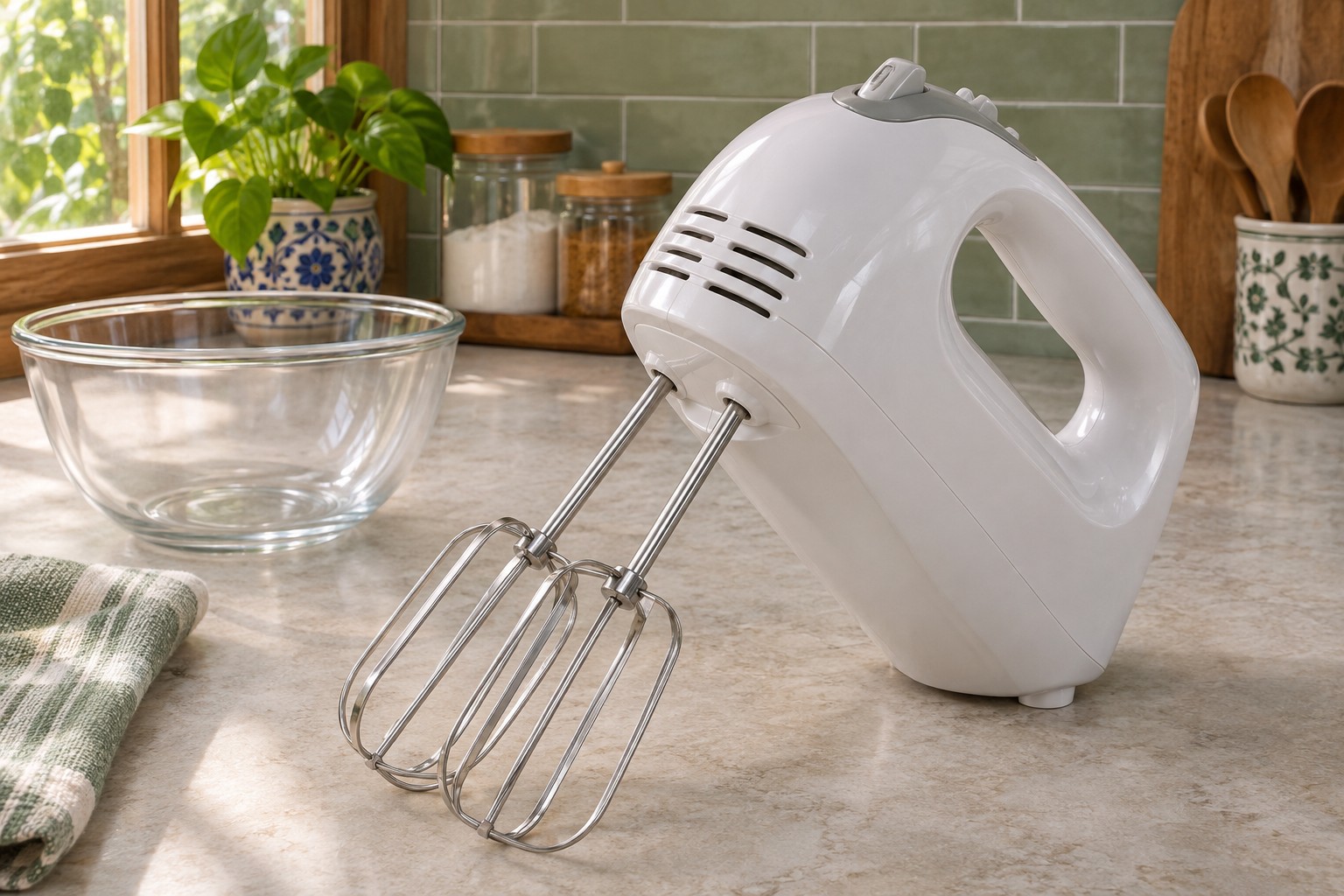
A hand mixer is a motor unit held above a bowl, driving beaters or other approved attachments. It mixes and aerates suitable ingredients rather than cutting them with blender blades. It can help with cake batter, whipped cream or eggs for home baking. In a Pakistani kitchen it may earn its space through birthday cakes, tea-time baking and desserts made in moderate batches.
It is not automatically suitable for a heavy batch of atta or a dense bread dough. Even when dough hooks are included, the maker may limit the recipe quantity, speed and continuous run time. Choose around the mixtures you make, not a claim that every motorised whisk can replace a kneading machine.
Weight and slow speed matter
Hold the mixer as though you were using it over your own bowl. A heavy body can tire the wrist, while an awkward handle or stiff speed switch can make stopping less comfortable. Check cord direction, the secure insertion of both beaters and how the unit rests between mixing stages. A stable resting position should keep the attachments off a contaminated surface without letting the cord pull the tool over.
As an editorial comparison, consider one modest cake batter rather than the largest bowl you own. Look for a usable low starting speed that can incorporate flour without throwing it out. Higher settings should be controllable for the actual recipe. KitchenAid's hand-mixer guidance links speeds to tasks and attachments; the numbers and accessories remain model-specific.
Check the attachment set and support
Beaters, wire whisks and dough hooks are not interchangeable names for the same part. Confirm what is included, whether an attachment has a left or right position, and which tasks it is designed to perform. Spare beaters must match the model's drive and retention arrangement; physical resemblance is insufficient. Ask about replacements before buying an imported mixer with unusual fittings.
Read the load and cooling-rest limits and check local voltage and warranty terms. A simple, serviceable mixer can be more useful than a large accessory bundle. Inspect a used unit for bent beaters, cracked sockets, a damaged eject mechanism and cable wear. Avoid an appliance that smells burned or has intermittent speed control. Electrical Safety First advises keeping electrical equipment and leads away from water and hot surfaces.
Mix in stages without splashing
With the mixer off and disconnected, fit the correct clean attachments fully. Use a bowl deep and wide enough to contain movement while remaining stable. Add ingredients according to the recipe, lower the beaters into the mixture and start slowly. Increase only when the ingredients are combined enough to avoid a cloud of flour or splashing liquid. Move steadily around the bowl without striking its rim or scraping beaters against the base.
Stop before lifting the beaters out. For scraping the bowl, switch off, disconnect and wait for movement to end before introducing a spatula. Never guide ingredients toward turning beaters with fingers or a spoon. If the motor labours or the mixture climbs the shafts, stop and check the recipe and load limit. Do not keep increasing speed to force a dense mixture through a tool that is not designed for it.
Clean beaters and assess wear
After switching off and unplugging, eject the attachments by the procedure in the manual. Wash them by the permitted method, taking care around joins where batter can lodge. Wipe the motor body gently and keep liquid out of vents and attachment sockets. Dishwasher permission for the beaters does not extend to the motor. Dry everything thoroughly before storage and avoid wrapping the cable tightly around a hot or damp body.
Bent attachments, loose drive sockets, failed speed control, exposed wire or repeated overheating need qualified assessment or replacement. There is no dependable lifespan in years for every household's use. A hand mixer offers compact storage and direct control over small baking tasks, but occupies a hand and can struggle with heavy mixtures. A balloon whisk is sufficient for occasional light work, while a stand mixer may suit repeated substantial dough batches. Choose the hand mixer when it comfortably handles your ordinary recipe and you can store and clean its attachments without effort.
Frequently Asked Questions
Can a hand mixer knead roti dough?
Only if that exact model, attachment and dough quantity are approved. Many hand mixers are intended mainly for lighter mixtures.
Can I scrape the bowl while it runs?
Stop and disconnect before putting a spatula near the beaters.
Are replacement beaters universal?
No. Match the exact model and fitting requirements.
How we know this
- Type Explainer
- Sources 2
- Reviewed November 2026
- Disputed points None
2 sources
- Hand mixer speeds and attachments, KitchenAid
- Electrical safety in the kitchen, Electrical Safety First
Photo credits (1)
- White electric handheld mixer on counter with two identical metal wire beaters fitted, clear mixing bowl nearby, unplugged., DailyLife.pk, All rights reserved
