
Kitchen item guide
Hand blender: choosingusing and caring for it
Use an immersion blender for suitable deep vessels and small puree jobs while controlling splashes, heat and blade access.
DailyLife.pk kitchen equipment collection
Blend in the vessel
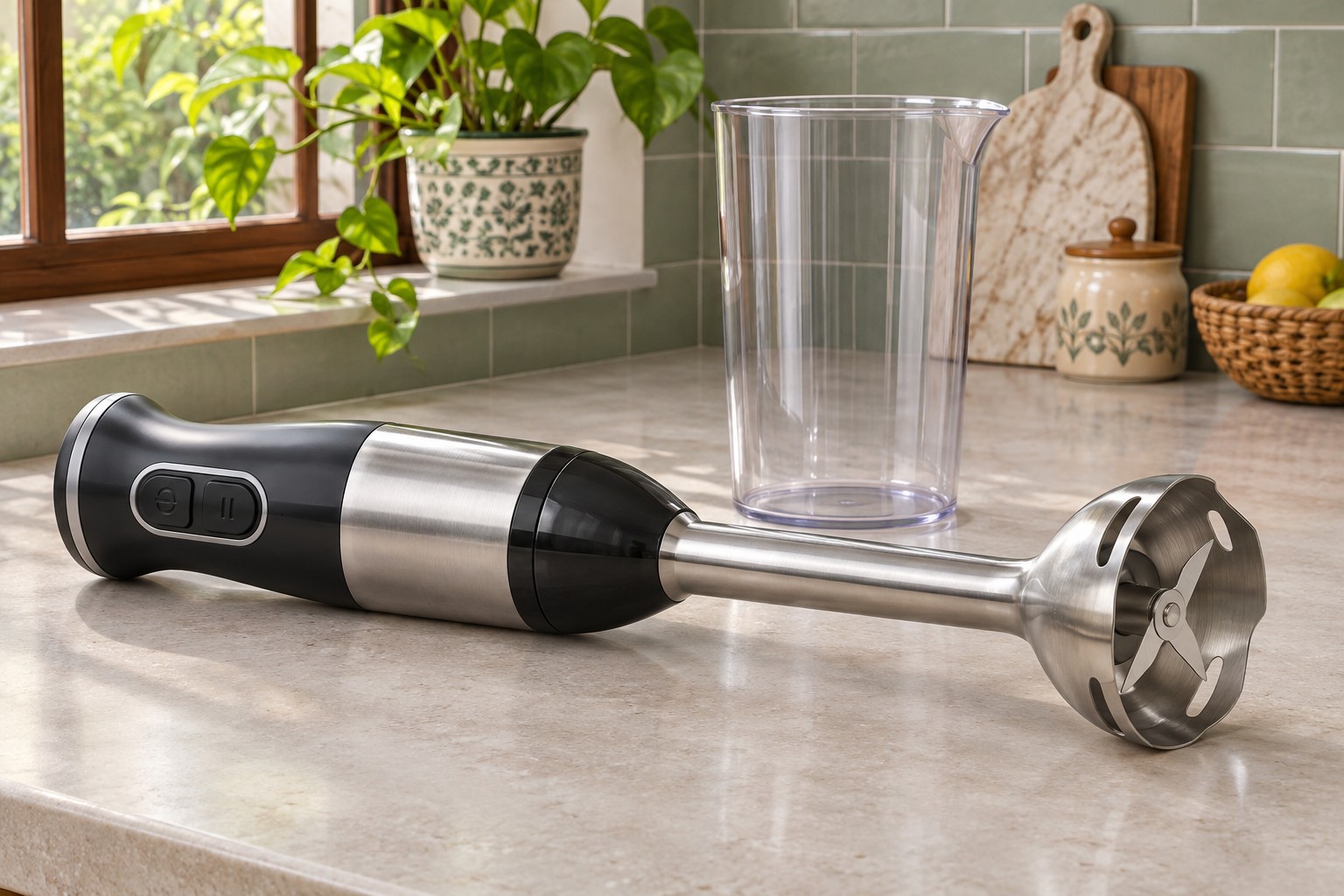
A hand blender, also called an immersion or stick blender, has a motor handle and a shaft ending in guarded rotating blades. It blends suitable ingredients in a beaker, bowl or pan rather than requiring a separate tall jug. In a Pakistani kitchen it can smooth cooked daal, puree a suitable cooled tomato mixture or blend a small quantity of chutney in the correct container.
Its convenience depends on the vessel and quantity. A shallow plate gives little protection from splashes and may leave the blade exposed. A deep narrow beaker can keep a small batch around the blade. An immersion blender is not a hand mixer: the blade cuts and purees, while a whisk attachment, if supplied and approved, performs a different job.
Shaft, guard and attachments
Compare a detachable shaft with a fixed-shaft design, considering cleaning access and the surfaces that can be immersed. Stainless steel shafts and plastic shafts have different temperature and pan-contact specifications; follow the model's permitted use rather than assuming metal allows any heat. Inspect the blade guard's clearance and any approved pan protector if you use coated cookware.
As an editorial planning example, compare your usual daal saucepan and a small chutney beaker with the shaft length and minimum immersion requirements. A long shaft is not useful if the handle must be lowered into liquid. A bundled chopper or whisk is valuable only if it replaces a task you do often and its working capacity suits you. Check replacement shafts, beakers and adapter parts through a traceable service channel.
Set up before the blade can move
Read the exact manual's hot-liquid and vessel instructions. KitchenAid's performance guidance cautions against leaving a hand blender sitting in a hot pan on the hob. A motor handle resting across a pot is neither secure storage nor a cooling stand. Keep electrical connections and the non-immersible handle away from liquid.
Switch off and disconnect before fitting or removing the shaft and before touching the blade area. For a cordless model, follow its battery-isolation instructions too: unplugging the charger does not necessarily disable the tool. Keep the cord clear of flames, hot rims and sink water. Inspect the shaft lock and vessel stability before loading food.
Control depth and splashes
Prepare the ingredients to the model's requirements and place the vessel on a stable surface. Where hot-food blending is allowed, remove the pan from the heat and follow the specified cooling and temperature precautions. Do not blend actively boiling liquid as an improvised shortcut. Lower the guard into the mixture to the correct depth before starting, then use the instructed setting and a controlled motion.
For daal, work through the mixture gradually until the desired texture is reached, leaving it coarse if that is the recipe's aim. For mint chutney, use an appropriately narrow beaker and enough suitable liquid for the approved method. Stop the blades before lifting the guard clear, or food can be thrown outward. If fibres wrap around the blade, stop and isolate completely before clearing with an appropriate tool; never check with a finger while the tool can start.
Wash the working end correctly
Disconnect and dismantle only as permitted. Remove food promptly from the guard using a brush or approved cleaning method without reaching blindly around cutting edges. KitchenAid's hand-blender care page separates attachments and adapters because their washing rules differ. A detachable shaft being washable does not make the motor handle or gearbox submersible.
Dry all mating surfaces before reassembly and store the blade end protected. Stop use for a loose shaft, cracked guard, damaged cable, liquid entering the motor handle or unusual noise. Do not assume an older tool remains safe because it still spins. Its advantages are small storage needs and less transferring of suitable food; its limitations are splash risk, vessel dependence and modest batch control. A jug blender suits larger drinks, a food processor suits chopping and a masher can leave daal deliberately textured. Choose the immersion blender when its handling and cleaning routine fit your regular meals.
Frequently Asked Questions
Can I blend directly in a saucepan?
Only within the appliance and cookware instructions, with a stable vessel and appropriate temperature precautions.
Should I lift it while running?
Keep the blade guard appropriately immersed and stop before lifting it clear to limit splashing.
Can I wash the motor handle in the sink?
Do not immerse non-immersible parts. Follow the exact cleaning instructions.
How we know this
- Type Explainer
- Sources 3
- Reviewed November 2026
- Disputed points None
3 sources
- Hand-blender performance tips, KitchenAid
- Cleaning a hand blender, KitchenAid
- Electrical safety in the kitchen, Electrical Safety First
Photo credits (1)
- Stainless immersion hand blender lying horizontally on clean dry counter beside tall blending beaker, visible bell shaped blade guard, unplugged., DailyLife.pk, All rights reserved
