
Kitchen item guide
Gas lighter: choosingusing and caring for it
Choose a suitable long-reach gas lighter and understand safe hob ignition, dry storage and the signs that it needs replacement.
DailyLife.pk kitchen equipment collection
Spark and flame types
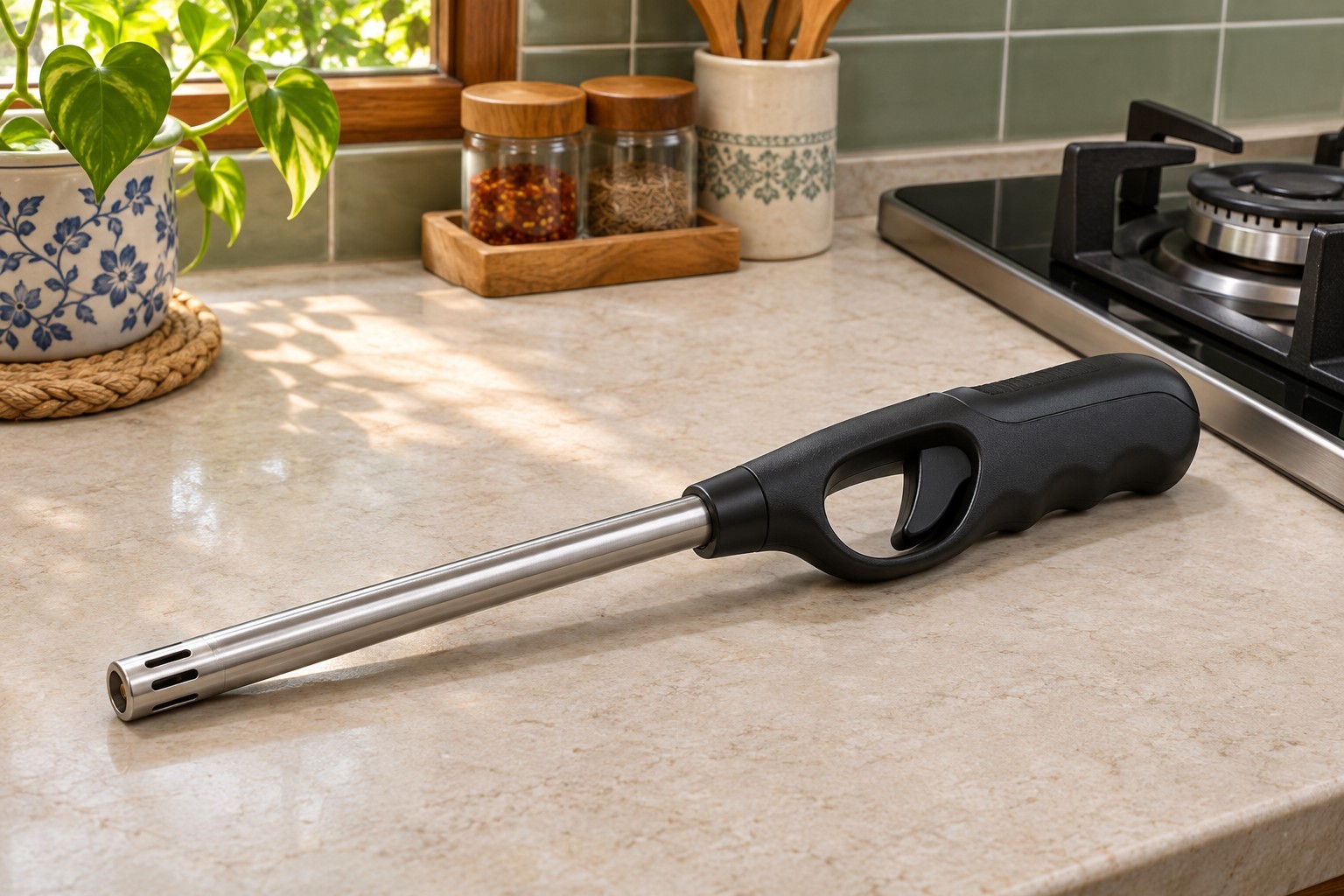
A gas lighter provides ignition for a gas burner when the hob has no working built-in igniter. In Pakistani kitchens, a long metal spark lighter is a familiar tool kept near the cooking area. It produces a spark at the tip, relying on gas from the burner rather than carrying fuel itself. A long-wand flame lighter instead contains fuel and makes its own small flame. These two designs should not be confused when buying, storing or troubleshooting them.
Some spark models use a piezoelectric mechanism activated by pressing or squeezing a handle; others depend on batteries. Rechargeable electric arc lighters are another category and have their own operating restrictions. A long reach helps keep your hand farther from the burner, but it does not make unsafe lighting practice acceptable. Always follow the gas hob's ignition procedure as well as the lighter's instructions.
Choosing a practical design
Hold the unlit sample and check whether the trigger is comfortable for the person who will use it. The tip should reach the intended burner without your hand passing over neighbouring flames. As an editorial comparison, a roughly 25 cm overall length can be convenient, but the grip and actual usable reach matter more than that number. A narrow storage hook can be useful if it keeps the lighter dry and away from children.
Buy from a housewares or hardware retailer that can identify the product type and provide its warnings. Inspect the wand, tip and trigger for damage. For battery models, check the specified battery and secure battery cover. For flame lighters, confirm whether the exact product is refillable; some are permanently sealed and must never be refilled. A child-resistant mechanism is valuable but does not make any lighter child-proof.
Ignite without allowing gas to collect
Check the hob instructions before lighting. Have the working lighter ready and keep loose sleeves, towels and paper away from the burner. Use the manufacturer's sequence for bringing ignition to the burner and opening its control. Confirm that the flame has established properly, then withdraw the lighter and check that the flame remains stable. Do not lean your face over the burner while attempting ignition.
If ignition fails, turn the gas control off promptly and follow the appliance's waiting and ventilation instructions before another attempt. Repeatedly releasing gas while clicking a faulty lighter allows unburned gas to accumulate. If you smell gas, stop attempting ignition: do not operate electrical switches or create a spark, leave the area if needed and contact the gas emergency service or qualified supplier from a safe location. A lighter is never a leak-testing tool.
Keep the tip and storage area sound
Allow the lighter to cool after use and wipe its exterior when necessary. Keep a spark tip free from obvious food residue using only the maker's permitted method; do not poke conductive objects into it or test it close to your face. A fuel lighter must be protected from heat and direct sunlight. Do not leave any lighter on a hot hob, inside an oven or where cooking oil repeatedly splashes it.
Store it securely out of children's reach rather than in an open cutlery drawer they can access. Replace batteries only as instructed, and keep loose batteries away from children. Do not immerse an electrical or fuel lighter in washing water. If a trigger becomes stiff or ignition becomes intermittent, inspect for visible damage and follow the maker's troubleshooting guidance instead of bending the wand or dismantling a sealed mechanism.
When to replace and what can substitute
Replace a lighter with a cracked handle, damaged wand, loose parts, unreliable ignition or any suspected fuel leak. A disposable flame lighter should be replaced when empty; it is not a repair project. Spark lighters can last for many uses, but their useful life depends on handling and construction rather than a reliable household calendar. Keeping a sound spare can prevent repeated attempts with a failing one.
A hob's built-in ignition is the most convenient alternative when working correctly. Suitable long matches may be an option only where the appliance instructions permit them, with the same attention to ignition sequence and failed-lighting precautions. Repairing faulty hob ignition may be preferable to relying indefinitely on a separate lighter. The lighter's advantages are low storage needs and immediate ignition; its limits are ignition reliability and the need for disciplined handling around gas and flame.
Frequently Asked Questions
Does a metal spark lighter contain gas?
A typical piezo spark lighter does not; fuel-filled flame lighters are a separate design.
Can I keep clicking while gas flows?
No. Turn the burner off after failed ignition and follow the hob’s waiting and ventilation instructions.
Can every flame lighter be refilled?
No. Refill only a product explicitly designed for it, exactly as instructed.
How we know this
- Type Explainer
- Sources 3
- Reviewed November 2026
- Disputed points None
3 sources
- Lighter questions and storage, BIC
- Long-wand and child-resistance information, BIC
- Domestic gas safety, Health and Safety Executive
Photo credits (1)
- A long stainless steel kitchen gas lighter with a black trigger handle beside an unlit gas hob., DailyLife.pk, All rights reserved
