
Kitchen item guide
Frying pan: ChoosingUsing and Caring for It
Choose a frying pan around usable base area, release needs and the way you turn eggs, fish or kebabs.
DailyLife.pk kitchen equipment collection
Broad contact cooking
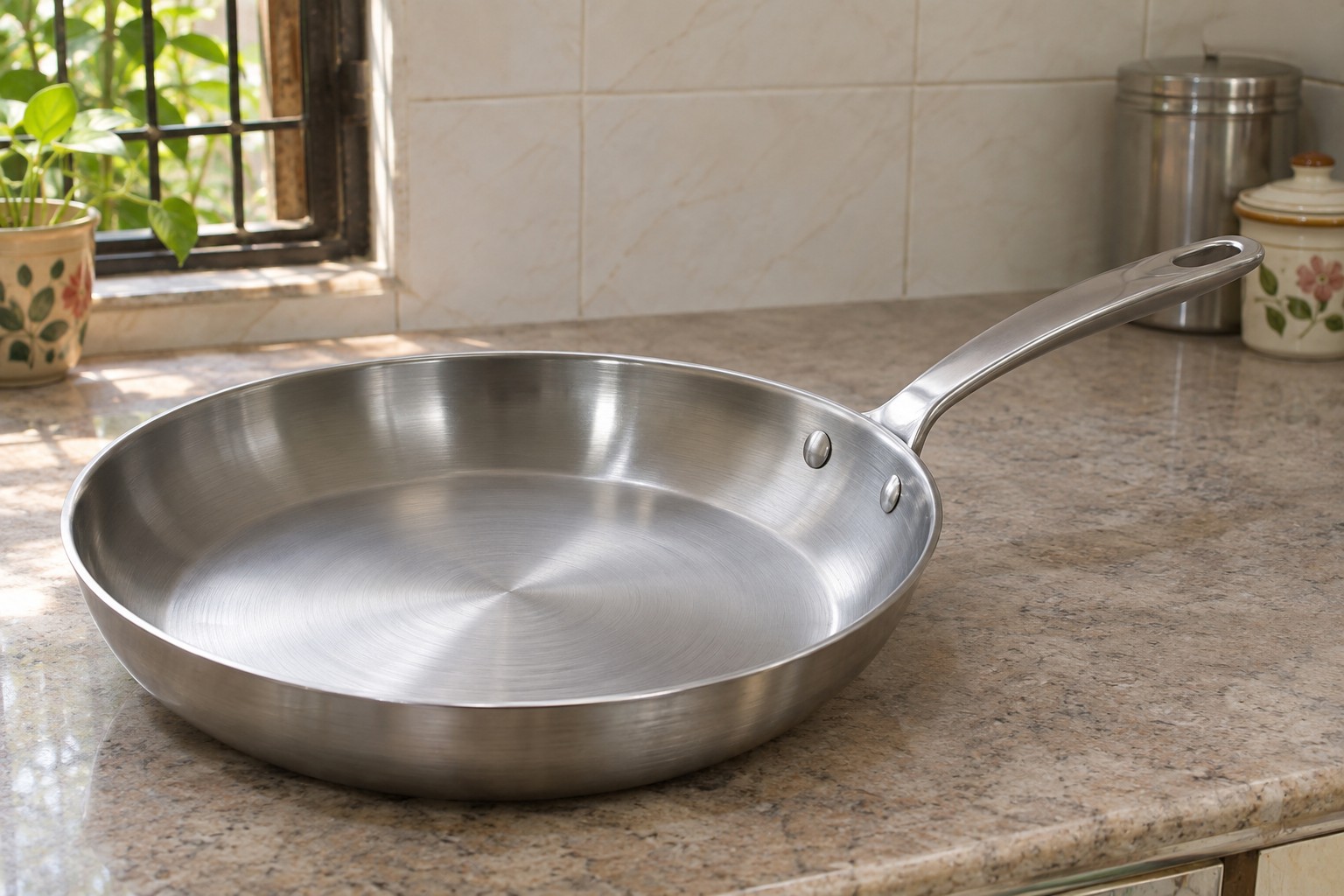
A frying pan has a broad base and relatively low sides, often sloping outward. It is useful for omelettes, fried eggs, shallow-fried fish, potato slices and chapli kebab in a Pakistani kitchen. The main benefit is access: a turner can slide beneath food without navigating a deep rim. The main limit is containment. A frying pan is not a sensible substitute for a deep vessel when oil or a bubbling gravy needs substantial headroom. Decide what must sit flat on the base, because the advertised rim diameter can exaggerate the area actually available for cooking.
Match the surface
Stainless steel suits browning and pan sauces when you manage heat and release. Seasoned iron and carbon steel require drying and maintenance but offer an uncoated cooking face. Nonstick-coated pans can simplify delicate eggs or fish, provided the coating is used within its instructions. None eliminates the need to choose appropriate heat. Health Canada guidance warns against empty overheating of nonstick cookware. A pan described as ceramic may be a coated metal pan rather than solid ceramic, so ask what lies beneath the surface and what utensils the maker permits.
Compare working dimensions
A 24 cm and 28 cm pan are editorial comparison examples, not serving capacities. Measure the flat inside base and imagine the actual fish fillets or kebabs you cook. Food should be turnable without pressing neighbouring pieces together. Check base-to-burner fit and induction suitability for your hob. Try the handle with the pan empty, then consider how a full load will change the leverage. A helper handle can improve two-handed lifting on larger pans but also takes shelf space. Ensure any lid you plan to reuse fits the actual rim rather than merely sharing a nominal diameter.
A controlled frying sequence
Dry or prepare food as the recipe requires and arrange a clean cooked-food plate before heating. Set the pan level, add the specified fat and warm within the surface's limits. Lay food away from your body to reduce the chance of splashes toward you. Leave space between pieces and turn with a tool that supports the food. Lower heat if the outside browns before the centre cooks. Work in batches instead of adding more food to a crowded pan. At the end, move the pan off active heat safely and keep raw-food tools away from the finished meal.
Oil, splashes and doneness
A shallow pan makes oil movement visible, but exposed hot fat still demands attention. Do not pour wet food or cold water into it. A splatter screen can reduce droplets while allowing steam to escape; it is not a fire blanket or a pressure lid. For meat and fish, browning does not alone establish safe doneness. Follow appropriate thermometer guidance through FoodSafety.gov guidance. Keep the long handle away from a walkway and another flame. A pan with a coated handle may have a lower oven limit than its body, so verify all parts before finishing a dish in an oven.
Care for the actual metal
Cool the pan before cleaning, then loosen food without cutting into the surface. For seasoned iron, Lodge Cast Iron guidance describes washing, thorough drying and light oiling. Stainless steel may need a suitable soak for browned residue; nonstick needs gentle tools and protection from nested utensils. Do not store a wet pan under a tight stack. Replace a cracked body, detached base or seriously deteriorated coating. A rough patch of seasoning on structurally sound iron may be recoverable through the maker’s care procedure, while a loose handle needs proper attention before the next hot load.
Buy for the foods you turn
A tawa can handle some flat foods but has less protection against escaping fat. A sauté pan has higher sides and can be more versatile for gravies, although access beneath delicate food may be less convenient. Choose a frying pan when broad shallow contact is the recurring need. In a shop check for rocking and sharp edges; online request base diameter, weight and coating details. A second pan is most useful when it provides a different surface for a distinct job, such as delicate eggs alongside a pan used for robust browning, rather than simply duplicating the same size.
Frequently Asked Questions
Is a 28 cm pan’s base 28 cm wide?
Usually the listed size refers to the upper diameter; check the flat cooking area.
Can I deep-fry in it?
Use a vessel designed with appropriate oil headroom and follow its instructions.
Does brown meat mean it is cooked safely?
No. Use suitable food safety guidance and a thermometer where required.
How we know this
- Type Explainer
- Sources 3 (1 official/academic)
- Reviewed November 2026
- Disputed points None
3 sources
- Safe use of cookware and bakeware, Health Canada
- How to clean seasoned cast iron, Lodge Cast Iron
- Four steps to food safety, FoodSafety.gov
Photo credits (1)
- a stainless steel frying pan with broad flat base, low sloping walls and one long riveted handle, empty clean interior, DailyLife.pk, All rights reserved
