
Kitchen item guide
French press: choosingbrewing and cleaning
A manual press makes full-bodied coffee when the beaker, grind and gentle plunge work together.
DailyLife.pk kitchen equipment collection
What the press does
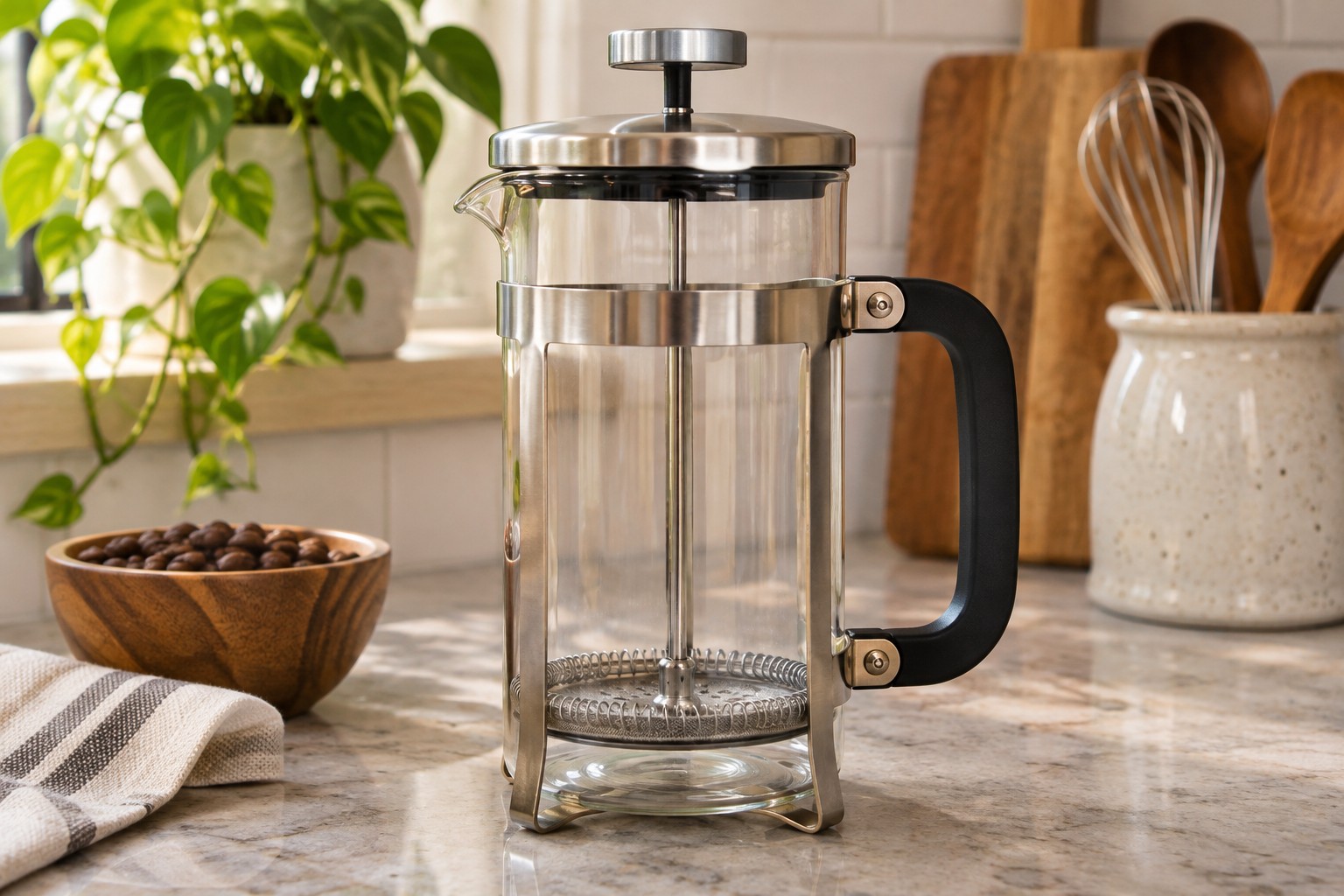
A French press is a vessel with a lid-mounted plunger and mesh filter. Ground coffee steeps in hot water, then the filter moves down to separate most grounds from the drink. Unlike a paper-filter cone, the mesh lets more fine particles and oils remain in the cup. It suits a Pakistani home wanting freshly brewed coffee without an electric coffee machine. It still needs a separate safe source of hot water and coffee ground for the method; stirring instant coffee into it does not demonstrate what the press is designed to do.
Choose a practical construction
Glass beakers let you see the brew and inspect cleaning, while stainless steel designs can be more resistant to accidental knocks. Double-wall models may hold heat differently from single-wall ones. A frame and handle should support the filled vessel without wobbling. Check the mesh sits evenly against the inside and that the plunger travels straight. As an editorial example, choose a small press for one regular coffee drinker rather than keeping half a large batch standing on the grounds. Cup counts on packaging may describe servings much smaller than a household mug.
Buy the complete working set
Check stated millilitre capacity, replacement beaker availability and whether the filter separates for washing. At a Pakistan-serving seller, obtain the exact model identification and care directions rather than relying on a generic photograph. A cheap body becomes less useful if one broken glass beaker makes the whole assembly unusable. Inspect the rim and handle mounts before first use. A grinder is a separate purchase unless clearly included; if buying pre-ground coffee, ask for a coarse grind suited to a French press and avoid assuming all coffee packets have the same particle size.
Prepare a measured batch
Stand the press on a stable, heat-resistant surface away from the counter edge. Check the beaker and filter, then add measured coffee. Bodum’s BRAZIL directions use coarsely ground coffee, hot water and a four-minute steep. Its instructions leave headroom rather than filling to the rim. Follow your own model’s fill limit and stir with a tool compatible with the vessel. Keep notes on coffee amount, water amount and time so one change at a time can improve the flavour without an expensive accessory purchase.
Press slowly and serve
Place the lid as instructed while the coffee steeps. Keep the handle supported and lower the plunger slowly, with the spout directed safely away from you and other people. Do not force a resistant filter or push down with body weight. Stop and let the situation become safe if the plunger jams; follow the maker’s troubleshooting steps rather than forcing hot liquid through a blockage. Once pressed, pour carefully into stable cups. Transfer remaining coffee to a suitable clean server if you want to avoid leaving it in prolonged contact with the grounds.
Adjust taste, not pressure
A muddy cup can reflect very fine grounds, a damaged filter or rough plunging. A bitter or weak cup can have several causes, so start by checking the recipe and grind instead of applying extra force. Use the same cup and measured quantities when comparing batches. The press does not produce espresso, and a darker or more concentrated drink does not establish espresso pressure. A little sediment is part of many mesh-filter brews. If that texture bothers you, a paper-filter pour-over may suit your preference better than repeatedly replacing a sound press.
Disassemble and clean
Let the equipment cool before handling the filter assembly. Remove spent grounds into a waste container and wash the beaker, lid, mesh and hidden interfaces according to the instructions. Rinse away coffee oils and trapped grit, then dry the parts. Bodum labels the cited BRAZIL model dishwasher-safe; check that permission for another maker or a different finish. A quick rinse of the outer glass leaves grounds between filter layers. Reassemble only when the parts are clean and correctly aligned, with the mesh undamaged and the handle secure.
Know when to replace parts
Stop using a beaker with cracks, chips or significant scratches, and obtain a compatible replacement rather than using a loosely fitting jar. Duralex’s glassware care guidance also excludes damaged glass, although its material ratings must not be transferred to a French press. Replace a frayed mesh or loose plunger connection that cannot be repaired with approved parts. For a single rushed cup, a mug filter is simpler to wash; for several people, a press offers convenient batch brewing. Buy it when that routine fits your kitchen and the cleaning is realistic.
Frequently Asked Questions
Is a French press an espresso maker?
No. It is an immersion brewer with a mesh filter.
Should I push harder if the filter sticks?
No. Stop forcing it and follow the maker’s troubleshooting directions once it is safe to handle.
Can I put every press in the dishwasher?
Check the exact model, including the handle, lid and filter parts.
How we know this
- Type Explainer
- Sources 2
- Reviewed November 2026
- Disputed points None
2 sources
Photo credits (1)
- French press displayed clearly in a clean kitchen setting., DailyLife.pk, All rights reserved
