
Kitchen item guide
Food scoop: A Practical Pakistani Kitchen Guide
Choose a dry-food scoop that fits the container opening and transfers rice, atta or pulses without awkward lifting.
DailyLife.pk kitchen equipment collection
A transfer tool for dry ingredients
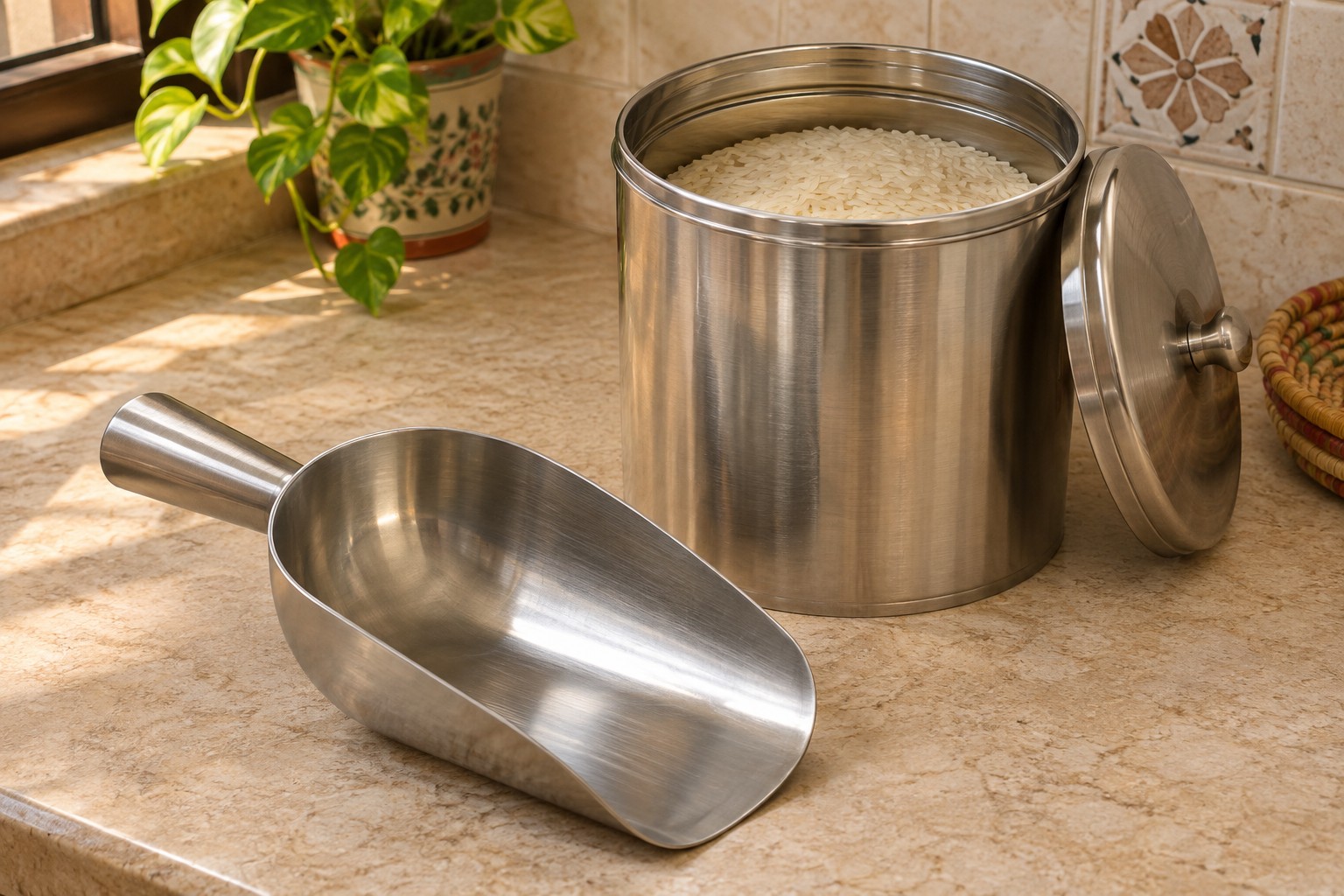
A food scoop moves loose ingredients from a storage bin into a bowl, pan or weighing container. For Pakistani home cooking it can make a heavy rice bin or atta drum easier to use because the whole supply need not be lifted and poured. This guide concerns a simple dry-food scoop, rather than an ice-cream disher or a slotted serving shovel. Its capacity is useful for moving food, but an unmarked scoop does not establish the weight of rice or flour. Weigh or measure separately when the recipe needs precision.
Match the bowl to the opening
Deep scoops carry more but require a wider container mouth and enough space to turn your wrist. A pointed lip helps direct small grains into a narrow preparation bowl. A flatter open scoop can slide beneath flour but may spill if tipped sideways. One-piece stainless steel is easy to inspect; food-contact plastic can be lighter. Check the underside and handle junction for rough joins. As editorial fit examples, compare one modest scoop for a household canister with a larger one for bulk transfers, testing whether either can be withdrawn without catching the rim.
Use a clean dry route from bin to bowl
Place the receiving bowl securely beside the container before starting. Hold the scoop by the handle, lift a manageable amount and pour close to the bowl to limit scattering. Close the storage lid after measuring. Keep a wet rice-rinsing cup away from the dry reserve, and do not return ingredients that have touched a dirty counter. A scoop stored separately can be inspected before each use; one stored inside is convenient only when its handle stays clean, the bin closes properly and it does not become buried in the ingredient.
Separate flour handling from ready-to-eat food
Treat an atta scoop as part of raw-flour preparation. CDC advises washing utensils and surfaces after handling raw flour or dough. Do not use the same unwashed scoop for ready-to-eat snacks or sugar after working with flour. Likewise, a scoop for animal feed, cleaning powders or other non-food materials should not migrate into the kitchen supply. Dedicated tools can make a busy household routine clearer, but colour alone is not a substitute for keeping the tool clean and storing it in the right place.
Buy, wash and replace thoughtfully
At a kitchenware shop, check grip comfort and look along the lip for sharp damage. Online, request actual bowl dimensions and material details rather than buying by a photograph of an oversized scoop. A dry measuring cup is a practical substitute for small quantities. Wash after contamination or when changing ingredients, rinse and dry fully, following dishwasher instructions if supplied. Keep the handle accessible in a dry drawer or holder. Replace a cracked body, loose handle or corroding contact surface. A larger scoop saves transfers but adds weight and spill risk; the best size is the one you can control.
Frequently Asked Questions
Can I use it as a measuring cup?
Only if it has a stated usable measure. Otherwise measure separately.
Can it stay in an atta bin?
Only while clean and dry and without interfering with the lid; separate storage is easier to inspect.
Is a plastic scoop suitable for hot food?
Do not assume it. Check the documented temperature and intended use.
How we know this
- Type Explainer
- Sources 2 (1 official/academic)
- Reviewed November 2026
- Disputed points None
2 sources
- Food packaging, NSW Food Authority
- Raw Flour and Dough, Centers for Disease Control and Prevention
Photo credits (1)
- Broad stainless steel dry-food scoop beside an open canister of rice., DailyLife.pk, All rights reserved
