
Kitchen item guide
Dishcloth: A Practical Pakistani Kitchen Guide
Keep dishcloths assigned to clear tasks and change, wash and dry them often enough that cleaning does not spread yesterday’s residue.
DailyLife.pk kitchen equipment collection
A reusable cloth needs a clear role
A dishcloth is a washable textile used for cleaning dishes or appropriate kitchen surfaces. It is different in role from a clean towel reserved for drying crockery or a hand towel beside the sink. In a Pakistani kitchen, one cloth may otherwise move from an oily counter to tea cups and then to wiping hands. That convenience can spread residue between tasks. Decide what each cloth is for and keep enough clean replacements available so a dirty cloth can leave use immediately rather than being rinsed repeatedly through the day.
Choose fabric and size for handling
Cotton cloths are familiar and washable; synthetic microfibre and other blends have different laundering instructions. A thin cloth rinses and hangs easily, while a thick textured cloth can hold more water and residue. As editorial handling examples, compare a small cloth that wrings comfortably in your hands with a larger one for broad washable surfaces. Check seams and fibre shedding before use. Colour coding can help distinguish washing-up cloths from counter cloths, but the household must understand the system. Colour itself does not prevent contamination or replace washing.
Clean with a fresh task-appropriate cloth
Start with a clean cloth and a suitable cleaning product for the surface. Remove loose debris first, then clean systematically rather than spreading one greasy patch over the whole worktop. The Food Standards Agency advises separate cloths for surfaces and washing up. Do not use a dishcloth that has wiped raw meat juices to dry washed plates. Handle raw-food spills with an appropriate cleaning and sanitising procedure, using disposable material where that procedure calls for it. A cloth that looks white or smells pleasant is not proof of hygienic condition.
Wash and dry as part of the routine
Change cloths regularly and whenever their use makes them dirty or unsuitable for the next task. Follow the textile’s laundering instructions and reliable kitchen-hygiene guidance rather than inventing a universal bleach soak. The FSA student guide recommends regular washing or changing of dishcloths and related kitchen textiles. After use, spread a cloth so it can dry instead of leaving it balled in the sink. Keep dirty cloths separate from clean stock and avoid returning a damp unwashed cloth to a closed drawer.
Buying, lifespan and alternatives
Buy a manageable number with clear fibre and care labels, considering the washing routine available at home. A multipack is useful only if clean spares actually circulate into use. Inspect for fraying, thinning, persistent grease or residue that laundering does not remove. Replace worn cloths rather than assigning every damaged one another food-contact task. Suitable disposable kitchen paper can be useful for particular dirty spills, while a dish brush may suit washing cookware; neither eliminates the need for a clean surface and correct product. Reusable cloths are economical and flexible, but their benefit depends on prompt changing and thorough washing and drying.
Frequently Asked Questions
Can one cloth serve dishes and counters?
Use separate cloths for those tasks and change them when dirty or contaminated.
Does rinsing make a dirty cloth ready for everything?
No. Rinsing alone does not replace the appropriate washing or changing routine.
When should a cloth be discarded?
Replace it when damage or persistent residue prevents effective cleaning and laundering.
How we know this
- Type Explainer
- Sources 2
- Reviewed November 2026
- Disputed points None
2 sources
- Cleaning and Food Hygiene, Food Standards Agency
- Student Guide to Food Safety and Hygiene, Food Standards Agency
Photo credits (1)
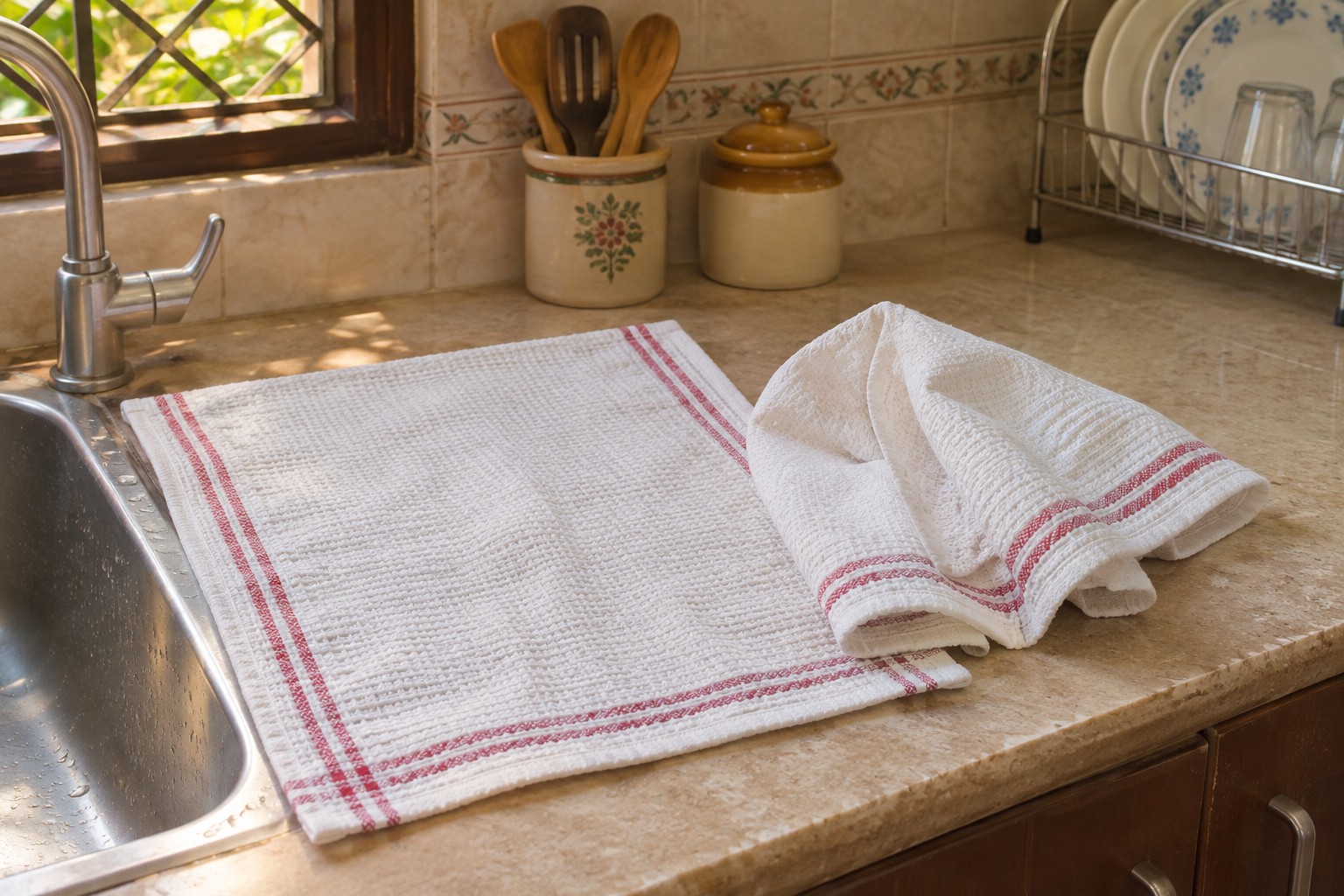
- Two clean white cotton dishcloths with muted red stripes beside a kitchen sink., DailyLife.pk, All rights reserved
