
Kitchen item guide
Degchi: ChoosingUsing and Caring for It
Assess a degchi by its broad cooking area, lid fit and lifting arrangements for rice, salan and family meals.
DailyLife.pk kitchen equipment collection
Recognise the vessel
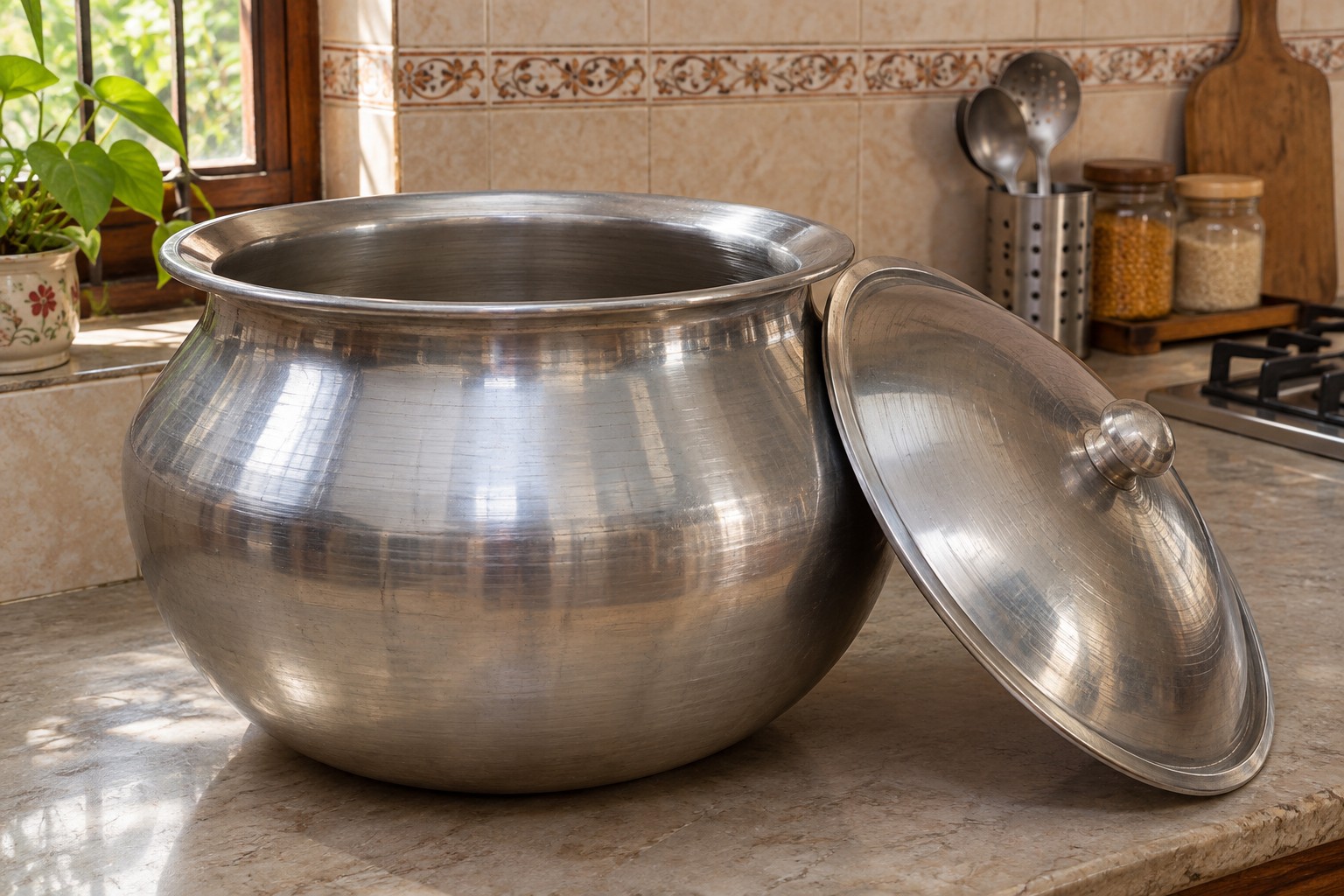
A degchi is a deep cooking pot associated with rice, salan and other substantial household dishes. Market names vary: a shop may call a similar vessel a patila or handi. Look at the profile rather than relying on that name. The degchi discussed here has a generous mouth and a body that gives space for stirring and layering. It is particularly useful when rice needs to be spread, a masala needs to be swept across the base, or a finished dish needs to be served without passing a spoon through a narrow neck.
Read the construction
A bare aluminium degchi, a stainless steel vessel and a heavy multilayer pot can have similar silhouettes but very different weight and care needs. Look for a declared food-contact material, a sound rolled rim and an evenly seated base. Multilayer construction should be described clearly: ask whether heat-spreading layers extend up the sides or are confined to a base disk. Hawkins guidance illustrates why product construction and individual use limits must be checked together. A decorative hammered exterior does not prove thickness, lining quality or suitability for a particular stove.
Plan capacity and access
As an editorial buying exercise, compare a 4 litre pot with a 6 litre pot using your own largest normal recipe. Those volumes are vessel examples, not rice yields. Leave working room above food for stirring and steam; brim capacity is never a sensible target for a bubbling salan. Measure the mouth against your serving spoon and the base against your burner. Check whether two dry mitts can reach the handles without touching another pot. If the degchi has no secure handles, plan how it can be used and emptied without lifting a heavy hot load.
Rice and salan workflow
For a rice dish, have drained rice, measured recipe liquid and aromatics ready before the cooking stage that needs them. Begin the masala at controlled heat and scrape the whole base as you stir. Add ingredients in the recipe sequence, then spread rice evenly rather than piling it in a central mound. Once covered cooking begins, reduce heat as needed and keep the lid seated. For salan, stir particularly where the curved side meets the bottom. If one area catches repeatedly, investigate burner size, heat level and base flatness rather than trying to disguise scorching with additional spices.
Dum without improvisation
An ordinary degchi is not a pressure cooker. Its lid can hold moisture, but it should not be clamped, weighted or modified to make a pressure seal. Choose a lid that sits evenly and is easy to lift away from your face. A recipe may use a dough seal for traditional dum; avoid creating an uncontrolled sealed system and follow the pot maker's directions. Keep handles and any cloth away from flame. Material choice also matters for acidic salan: Health Canada guidance advises avoiding acidic or salty foods in bare aluminium and long acidic cooking in uncoated iron.
Cleaning and leftovers
Remove food after the meal, loosen stuck rice with an appropriate soak once the pot has cooled and clean the rim where starch collects. Dry beneath a rolled edge and around handle rivets. A large degchi of food should not be left standing simply because its lid is convenient; USDA FSIS guidance recommends dividing large quantities into smaller containers for refrigeration. Check for a detached base disk, sharp damage at the rim, loose attachments or deep corrosion. Those are different from cosmetic staining. Store with the lid slightly offset once everything is clean and dry.
Choose a practical substitute
A broad stockpot or a heavy casserole suitable for the hob can perform much of the same cooking if the dimensions suit the recipe. A narrow tall pot makes layering and lifting rice less convenient, while a wide shallow karahi loses moisture differently. Buy a degchi when its shape improves a task you repeat. At a cookware shop check base stability on a level surface; online request underside and interior photographs, the empty weight, the actual capacity and the return policy. Size should serve your household burner and storage shelf, not merely look impressive at a dawat.
Frequently Asked Questions
Is degchi different from patila?
Usage overlaps by region and seller. Compare actual depth, shoulder shape, mouth and handles.
Can I fill it to the rim?
No. Allow headroom appropriate to bubbling, stirring and the recipe.
Can it hold dum pressure?
An ordinary degchi is not a pressure vessel and should not be modified into one.
How we know this
- Type Explainer
- Sources 3 (1 official/academic)
- Reviewed November 2026
- Disputed points None
3 sources
- Stainless steel tri-ply cookware manual, Hawkins
- Safe use of cookware and bakeware, Health Canada
- Can you put hot food in the refrigerator?, USDA FSIS
Photo credits (1)
- a stainless steel Pakistani degchi with wide mouth, curved shoulders, deep rounded pot body and snug domed lid set beside it, DailyLife.pk, All rights reserved
