
Kitchen item guide
Coaster: choosing a stable base and caring for it
Choose a coaster around the cup and table surface, then dry it between uses.
DailyLife.pk kitchen equipment collection
A barrier under a drink
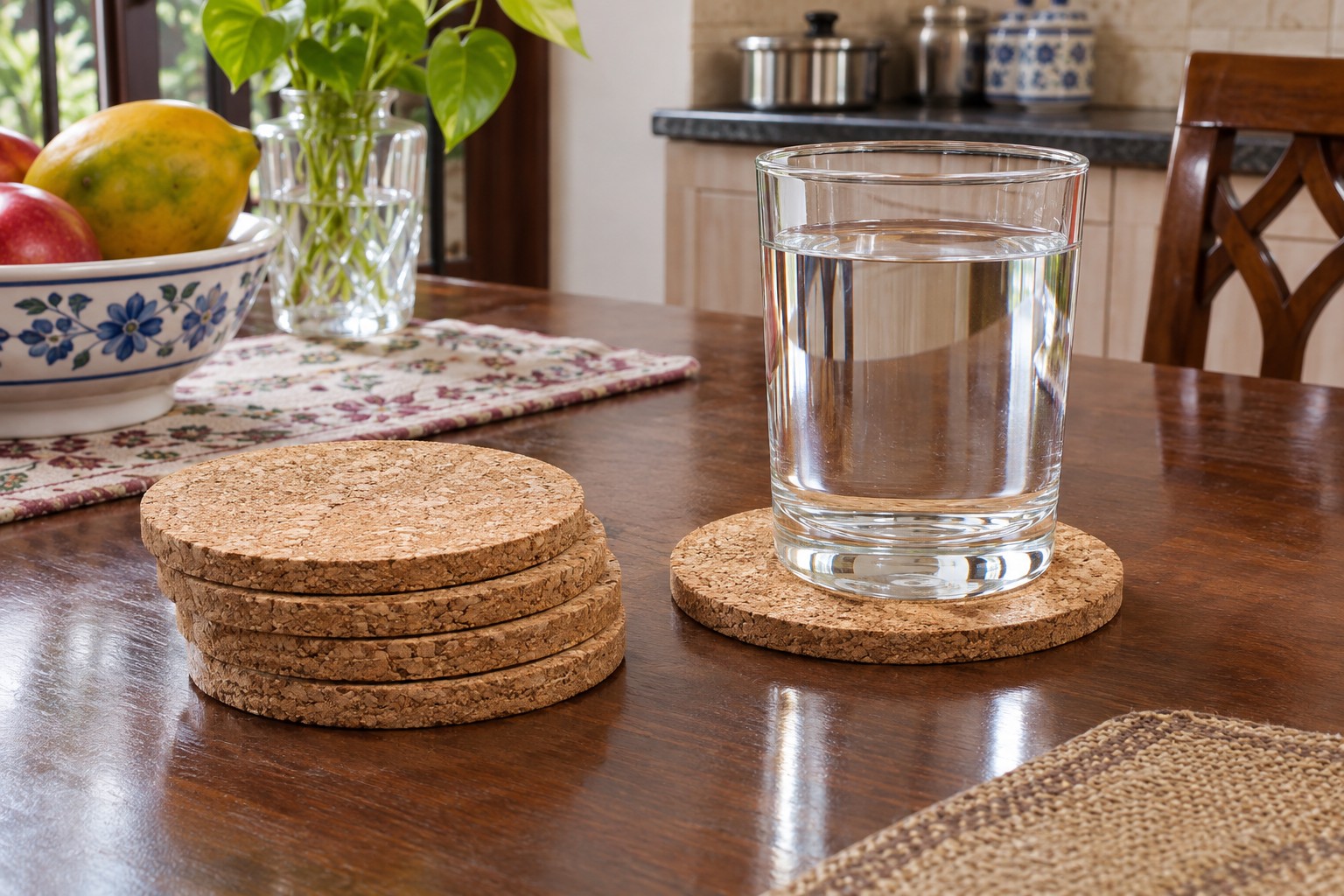
A coaster is a small pad or disc placed beneath a cup, mug or glass. It can reduce direct contact between the vessel and a table, catch some condensation and soften the sound of setting a cup down. In Pakistani tea service, a set is useful on a side table where chai cups and cold-water glasses are repeatedly placed. It does not make a fragile table finish immune to heat or spills. Liquid can still run over an edge or remain trapped underneath, so wiping and drying remain part of the job.
Match the material to the task
Cork is light and soft; silicone is flexible; glazed ceramic and stone designs can be heavier. Absorbent and non-absorbent surfaces manage condensation differently, and neither is automatically best for every table. A raised rim can hold a limited spill but also needs cleaning. As an editorial example, compare the underside of your widest mug with the usable flat area of a coaster rather than its decorative outer diameter. A base that overhangs the edge can become less stable, especially when a handle adds sideways weight.
Check grip and edges
At a homeware shop or online seller serving Pakistan, check dimensions, thickness, cleaning guidance and any heat rating. Examine the underside for grit, sharp edges or a loose backing that could mark a finish. A coaster should rest flat without rocking. IKEA’s cited 10cm cork coaster is described as protecting a table surface and reducing noise; this is a modest intended function, not a guarantee against every hot pan. Choose enough for the usual service rather than buying an oversized set that is awkward to keep clean.
Place it before filling the table
Set a dry coaster on a clean, dry surface before placing the drink. Keep the cup centrally positioned and avoid stacking coasters into an unstable tower to gain extra heat protection. Wipe condensation beneath a cold glass during long service, especially on a finish sensitive to water marks. A coaster that clings to a lifted cup can drop unexpectedly; check before carrying the drink away. Keep its edges away from a table overhang where a hand or sleeve could catch them. Replace it with a dry one when saturated.
Different size, different claim
A larger pad may support bowls or plates, but size alone does not establish suitability for a hot cooking pot. IKEA’s 19cm BRÄNNBOLL example has raised edges and is sized for selected plates, mugs and bowls. Follow the actual heat and load guidance for the item you own. Use a properly rated trivet for a hot pan rather than treating a drink coaster as one. Decorative felt or paper coasters may be suitable for light service yet need replacing sooner when stained or worn.
Clean and dry by material
For the two cited cork examples, IKEA specifies wiping with a damp cloth; the BRÄNNBOLL guidance also calls for wiping dry. Do not assume cork should soak in a sink or go through a dishwasher. Wash silicone, ceramic or other materials only as their makers permit, including separate backing layers. Dry before stacking so dampness is not trapped. Replace cracked, crumbling, persistently mouldy or warped pieces. A washable tray can serve several drinks at once, while individual coasters remain convenient where cups move between seats and side tables.
Frequently Asked Questions
Can a coaster hold a hot saucepan?
Use a trivet rated for the pan and temperature; a drink coaster has a different job.
Should cork coasters be soaked?
Follow the maker; the cited cork models specify damp wiping rather than soaking.
Why dry the table underneath?
Condensation or spills can pass the coaster edge or become trapped beneath it.
How we know this
- Type Explainer
- Sources 2
- Reviewed November 2026
- Disputed points None
2 sources
- IKEA 365+ Cork Coaster, IKEA
- BRÄNNBOLL Coaster, IKEA
Photo credits (1)
- Coaster displayed clearly in a clean kitchen setting., DailyLife.pk, All rights reserved
