
Kitchen item guide
Clay handi: ChoosingUsing and Caring for It
Buy clay handi for an approved cooking method, reliable food-contact evidence and a gentle heat routine.
DailyLife.pk kitchen equipment collection
Understand clay cooking
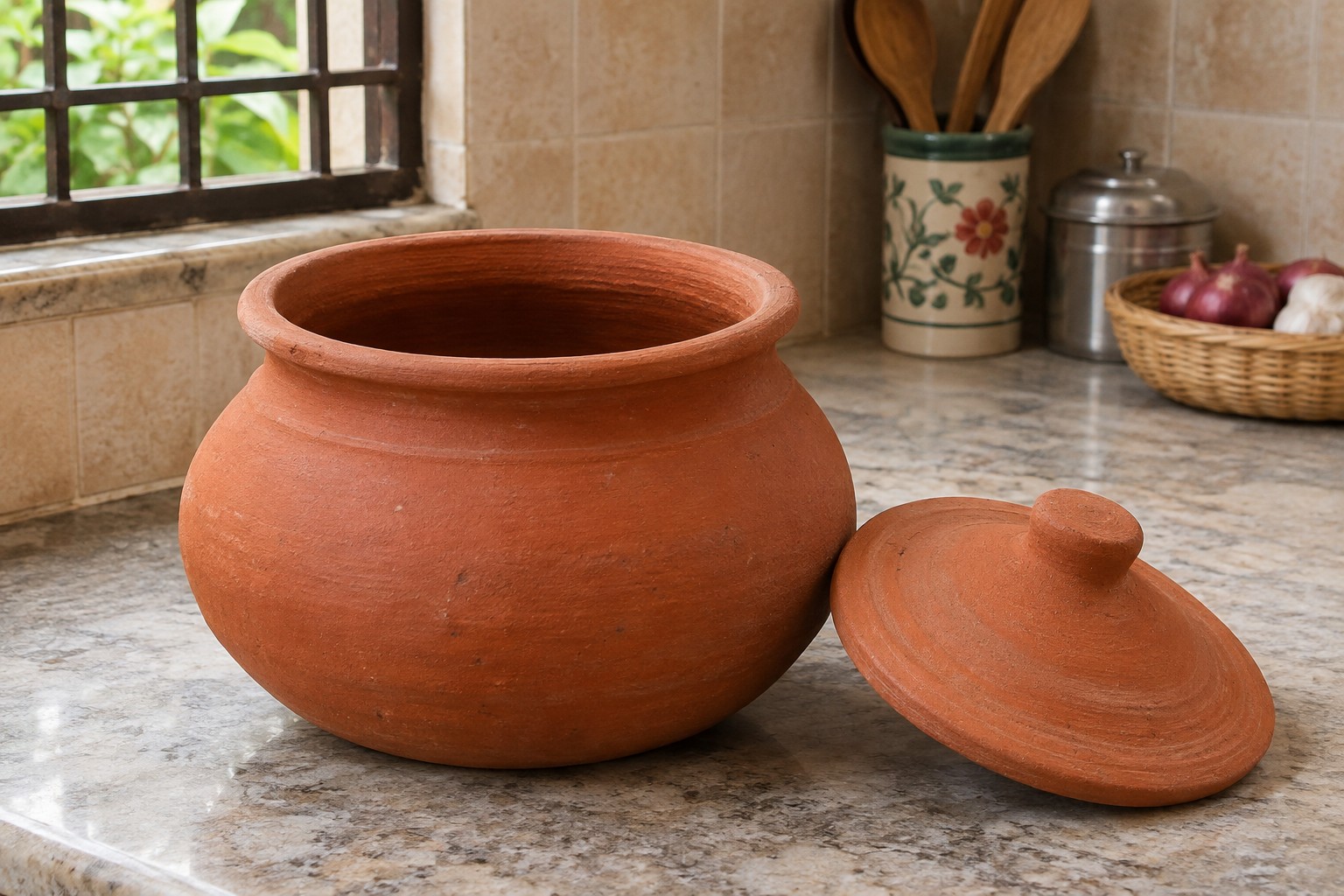
A clay handi is an earthenware cooking vessel with a rounded body, comparatively narrow mouth and matching lid. In a Pakistani kitchen it may be chosen for a gently simmered chicken handi, dal or a dish served in its cooking pot. The material is part of the handling decision, not proof of superior nutrition or automatic improvement in flavour. A pot intended only to present food can look much like one designed for a burner. Start by establishing whether the exact piece is for cooking, serving or decoration. These uses are not interchangeable simply because all three pieces are clay.
Different clay products
Unglazed porous earthenware, glazed earthenware and engineered flameproof ceramics need different preparation. Some require a specific first-use treatment; others prohibit soaking or allow only an oven. Do not apply an internet seasoning ritual to every clay pot. Ask the maker about the clay body, interior glaze, permitted heat source and whether a diffuser is required. A metal induction adapter does not by itself make an ordinary handi safe for that appliance. Decorative paint on the outside also needs evaluation if it sits where a flame or hot handle will expose it to heat.
Verify food suitability
Request traceable food-contact information instead of accepting a casual claim of natural or lead-free. FDA guidance explains that traditional pottery can contaminate food with lead and that appearance cannot establish safety. This does not mean every clay handi is hazardous; it means the buying evidence matters. Avoid decorative pieces and unknown glazes for cooking. A very cheap market pot with no maker or instructions is difficult to assess remotely. Prefer a seller who can identify the product, state its intended use in writing and explain the relevant testing or compliance information without promising that all clay is inherently safe.
Fit the meal and hob
For an editorial size comparison, look at a 2 litre handi beside a 4 litre model, then check the mouth and base dimensions. Capacity alone hides whether your serving spoon can reach comfortably around the inside. The rounded body needs stable support on the permitted hob; it must not wobble when stirred. Leave sufficient headroom for a curry to bubble without reaching the lid. Consider washing access too: a narrow neck makes dried onion paste harder to remove. Lift the empty pot with the same mitts you would use while cooking, and allow for the substantial extra weight of food.
Heat slowly and steadily
Follow the maker’s first-use preparation exactly. Add ingredients and liquid in the sequence specified for that cooking method and bring the pot through temperature changes gradually. Maintain the gentle simmer appropriate to the recipe instead of exposing the base to a concentrated roaring flame. Stir with a suitable nonmetal tool if required, reaching the lower curve gently. Add any further liquid in the way the maker permits; sudden thermal changes are an avoidable risk. Place a removed lid on a dry heat-resistant surface. Do not move a hot handi to a wet sink or attempt to cool it rapidly for washing.
Clean, dry and inspect
Allow natural cooling before cleaning. Use the maker’s recommended detergent and tools, especially for porous unglazed clay. Scraping with a knife can damage the cooking surface. Give the vessel time to dry fully before putting the lid on in a closed cupboard; storing a damp porous pot traps moisture and odours. Stop cooking in a handi that leaks, sheds material or develops damage that its maker cannot assess as acceptable. Do not mend a cracked cooking pot with household glue. A stain is a cleaning question; a crack that changes strength or containment is a different problem.
When metal is easier
A stainless steel handi or a hob-safe heavy casserole can handle the same recipe with changes to heat and evaporation. Metal is generally easier when the household needs rapid transitions between cooking and washing, or when a single pot changes between many acidic dishes. Clay earns its place when you can follow its particular heat and drying routine. Buy before a planned meal so there is time to check instructions and prepare the pot. Check return arrangements for transit breakage and photograph the item on arrival. The key tradeoff is the cooking experience and presentation against weight, fragility and careful maintenance.
Frequently Asked Questions
Should every clay handi be soaked?
No. First-use preparation depends on the product; follow its maker.
Can I use an ordinary handi on induction?
Only when the exact product and any approved accessory are specified for that use.
Does unglazed mean lead-free?
No. Request food-contact evidence and traceable manufacturing information.
How we know this
- Type Explainer
- Sources 2 (1 official/academic)
- Reviewed November 2026
- Disputed points None
2 sources
Photo credits (1)
- a food-use terracotta handi, squat round-bellied clay cooking pot with narrow neck and wide opening, matching clay lid beside it, unglazed reddish brown exterior, DailyLife.pk, All rights reserved
