
Kitchen item guide
Catering deg: ChoosingUsing and Caring for It
Plan a catering deg as a complete large-batch workflow, including burner support, serving and rapid portioning.
DailyLife.pk kitchen equipment collection
Large pot, larger operation
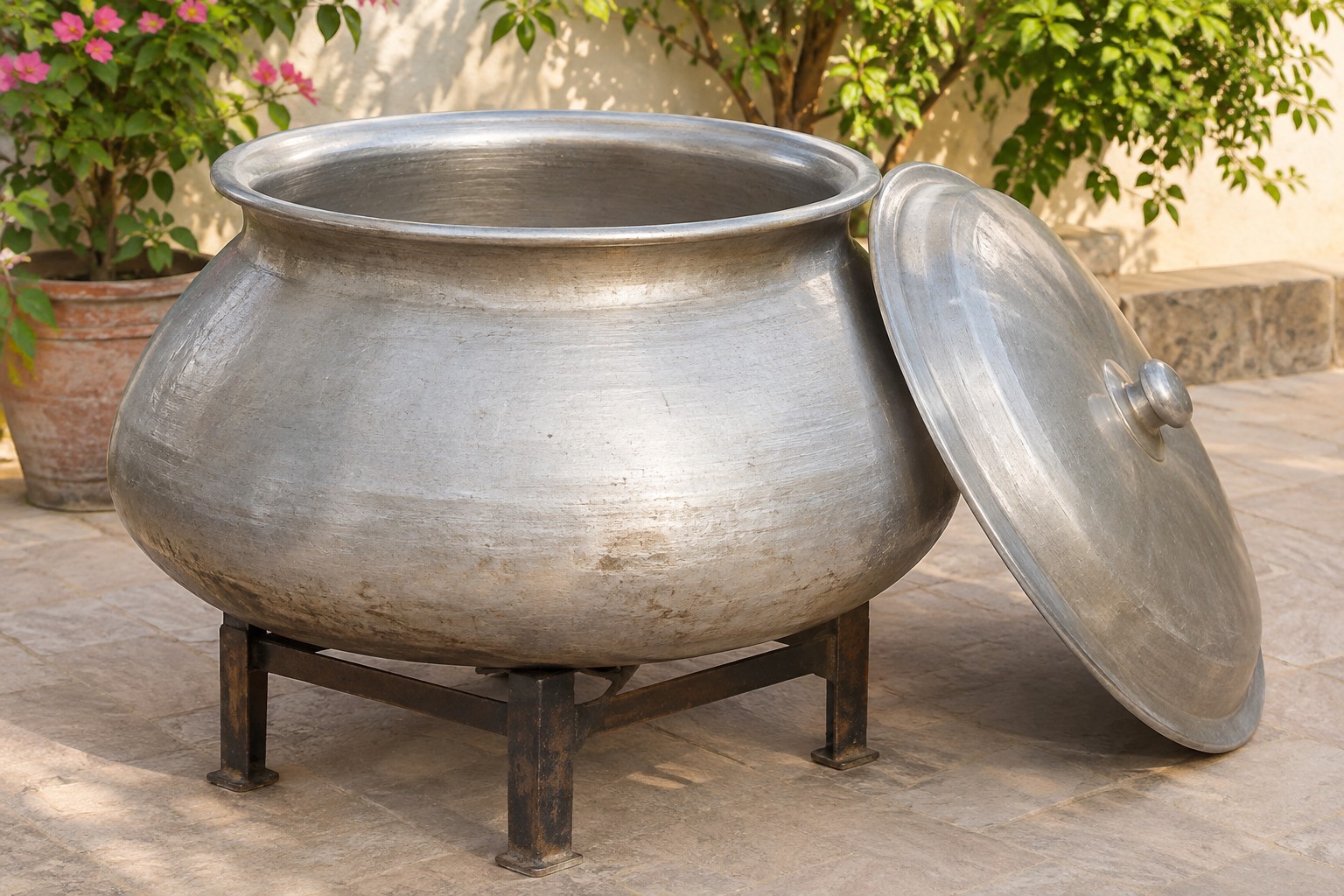
A catering deg is a large broad-bellied vessel used for substantial batches of biryani, pulao, salan or other event food. In Pakistan its usefulness is most apparent at a dawat or organised catering session, where one recipe is produced at a scale beyond ordinary household pots. Buying the vessel is only part of the decision. The burner, stable stand, stirring tools, workspace, handling team and food storage arrangements all need to suit it. A deg that fits the recipe but cannot be safely heated, emptied or washed in your space is not a workable purchase.
Specify the vessel clearly
Aluminium and stainless steel versions may share a familiar silhouette but differ in weight, surface and care. Ask for a traceable food-contact material rather than accepting an unidentified alloy because it looks traditional. Check wall and base condition, the rolled rim and any handle attachment. Health Canada guidance explains that food-contact suitability depends on material and condition. A domestic multilayer pot may prohibit industrial burners or coal: Hawkins guidance contains range-specific use restrictions. A catering deg therefore needs its own approved heat-source specification, rather than assumptions borrowed from a household cookware manual.
Capacity is not a guest count
A 20 litre versus 40 litre comparison is an editorial example of vessel scale, not an estimate of portions. Recipe density, rice expansion, meat, liquid and safe working room change the useful load. Develop the quantity through a tested recipe and the actual vessel rather than a seller’s guest claim. Measure the deg’s widest belly, mouth and base. The burner and support must be rated for the full loaded weight and remain stable during stirring. Check the route from storage to cooking area while the pot is cold, including thresholds and the place where it will cool.
Prepare the large-batch station
Set up the stable approved burner and stand before loading ingredients. Keep fuel components arranged by a qualified person where installation is required. Stage measured ingredients, a long suitable stirring tool, lid support and clean serving equipment. Add ingredients in a recipe sequence suited to the batch, sweeping the base to avoid local catching. Once a covered rice stage begins, manage heat according to the recipe and approved equipment. Do not rely on extra fuel to compensate for an undersized burner or poor base contact. Large quantities respond slowly, and hurried adjustments can create scorching before the rest of the food changes.
Serve without lifting a hot load
Plan to ladle or portion food from a stable cooking position rather than carry a full deg. Keep people away from hot exposed sides and make the serving route separate from fuel and flame. Handle a large lid with suitable protection and a prepared resting place; condensation and weight make it awkward. If charcoal or another fuel-burning system is involved, use the required outdoor arrangement. CDC guidance warns that burning charcoal releases carbon monoxide and must never be used indoors. A roof, wall or temporary enclosure can change the ventilation situation, so the cooking site needs deliberate assessment.
Food handling after the meal
A large mass of food needs a plan beyond turning off the burner. Prepare clean shallow containers and sufficient refrigeration before cooking. FoodSafety.gov guidance advises dividing large quantities into shallow containers for prompt refrigeration. Do not use a tightly lidded deg as an overnight room-temperature storage solution. Keep utensils used with raw ingredients away from serving food. Once emptied and cool, wash the full internal curve, rim and underside with appropriate tools. Dry fully, inspect seams and corrosion, and store so the belly and rim are supported without trapping dampness.
Buy, hire or split the batch
For occasional events, hiring a sound vessel with a known compatible cooking setup or using a competent caterer may be more practical than ownership. Two manageable household pots can be an alternative for smaller gatherings when the recipe can be divided consistently. In person inspect the actual deg rather than a sample photograph, especially if buying used. Ask about heat-source permissions, capacity measurement, transport and returns. The advantage is scale and a familiar large-batch form; the costs are equipment, handling, cleaning and cooling capacity. Choose ownership only when the complete workflow can be repeated safely and usefully.
Frequently Asked Questions
How many guests will a deg feed?
Capacity alone cannot establish portions. Use recipe quantities and a tested batch plan.
Can it sit on an ordinary small burner?
Only with an approved stable system rated for its full load.
Can leftovers stay in the deg overnight?
Plan prompt portioning into suitable shallow refrigerated containers.
How we know this
- Type Explainer
- Sources 4 (2 official/academic)
- Reviewed November 2026
- Disputed points None
4 sources
- Safe use of cookware and bakeware, Health Canada
- Stainless steel tri-ply cookware manual, Hawkins
- Carbon monoxide poisoning basics, CDC
- Four steps to food safety, FoodSafety.gov
Photo credits (1)
- a large Pakistani catering deg, broad bulbous aluminium cooking vessel with very wide mouth, thick rolled rim and matching large domed lid beside it, unlit on a stable low support in a clean outdoor courtyard, DailyLife.pk, All rights reserved
