
Kitchen item guide
Casserole dish: ChoosingUsing and Caring for It
Choose an oven casserole dish for baked meals, with clear material, heat-source and thermal-shock limits.
DailyLife.pk kitchen equipment collection
What this dish does
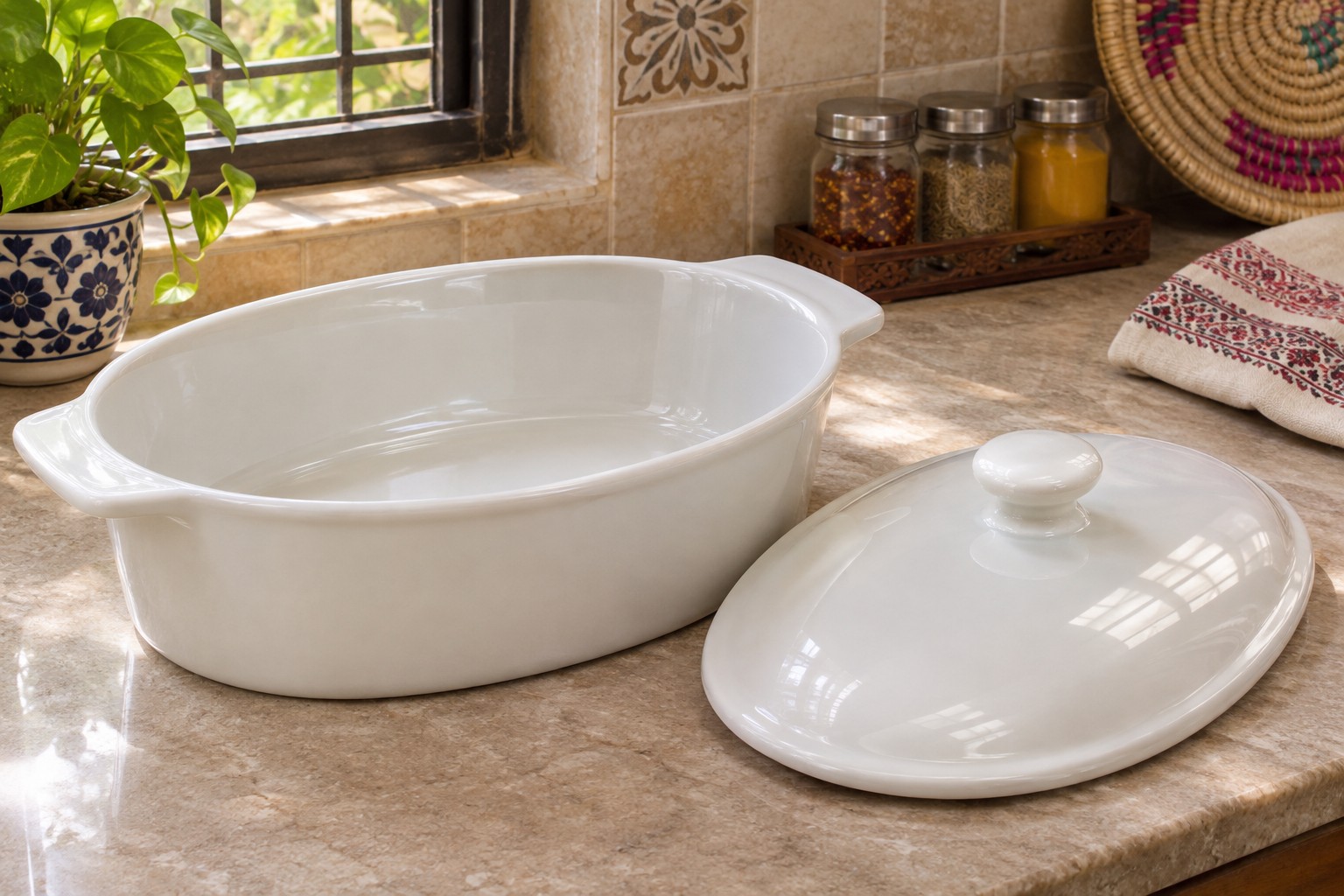
Here, a casserole dish means a deep oven dish, often with short handles and sometimes a lid. In Pakistani households it can serve a baked pasta, layered rice finish, vegetable gratin or a covered oven dish for a family meal. The word casserole is also used for insulated serving containers and hob-safe metal pots; neither is automatically equivalent. Check the product description before buying. An insulated hotpot meant to hold cooked roti is not bakeware, while an oven dish may be unsuitable for the stove even when its handles make it look like a cooking pot.
Compare oven materials
Glass lets you see the sides of a layered dish, glazed ceramic brings an opaque serving surface, and metal offers another weight and handling option. Each comes with product-specific temperature and appliance limits. Glass can still become very hot, and an attractive glaze is not evidence of food-contact safety. Choose traceable food-use ceramics with appropriate instructions. FDA guidance explains the concern with unknown traditional glazes. For an enamelled metal casserole, inspect both the metal body and coating; an ordinary ceramic dish should never be presumed suitable for direct burner heat.
Measure for recipe and oven
An editorial comparison is a 2 litre oval dish against a 3 litre rectangular one. Equal volume does not mean equal performance: surface area and depth change the thickness of food and how much topping is exposed. Check recipe pan dimensions when they are given. Measure the oven rack with space for the handles and a safe grip, and check whether a lid adds too much height. Consider the loaded weight when taking the dish out of the oven. A beautiful oversized dish that can only be grasped by fingertips is an awkward daily purchase.
Load and bake deliberately
Check the dish for chips and cracks, then prepare the ingredients and oven according to both recipe and product instructions. Distribute layers evenly and keep any sauce below the safe working rim. Set the dish on a stable rack and keep the handles accessible. Use its lid only if that lid is rated for the intended oven use; a storage cover is often a different accessory. At the end, pull the rack out only as far as the oven allows and lift with dry mitts, keeping the dish level. Have a dry heat-resistant landing place prepared before opening the oven.
Respect thermal change
Follow the actual maker’s restrictions, which can differ between glass and ceramic ranges. Pyrex guidance warns against direct heat and sudden temperature changes for its products. In practical terms, do not put a hot glass dish in a wet sink or add cold liquid to it. Do not transfer a frozen dish straight into a hot oven unless the precise product instructions permit that transition. Broiler, microwave, air-fryer and oven suitability are separate questions. A lid with a plastic knob may have a lower limit than the dish itself; the least heat-tolerant part controls the assembled use.
Clean and store without knocks
Let the dish cool as directed before washing. Loosen baked sauce with a compatible soak and use nonabrasive tools rather than striking the rim with a spoon. Check the handles and underside for impact damage after a knock. Stop using chipped or cracked glass bakeware; repairs with household adhesive do not restore oven suitability. Dry before storage and use separators if dishes nest together. Avoid forcing an oval dish into a tight stack where its handles carry another vessel's weight. Storage space should support the body and let you remove it without scraping against other hard edges.
Choose a useful alternative
A correctly sized metal baking pan can replace an open casserole for many recipes, with adjustments based on the recipe rather than an assumed one-for-one change. A heavy hob-and-oven pot may suit a covered braise, while a shallow tray will not contain the same liquid depth. Buy a dedicated dish when oven-to-table presentation or its shape serves meals you regularly cook. Check shop samples for glaze defects and online orders for transit damage. Ask for the product's actual appliance permissions and lid specifications. The main advantages are meal containment and presentation; fragility, loaded weight and slower cooling are the practical tradeoffs.
Frequently Asked Questions
Can every casserole dish go on a hob?
No. Oven suitability does not establish direct burner suitability.
Can the storage lid go in the oven?
Only if its own instructions specifically allow that use.
Can I use cracked glass bakeware?
No. Stop using damaged glass bakeware and replace it.
How we know this
- Type Explainer
- Sources 3 (1 official/academic)
- Reviewed November 2026
- Disputed points None
3 sources
Photo credits (1)
- an oval glazed white ceramic oven casserole baking dish with integral short handles, deep sidewalls, fitted ceramic lid beside it, DailyLife.pk, All rights reserved
