
Kitchen item guide
Barfi tray: ChoosingUsing and Caring for It
Choose a shallow barfi tray that spreads the mixture evenly and allows neat removal without damaging its surface.
DailyLife.pk kitchen equipment collection
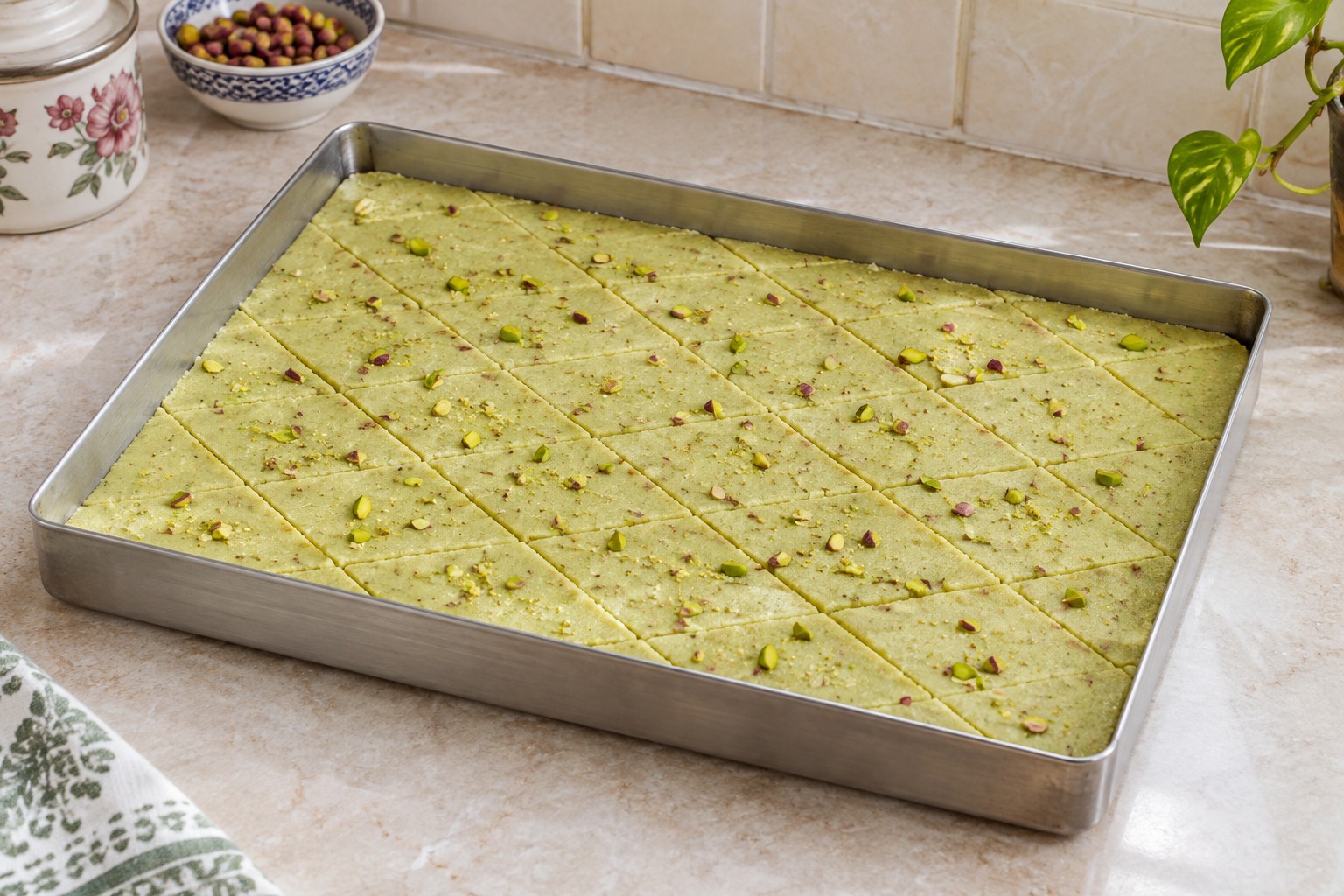
A setting tray for a slab
A barfi tray is a shallow food-safe tray used to spread a cooked sweet mixture into an even slab before cutting. It is useful for milk barfi, besan barfi and other suitable mithai made for a Pakistani family tea or Eid gift box. The name describes a job rather than one mandatory metal or size. A square cake tin may perform it when its material and recipe preparation are suitable.
The tray does not cook an underprepared mixture into the right texture. Set the sweet’s cooking and cooling method first, then choose a tray that gives the intended thickness.
Depth, corners and material
Stainless steel trays are rigid and can be easy to wash; coated tins need protection from cutting tools. Flexible moulds need support, while glass dishes add weight and have temperature-change restrictions. Straight corners give tidy portions but need careful cleaning. A loose-base form helps removal only when the mixture and assembly suit it.
As an editorial example, a mixture spread over a larger base produces a thinner slab than the same quantity in a small tray. Nestlé’s milk-and-chocolate barfi recipe uses a lined tray and a specified layer thickness, illustrating why tray area belongs in the recipe plan.
Prepare before the mixture is ready
Have the tray washed, dried and greased or lined according to the recipe before cooking finishes. Place it on a stable heat-resistant surface if receiving a warm mixture. Transfer carefully with a suitable spatula, distribute into corners and level without putting bare fingers into hot sweet. Press garnishes as the recipe directs.
Cool and store using that recipe’s conditions. Do not treat a large tray of milk-based mithai as indefinitely safe at room temperature. FoodSafety.gov’s guidance on prompt refrigeration and shallow containers provides general food-handling principles. For cutting, lift out using an appropriate liner when possible, then use a board rather than scoring a coated tray.
Buying checks for small batches
Measure cupboard and refrigerator space, not only the counter. A wide catering tray may be difficult to chill or wash at home. Ask for food-contact suitability, material and actual internal base dimensions. A shallow rim should be smooth enough to grip, with no sharp folded corners.
Specialist sweet-making suppliers and ordinary household shops may offer similar-looking trays. Avoid unknown decorative plating or a surface that sheds. If you plan to use the tray for baking as well, obtain explicit oven permission; suitability for setting a cool sweet does not establish suitability for an oven.
Clean corners and prevent scratches
Remove crumbs and syrup after portioning. Loosen sticky residue with a warm wash suited to the material, then use a soft sponge or brush. Clean corner seams and the underside. Follow dishwasher guidance and dry before stacking. Do not leave salty or acidic residues from unrelated cooking sitting on a steel tray.
Use a separator to protect coated surfaces from other metal trays. Replace peeling coatings, deep corrosion, a split seam or a warped base that cannot sit steadily. A stained but smooth tray needs assessment according to its material; a rough surface releasing fragments should not remain in the mithai routine.
Benefits and simple substitutes
A dedicated shallow tray makes thickness and portioning easier, but may duplicate a pan already in the cupboard. A suitable lined square baking tin or food-safe dish can work for a recipe matched to its area. A dinner plate produces a different thickness and curved edges, so it is less convenient for regular diamonds. Paper gift boxes belong after the sweet has set; they are not hot-mixture trays.
Frequently Asked Questions
Must a barfi tray be stainless steel?
No. Use a suitable food-safe tray or dish matched to the recipe and temperature.
Can I cut inside a nonstick tray?
Lift the slab to a board where possible so the knife does not damage the coating.
Why did my barfi become too thin?
The tray base may be too large for the batch. Match the recipe’s area and layer depth.
How we know this
- Type Explainer
- Sources 4 (1 official/academic)
- Reviewed November 2026
- Disputed points None
4 sources
- Chocolate and milk barfi, Nestlé Desserts Arabia
- Four steps to food safety, FoodSafety.gov
- Good use and care of bakeware, Wilton
- Stainless steel flatware use and care, Tramontina
Photo credits (1)
- One shallow rectangular stainless steel barfi setting tray with straight low sides holding an evenly pressed pale pistachio barfi slab partly marked into diamond portions., DailyLife.pk, All rights reserved
