
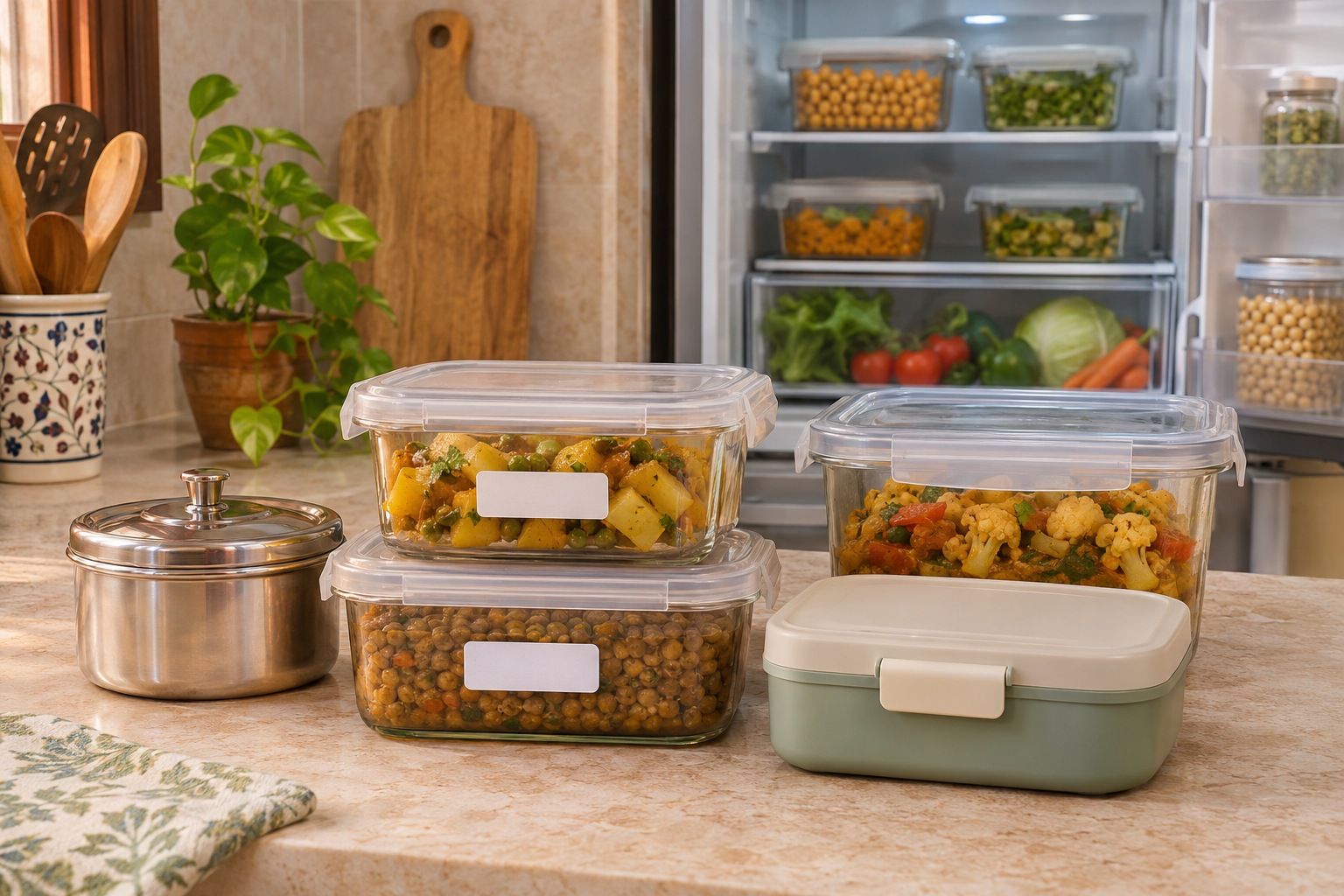
Kitchen equipment guide
Food Storage ContainersMasala Dabba and Kitchen Organizers
Plan practical storage for atta, rice, spices, leftovers and packed lunches, with checks for lids, freezer use, cleaning access, racks and container sizes.
DailyLife.pk kitchen equipment collection
Map the food before buying containers
Storage becomes useful when the container matches the food and the shelf. List what you buy dry, what you refrigerate after cooking and what leaves the house in a lunchbox. Atta, rice, daal and spices need a different arrangement from leftover curry or a school snack. A large matching container set can leave you short of useful middle sizes while filling the cupboard with unused mini tubs.
Measure the cupboard depth, shelf height and refrigerator shelf clearance. Include the extra space needed to lift a lid or pull a box forward. The sizes in this guide are editorial starting examples: compare them with your actual shopping quantities and portions. An advertised litre capacity does not tell you how much rice or flour fits by weight.
Choose the container and lid as a pair
| Use | Useful design | Check |
|---|---|---|
| Atta and rice | Wide opening with a manageable refill size. | Can your scoop enter and can you lift it when filled? |
| Leftover daal | Shallow food-use container with a reliable cover. | Cleaning access around the seal and clips. |
| Freezer portions | Clearly freezer-suitable box or bag. | Label area, closure and maker’s expansion guidance. |
| Lunch curry | Secure container tested with water before packing. | Whether compartments are individually sealed. |
| Dry spices | Small jar with an easily cleaned lid. | Opening size and legible identification. |
Glass makes contents easy to see, steel can suit a sturdy lunchbox, and lightweight plastic can simplify carrying. None of those material names establishes every permitted use. Check separate instructions for the body, lid and gasket. Pyrex’s product-specific use instructions illustrate why glassware needs its own heat and handling rules. Do not assume a freezer-suitable tub can also go into an oven.
For an initial leftovers set, try two containers around 500 ml and two around one litre, then adjust after a week of use. These are suggested shopping examples, not food-safety requirements. Prefer a small number of lid sizes you can identify quickly. Before buying, see whether replacement lids and seals are sold for that model.
Make the masala dabba easy to maintain
A masala dabba gathers frequently used spices in small inner cups. Choose the layout according to your own cooking: whole cumin, turmeric and chilli powder may deserve different positions from spices used only for occasional recipes. The outer lid, inner lid and individual cup covers perform different jobs; inspect what the actual set includes rather than assuming every cup is sealed.
Lift an inner cup while the neighbouring cups are in place. Check that the rims are smooth and that a spoon can reach the bottom without knocking powder into another compartment. A spare clean spoon helps avoid returning a damp utensil to a dry spice. For larger reserves, use labelled jars and replenish a modest working quantity instead of crowding every spice into one box.
Write the spice name and refill date in a script everyone cooking in the household understands. Keep manufacturer storage guidance where relevant, and do not infer freshness from a tidy appearance. If reusing a food jar, remove old residue and ensure the lid still closes properly. Never repurpose a chemical container for food.
Plan chilled and frozen portions
FoodSafety.gov recommends shallow containers for cooling leftovers and keeping refrigerators at 4°C or below. A deep stockpot is therefore not the best default storage vessel for a large batch. Divide a curry or rice dish into manageable portions and refrigerate promptly according to food-safety guidance. Do not wait for the next meal simply because the original pan has a lid.
Use only bags sold for the freezer when freezing food. Lay a suitable filled bag on a tray while it freezes if its instructions and food allow, then arrange the portions so labels remain visible. Follow the container maker’s guidance on expansion space; there is no single gap suitable for every food and vessel. Keep a small written freezer inventory with the contents and date.
The FDA’s food-waste guidance recommends covered refrigerated storage and checking stored food regularly. Put recently packed portions behind older suitable ones. Containers help organisation but do not extend safe storage indefinitely. Consult a reliable food-specific storage guide when deciding how long to keep a prepared dish.
Lunchboxes need a transport plan
Pack the actual meal before deciding that a lunchbox is large enough. A roti compartment, curry cup and fruit box occupy different shapes. Dividers may stop solids moving without keeping liquid in its own section. Test a new box with cool water over the sink and inspect its latch, then carry it upright in a washable bag.
If food needs to stay cold, plan an insulated bag and suitable cold source around the journey and available refrigeration. An ordinary steel dabba is a container, not evidence of temperature control. Ask the recipient whether they have a microwave, fridge or washing facility, and choose the container’s permitted use accordingly. Leave clear instructions when the lid must be removed for heating.
Organizers should improve access
Use a rack only after checking the weight it will hold and the shelf or wall supporting it. A spice riser should let you read the back row without hiding jars under a cupboard. A rotating organizer needs clearance to turn. Pull-out baskets must clear door hinges; under-sink baskets should leave plumbing accessible and keep cleaning products separate from food.
Store lids upright in a divider that can be wiped clean, with boxes nested only when completely dry. Avoid buying a new organizer to hide broken containers. At a regular cupboard review, remove mismatched lids, damaged seals and packaging no longer suitable for repeated use, then buy only the missing piece that improves the routine.
Keep building your kitchen
Return to the Pakistani kitchen equipment directory for related tools, cookware, appliances and practical buying guides. Then choose a dish from the recipe collection and check its equipment list before buying another gadget.
Frequently Asked Questions
Does a clip lid guarantee a leakproof lunchbox?
No. Check the manufacturer’s claim, inspect the seal and test with water. Internal dividers may not be sealed even when the outer lid is secure.
Can I put hot leftovers into one large storage box?
Use shallow portions and follow prompt-refrigeration guidance. Choose a container suitable for its contents and temperature rather than using a deep box solely because it holds everything.
How we know this
- Type Explainer
- Sources 3 (2 official/academic)
- Reviewed November 2026
- Disputed points None
3 sources
- Product Warranties Safety and Usage, Pyrex
- 4 Steps to Food Safety, FoodSafety.gov
- How to Cut Food Waste and Maintain Food Safety, US Food and Drug Administration
Photo credits (1)
- Lidded glass and steel food containers and a closed lunchbox beside an organised refrigerator., DailyLife.pk, All rights reserved
