
Kitchen equipment guide
Cookware Materials Explained for Everyday Pakistani Cooking
Compare stainless steel, aluminium, iron, nonstick, copper, brass and clay by cooking task, maintenance and the documentation to check before buying.
DailyLife.pk kitchen equipment collection
Read the surface and the structure separately
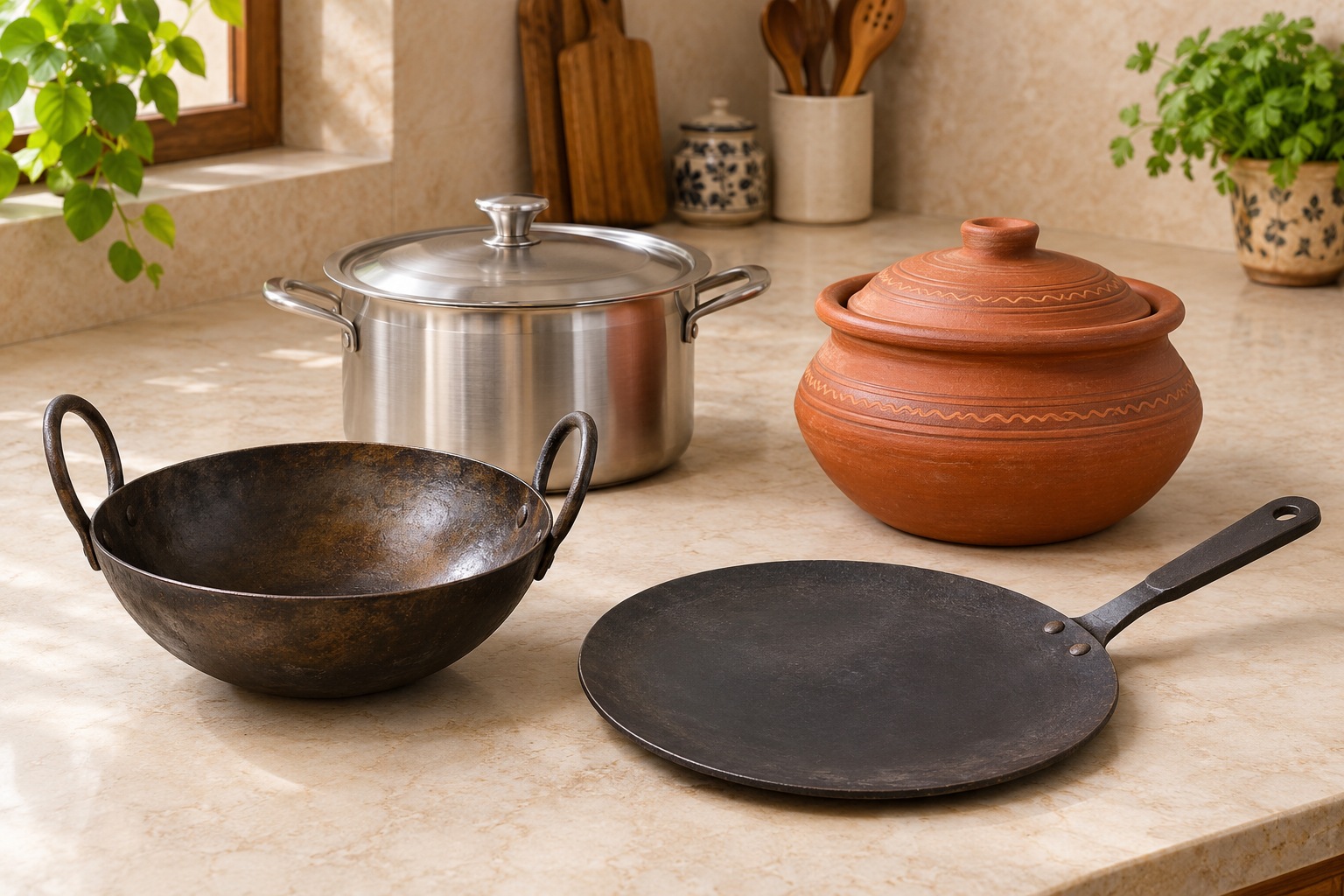
The material touching your food and the metal moving heat through the pan can be different. A stainless pot may contain an aluminium core; a dark frying pan may be coated aluminium or seasoned iron. Begin a cookware comparison by identifying the cooking surface, body construction, base and handle materials separately. This is more useful than ranking every pot by one word printed on its box.
Build around dishes rather than a matching set. A stainless saucepan for tomato gravy, a seasoned tawa for roti and a small coated pan for delicate eggs can be a practical combination. Buy the item that solves a repeated problem first. An extra lid or a better sized pot may improve cooking more than replacing everything with a supposedly premium material.
Compare the materials by job
| Material or finish | Practical place in a kitchen | What to check |
|---|---|---|
| Stainless steel | Sauces, boiling and general cooking | Layer construction, base fit and accessible cleaning |
| Bare aluminium | Lightweight larger pots | Food contact evidence and limits for acidic ingredients |
| Hard anodised aluminium | A distinct treated aluminium surface | Whether any additional coating is present |
| Seasoned cast iron | A substantial griddle or frying surface | Lifting weight and seasoning care |
| Carbon steel or iron | A maintainable tawa or frying pan | Finish, flatness and handle attachment |
| PTFE nonstick | Delicate foods with convenient release | Heat limits and tool compatibility |
| Ceramic nonstick coating | A coated metal pan with a different surface system | Exact coating instructions rather than clay pot advice |
| Copper or brass | Specialist or heritage cookware | Documented food contact suitability and sound lining |
| Clay or glazed ceramic | Recipes suited to a specified cooking vessel | Permitted heat sources and food contact evidence |
This is an editorial task comparison, not a laboratory ranking. Two pans described with the same material can differ in thickness, construction and handling. Test the empty lifting grip and inspect the interior corners before paying.
Stainless and aluminium: inspect the layers
Hawkins’ tri-ply manual identifies a stainless cooking layer, aluminium core and magnetic stainless base in its specified range. Read the construction diagram. That is an example of how a manufacturer can explain construction clearly. Ask another seller for equivalent information rather than accepting the word tri-ply without a description of the actual product.
A disc base and fully layered body are different designs. Inspect how the base joins the wall and consider the task: milk or thick gravy needs access for stirring across the base, while a tall stockpot emphasises volume and handling. Check that the lid and handles are included in any oven suitability statement. A metal body alone does not establish that a plastic knob can enter the oven.
Health Canada advises against cooking acidic or salty foods in aluminium cookware and against using damaged anodised surfaces for food. See its material guidance. For an everyday tomato reduction, that is a reason to consider a documented stainless option. Avoid blanket health claims about all aluminium or all stainless products; evaluate intended use and condition.
Iron and coatings need different routines
Seasoning is a maintained cooking surface, not a promise that iron behaves like a coated egg pan. Lodge recommends gradual preheating and a wash, dry, oil care sequence for its carbon steel cookware. Read its specific instructions. Decide whether this routine suits everyone who uses and washes your pans. A pan that is regularly left wet in the sink is a poor match for a household that wants minimal maintenance.
A nonstick coating removes the need to maintain iron seasoning but introduces its own limits. BfR identifies strong empty overheating as a concern for PTFE cookware. Read its PTFE assessment. Follow the pan’s operating instructions and choose another vessel when the recipe requires heat or techniques the maker does not permit.
Do not confuse a ceramic coated metal frying pan with an earthenware handi. They are different products, and a soaking or seasoning routine from one may be inappropriate for the other. Ask about permitted utensils, cleaning products and warranty exclusions. Replace a badly damaged coating according to the maker’s advice; do not try to repair its food contact surface with household paint.
Copper, brass and clay: documentation first
For copper cookware, Health Canada advises against cooking in scratched or uncoated copper and recommends restoring damaged inner coating. See the copper precautions. Treat the lining as a working part, not cosmetic decoration. Ask who can inspect and renew it, and whether that service is realistically available before choosing the pot for regular cooking.
Brass should receive its own assessment rather than inheriting copper advice by association. Ask the seller to identify the alloy, intended food use and any lining. An old inherited piece of unknown composition can remain decorative until a qualified supplier establishes its suitability. Polishing the exterior cannot answer questions about the cooking surface.
For clay, require instructions that name the permitted appliance and first use procedure. Emile Henry identifies its Delight range as induction compatible; this illustrates how specific such claims should be. See that identified collection. Do not add an induction adapter by guesswork. In Pakistan, factor replacement handles, lining service, seller accountability and readable instructions into the price comparison. The best material is one you can use within its limits and maintain consistently.
Keep building your kitchen
Return to the Pakistani kitchen equipment directory for related tools, cookware, appliances and practical buying guides. Then choose a dish from the recipe collection and check its equipment list before buying another gadget.
Frequently Asked Questions
Is stainless steel automatically induction compatible?
No. Verify the exact product specification and the hob’s base requirements.
Should I buy one complete matching set?
Only if every piece has a job. Individual pots often give a better fit for bread, gravy, boiling and delicate frying.
How we know this
- Type Explainer
- Sources 5
- Reviewed November 2026
- Disputed points None
5 sources
- Tri-ply manual, Hawkins
- Safe use of cookware, Health Canada
- Carbon steel care, Lodge
- PTFE assessment, BfR
- Delight collection, Emile Henry
Photo credits (1)
- Iron karahi and tawa displayed with a lidded stainless steel pot and terracotta handi., DailyLife.pk, All rights reserved
