
Kitchen equipment guide
Kitchen Cleaning Tools and Cookware Maintenance That Fit the Job
Choose dish brushes, drying racks and cleaning tools, and learn a practical routine for washing, sanitising and caring for common cookware surfaces.
DailyLife.pk kitchen equipment collection
Build a cleaning routine around the kitchen
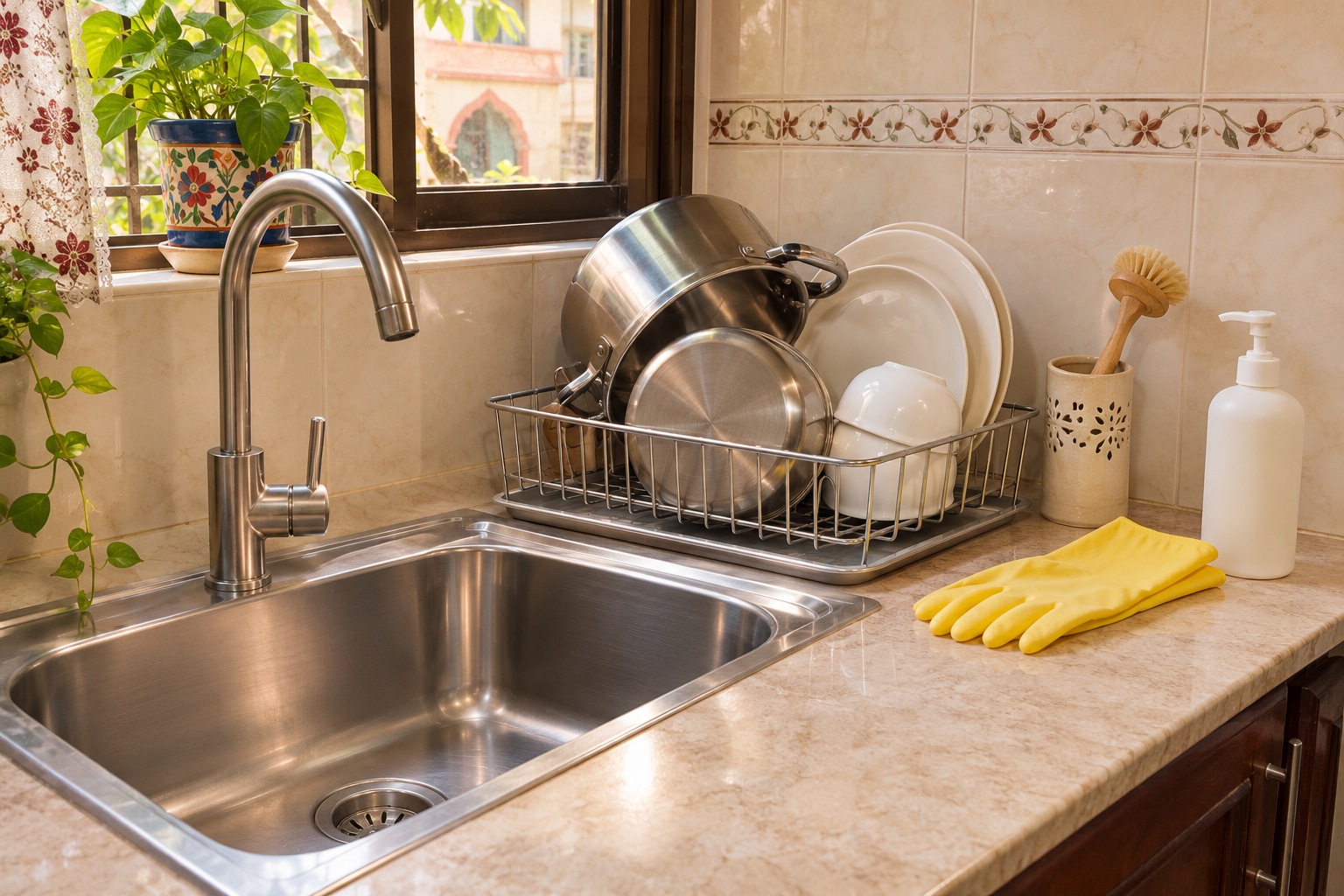
A tidy sink is easier to maintain when the equipment has a clear job. Start with dishwashing liquid, a comfortable dish brush, a suitable non-scratch pad, clean cloths and a drying arrangement that fits the counter. Add a bottle brush and narrow detail brush where your actual containers require them. Buying stronger chemicals cannot compensate for a brush that never reaches the bottom of a bottle.
The recommendations here are editorial household choices. Cleaning-product dilution, contact time and rinsing instructions belong to the actual label. Local products can have different concentrations and intended uses, so an internet recipe for another product should not become your universal kitchen formula.
Choose tools by access and surface
| Tool | Useful job | Selection check |
|---|---|---|
| Dish brush | Plates, steel pans and everyday washing. | Comfortable grip and bristles that reach corners. |
| Bottle brush | Flasks, bottles and narrow jars. | Head passes through the opening and reaches the base. |
| Small detail brush | Lid grooves and removable seals. | Can be cleaned and kept separate from other household brushes. |
| Non-scratch pad | Surfaces whose maker permits it. | Compatibility with the actual coating. |
| Drying rack | Air-drying washed dishes. | Stable feet, cleanable tray and drainage route. |
| Dishcloths | Wiping designated surfaces. | Enough clean replacements to change a dirty cloth. |
A steel scrubber may be useful on a surface whose instructions allow it, but it is a poor default for every pan. Separate a sink-cleaning brush from the brush used on food utensils. Colour coding can help a shared household, provided everyone knows the code. Store brushes so their working ends can dry rather than leaving them submerged in dirty water.
Wash, rinse and dry with a sensible sequence
Scrape food scraps into the appropriate waste container before washing. Dismantle removable lids and seals as instructed. Wash less greasy items before very greasy pans when sharing a wash basin, and replace water when it is no longer useful. Rinse away the washing product according to its directions. Use a rack that holds plates securely and does not send drainage back into a dirty area.
Air-drying needs space around items. Nesting bowls while wet leaves surfaces hidden and makes it harder to see whether they are dry. Put mugs and utensils where water can drain without collecting in the base. Clean the rack tray and utensil holder themselves; a shiny rack with a dirty tray is an incomplete system.
Keep a cloth for clean dishes separate from one used to wipe floor splashes or raw-food spills. If a cloth is dirty, change it; folding it to a cleaner-looking side does not make it a fresh cloth. Plan a laundering routine that follows the textile and detergent instructions, then dry cloths fully before returning them to the drawer.
Understand cleaning, sanitising and disinfecting
The CDC distinguishes cleaning from sanitising and disinfecting: cleaning removes dirt and many germs, while the other processes use appropriate treatments after cleaning. For a household kitchen, identify the situation and choose a product specifically suitable for the surface and intended task. Food-contact surfaces need particular attention to label directions about rinsing before food touches them again.
Do not combine a toilet cleaner, descaler, vinegar or another cleaner with bleach. CDC bleach guidance explicitly says never to mix bleach or disinfectants with other cleaners. Keep products in labelled original packaging, use the ventilation and protection the label specifies, and store them away from food. Avoid a generic homemade concentration when the available product strength is unknown.
After a raw-food spill, remove the mess and clean the affected area before applying any appropriate sanitising treatment. Use the label’s full contact time rather than spraying and immediately wiping. A cloth used to spread a treatment also needs appropriate handling; returning it to the general wiping pile can undermine the routine.
Match maintenance to the cookware
Let cookware cool as its maker directs before washing. For seasoned cast iron, Lodge’s care instructions describe washing, thorough drying and a light oil coating. That is guidance for seasoned iron, not for every black pan. A black nonstick coating and enamel need their own care instructions. Avoid scraping an unfamiliar surface with a metal implement simply because the food has stuck.
For stainless steel, start with the gentlest maker-approved method that removes the residue. Soaking or loosening deposits may be more useful than aggressive scraping, but check instructions for handles and bonded parts. Aluminium, copper and decorative finishes deserve their own guidance; a cleaner sold for one metal may not suit another. Never promise that one paste restores every pan.
Inspect rivets, handle screws and lid knobs as you clean. A loose handle needs attention before the pan carries hot food. Replace a damaged lid knob with the correct heat-suitable part, and leave cracked vessels or badly damaged coatings out of cooking service pending proper assessment. Repair decisions should concern structure and use, not simply whether the pan can be made shiny.
Maintain the tools as well as the kitchen
At a regular check, empty the sink strainer, wash the brush holder, clean the rack tray and examine cloths and pads. Replace brushes with damaged heads or inaccessible trapped residue. A refillable detergent brush should open sufficiently for its reservoir to be cleaned as instructed; convenience should not hide a permanently dirty cavity.
Keep a small maintenance list instead of buying duplicates whenever something looks tired. A replacement brush head, removable drain tray or correct pan knob can be the useful purchase. Choose products you can dismantle, dry and put back into service comfortably, so the cleaning routine remains workable after the first week.
Keep building your kitchen
Return to the Pakistani kitchen equipment directory for related tools, cookware, appliances and practical buying guides. Then choose a dish from the recipe collection and check its equipment list before buying another gadget.
Frequently Asked Questions
Do I need to disinfect every surface after every meal?
Choose the treatment appropriate to the task and follow authoritative guidance and the product label. Ordinary cleaning and targeted food-contact sanitising are different from routinely applying a disinfectant everywhere.
Can I use the same scrubber for every pan?
No. Match the pad or brush to the cookware maker’s instructions. An abrasive suitable for one steel surface may damage another finish.
How we know this
- Type Explainer
- Sources 3 (2 official/academic)
- Reviewed November 2026
- Disputed points None
3 sources
- When and How to Clean and Disinfect Your Home, US Centers for Disease Control and Prevention
- Cleaning and Disinfecting with Bleach, US Centers for Disease Control and Prevention
- How to Clean, Lodge Cast Iron
Photo credits (1)
- Clean kitchen sink, drying rack, dish brush, unlabelled soap bottle and washing gloves., DailyLife.pk, All rights reserved
