
Ingredients & Spices · The complete guide
Hard cheese
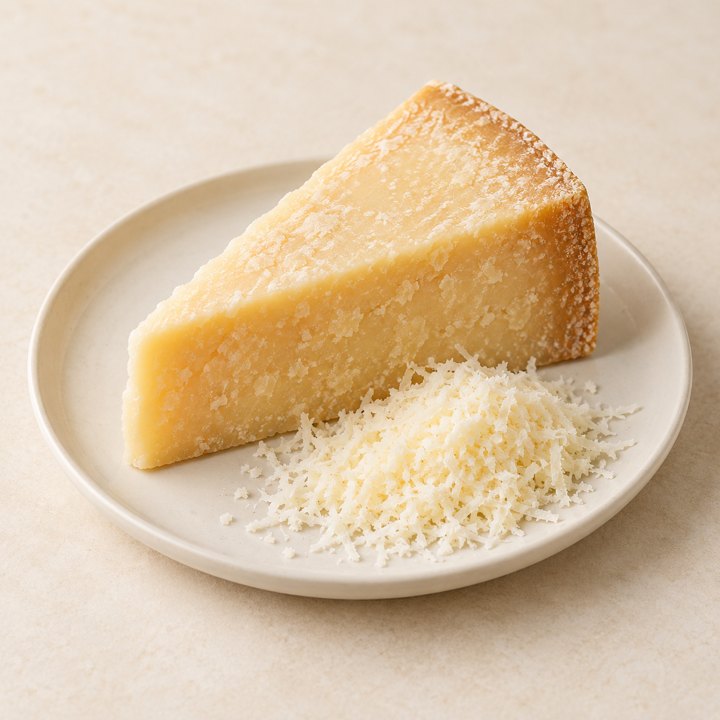
Hard cheese is a category of well-drained, often matured cheese used for grating, rather than a single product. Parmesan-style, Grana-style and other hard cheeses differ in origin, enzymes and salt.
What it is and what to ask for
Hard cheese is a category of well-drained, often matured cheese used for grating, rather than a single product. Parmesan-style, Grana-style and other hard cheeses differ in origin, enzymes and salt.
Buy a clearly identified cheese rather than assuming every pale grated powder is equivalent. Check for anti-caking ingredients, salt and the source of coagulating enzymes.
History, production and the Pakistan context
Drying and ageing curd helped preserve milk in many dairying societies. Named hard cheeses have specific regional histories; the broad category should not be assigned one birthplace or inventor.
Italy produces well-known hard grating cheeses, while many other dairy countries produce alternatives. Imported products in Pakistan should be checked for identity, rennet and certification where relevant.
How to use it successfully
Grate finely over hot pasta or into a filling so a small amount spreads evenly. Add gradually off fierce heat to reduce clumping, and do not expect a hard grating cheese to stretch like mozzarella.
A wedge is often easier to identify and assess than an anonymous grated mix. Grate finely with a clean dry tool and replace the wrapping promptly. Hard cheese may contain crystals from ageing, but a consumer should not treat every unexpected spot or surface change as a harmless crystal without considering the product and storage instructions.
Nutrition, benefits and limits
Hard cheese concentrates protein, calcium and salt. Long maturation often lowers lactose but does not remove milk proteins or make the cheese safe for milk allergy.
Choosing a replacement
A different halal-suitable hard grating cheese can replace it with a flavour adjustment. Mature cheddar gives a softer, oilier melt; nutritional yeast offers savouriness without the same dairy function.
When changing a dairy product, compare moisture, fat, acidity, sweetness and whether it must melt, whip or hold its shape. Preserve the recipe’s functional balance rather than only the spoonful count. A substitute should also meet the household’s actual dietary requirement; similar texture does not establish identical allergen suitability.
Safe handling and storage
Keep the cheese wrapped and refrigerated as directed, limiting exposure to air and strong refrigerator odours. Grate with clean equipment and return the unused block promptly. An opened block, a grated bag and individually wrapped slices can have different keeping guidance, so use the instructions for the actual product rather than a universal cheese rule.
Cold cheese generally grates more neatly, while thinly cut or grated pieces melt faster than a large lump. Match the cheese to the intended function: flavour, stretch, thickening or a cohesive slice. Overheating can cause natural cheese to release oil or clump, while processed slices may melt differently because they include emulsifying salts.
Check the milk source, enzymes, added starches or fats and halal suitability as relevant. A reduced lactose level does not remove milk allergens. Cheese is concentrated food, so salt and saturated fat can accumulate through repeated small additions to bread, fillings and sauces. Freezing may make a block crumbly; if allowed by the producer, a frozen portion is often better suited to grating into cooked food than to neat table slices.
Planning, portions and serving
For pasta, reserve the right amount of cooking liquid if the recipe uses it to disperse grated cheese. Add cheese gradually with controlled heat rather than dropping a large handful into a fiercely boiling pan. In a bread filling, a small fine grate distributes savouriness efficiently. A rind may have a different treatment from the interior, so follow product information before adding it to stock or serving it as edible cheese.
Recipes and pantry links
Use hard cheese according to the form specified in the linked recipe: raw versus cooked, bone-in versus boneless, sweetened versus plain, and the stated cut or processing style all affect the result. The ingredient discussion above explains which differences matter most here. Read the complete recipe before shopping, then measure the prepared usable quantity rather than assuming every package has the same yield.
For related ingredient names, local terminology and flavour pairings, browse the Pakistani ingredients and spices pantry guide.
Names and forms used in our recipes
View the recipe names covered by this guide
- hard italian-style cheese
- hard vegetarian italian-style cheese
- parmigiano-style hard cheese
Frequently Asked Questions
Can I assume a hard grating cheese uses vegetarian rennet?
No. Enzymes and rennet sources vary by cheese and producer. Check the ingredients, producer information or relevant certification if vegetarian or halal suitability is important.
What should I check before buying hard cheese for these recipes?
Buy a clearly identified cheese rather than assuming every pale grated powder is equivalent. Check for anti-caking ingredients, salt and the source of coagulating enzymes. Match the stated plain or flavoured form and read the storage directions before opening the pack.
What is a practical substitute for hard cheese?
A different halal-suitable hard grating cheese can replace it with a flavour adjustment. Mature cheddar gives a softer, oilier melt; nutritional yeast offers savouriness without the same dairy function. Make a small test where binding, melting or a delicate final texture is central, and adjust the recipe rather than treating different ingredients as identical.
Keep Exploring
Related places and stories on DailyLife.pk

How we know this
- Type Explainer
- Sources 8 (3 official/academic)
- Reviewed November 2026
- Disputed points None
8 sources
- FAO: dairy product types and characteristics
- FAO: milk processing
- FAO: traditional milk products in developing countries
- FAO: milk and dairy products in human nutrition
- OECD–FAO: dairy production and trade context
- FDA: raw milk questions and answers
- NIDDK: lactose intolerance definition and facts
- FDA: food allergies
Photo credits (1)
- Milk glass.jpg, Stefan Kühn, CC BY-SA 3.0, via Wikimedia Commons
