
Ingredients & Spices · The complete guide
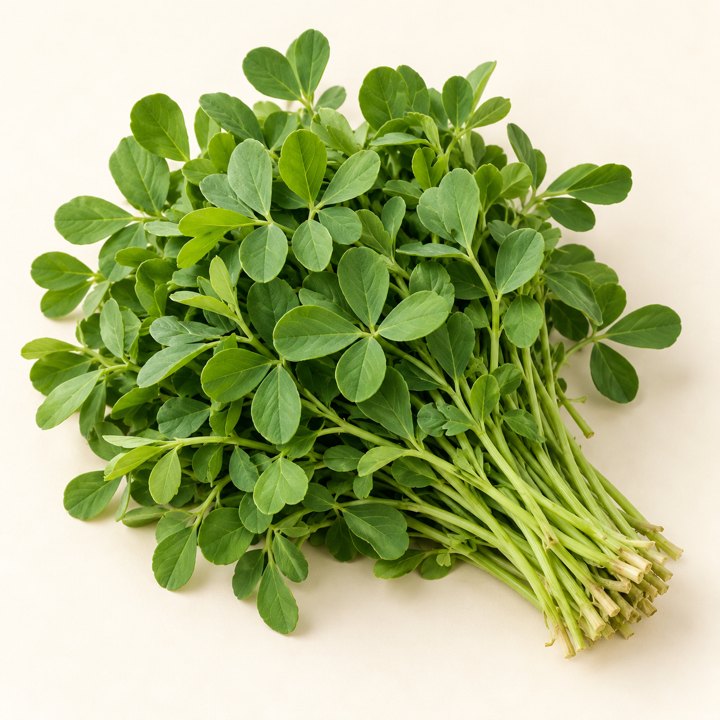
Fresh fenugreek (Methi)
Fresh fenugreek, methi, is the leafy green of Trigonella foenum-graecum. It has a savoury bitter edge and is eaten as a vegetable as well as an herb.
What it is and names to know
Fresh fenugreek, methi, is the leafy green of Trigonella foenum-graecum. It has a savoury bitter edge and is eaten as a vegetable as well as an herb. Methi dana is the seed, while kasuri methi is the dried leaf.
Origins, producing regions and Pakistan context
Fenugreek belongs to longstanding West Asian, Mediterranean and South Asian cultivation. Pakistani aloo methi and other regional dishes show living culinary traditions rather than evidence for one documented inventor.
Fresh methi is grown seasonally in Pakistan and India, among other countries. Leaf quality changes rapidly after harvest, so choose a clean fresh bunch rather than seeking a supposedly superior export origin.
Background: Spices Board: crop and ingredient reference.

Types and buying advice
Allow for the trimmed weight of a bunch: roots and tough stems are not the same as prepared methi leaves. Choose sound leaves without slime.
How to cook with it
Pick the leaves and tender tips for aloo methi, saag, paratha filling or dal. Wash thoroughly to remove soil and drain well; excess water can make a vegetable dish stew rather than sauté.
Cook enough to soften the leaves, then judge bitterness against the rest of the dish. Do not discard all their character by automatically washing repeatedly in salt water.
Methi is often sold with substantial stem and soil attached, so the purchased bunch weight is not the same as the prepared leaf weight. Pick and wash before comparing quantities. In aloo methi, drain thoroughly and use a wide pan if a relatively dry result is wanted. Fresh leaves supply vegetable bulk that kasuri methi cannot replace. When adapting with spinach and dried methi, judge the final leafy volume separately from the concentration of fenugreek aroma.
Try the ingredient in Aloo Methi, Methi Sabzi. Follow each recipes specified form and quantity, since whole pieces and fine powder season food differently.
For related pantry ingredients, see the Pakistani ingredients and spices guide.
For a paratha filling, cook the prepared leaves enough to remove excess moisture and cool them before enclosing in dough. A wet hot filling makes rolling difficult and can tear the bread. For aloo methi, add potatoes in pieces small enough to cook evenly alongside the leaves. These are different texture goals: a bread filling needs controlled moisture, while a vegetable dish can retain a looser leafy character.
Nutrition and realistic benefits
Fresh leaves add aroma, variety and some micronutrients to food. The nutritional contribution depends on whether you eat a few garnish leaves or a substantial chopped-herb portion. They cannot replace the volume and diversity of vegetables in a meal. Their most useful everyday role is making ordinary dishes enjoyable with a fresh aromatic finish. Claims based on isolated oils, extracts or laboratory tests should not be transferred to a spoonful of chopped leaves or an everyday homemade tea.
Disadvantages and precautions
Fresh methi contributes more dietary bulk than a pinch of seed, but a rich methi dish still depends on its overall oil and salt. Supplements are a separate question.
Clean handling matters even for a small garnish. FDA food-safety guidance explains practical handling. Buying from a traceable food supplier is more dependable than trying to judge safety from appearance alone.
Substitutions and storage
Spinach with a little kasuri methi can mimic leafy bulk plus aroma. Seed powder alone is unsuitable: it lacks the texture and is much more bitter per spoonful.
Choose sound leaves with a clear characteristic aroma, and discard rotten or slimy material. Rinse under fresh running water before use and dry gently; household soap and detergent are unsuitable for washing food. Keep most fresh herbs chilled with their moisture controlled so leaves do not sit wet. Tender basil is particularly sensitive to cold and bruising. Freezing can preserve a surplus for cooked dishes, though thawed leaves usually lose the texture needed for an attractive raw garnish.
Names and forms used in our recipes
View the recipe names covered by this guide
- fresh fenugreek leaves, picked and washed, drained edible weight
- fresh fenugreek leaves, tough stems removed, washed and drained
Frequently Asked Questions
Does bunch weight equal prepared methi weight?
Methi is often sold with substantial stem and soil attached, so the purchased bunch weight is not the same as the prepared leaf weight. Pick and wash before comparing quantities.
What can I use instead of fresh fenugreek?
Spinach with a little kasuri methi can mimic leafy bulk plus aroma. Seed powder alone is unsuitable: it lacks the texture and is much more bitter per spoonful.
What is the main caution with fresh fenugreek?
Fresh methi contributes more dietary bulk than a pinch of seed, but a rich methi dish still depends on its overall oil and salt. Supplements are a separate question.
Keep Exploring
Related places and stories on DailyLife.pk

How we know this
- Type Explainer
- Sources 4 (2 official/academic)
- Reviewed November 2026
- Disputed points None
4 sources
Photo credits (1)
- I-11 Sabze Mande, Islamabad.jpg, Pakieditor, CC BY-SA 4.0, via Wikimedia Commons
