
Ingredients & Spices · The complete guide
Fermented rice batter
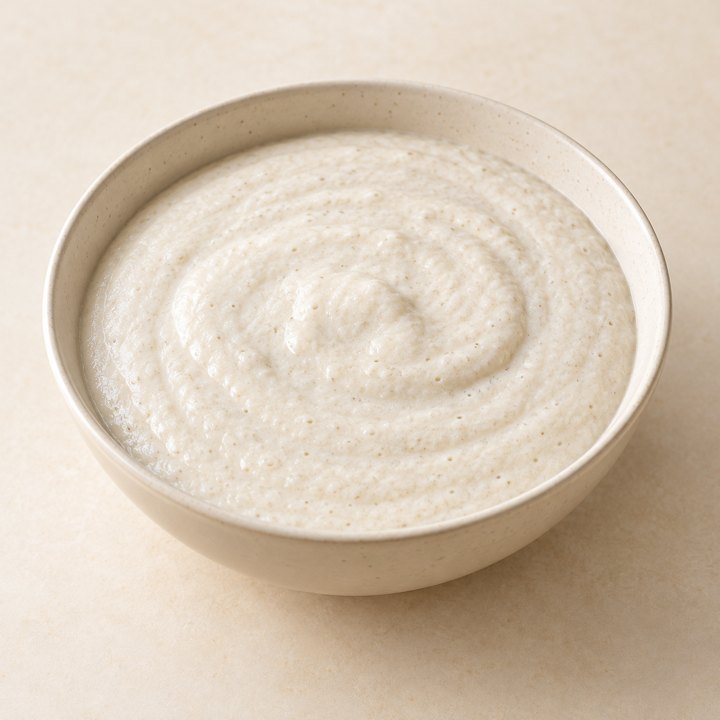
Fermented rice batter covers related but distinct mixtures for dosa, idli and appam. Their proportions and intended thickness are not interchangeable without adjustment.
What it is and names used in Pakistan
Fermented rice batter covers related but distinct mixtures for dosa, idli and appam. Their proportions and intended thickness are not interchangeable without adjustment.
Origin and historical context
These foods have longstanding South Indian and Sri Lankan culinary histories. FAO describes cereal-legume fermentation in idli and dosa without establishing a universal discovery story.
Types, manufacture and buying
Rice and, for many dosa and idli batters, urad dal are soaked, ground and fermented. Appam formulations may use coconut and yeast. Commercial refrigerated packs standardise the process.
Select batter specifically formulated for the dish you plan to cook. Dosa, idli and appam can require different ratios, thicknesses and fermentation characteristics. A refrigerated pack should be cold when purchased, with a clear date and storage instruction. Ingredients may include rice, urad dal, coconut, yeast or acidity regulators. Some producers add salt, so taste a cooked sample before seasoning a whole batch. A rising container can reflect fermentation, but unexpected swelling or leakage should not automatically be accepted as normal.
Reference: FAO: Rice in human nutrition, processed rice products.
Production, trade and the Pakistani pantry
India and Sri Lanka have established batter traditions and commercial supply; Pakistani buyers may find chilled specialty packs or prepare measured batches at home.
Cooking uses and practical substitutions
For dosa, spread a suitable flowing batter thinly; for idli, retain enough body to hold gas in the mould. Select an appam-labelled mixture for its characteristic lace and centre.
Stir only as directed: preserving trapped gas can matter for fluffy steamed idli, whereas a dosa batter may need controlled thinning to spread. Use clean utensils to take out the portion required rather than repeatedly dipping food-coated spoons into the main tub. Adjust water a little at a time and cook a test piece before changing the entire batch. Cook fully, including the centre of steamed cakes. Acidity and bubbles indicate fermentation activity, but neither is a reliable test that an improperly stored raw batter is safe.
Nutrition, benefits and limitations
Rice supplies carbohydrate, while urad dal can add protein and fibre in cereal-legume batters. Fermentation can alter certain food components, but exact nutrient changes depend on the recipe and process and should not be assumed from sourness. Cooking kills many live microorganisms, so finished dosa or idli should not automatically be described as probiotic. Oil used on the griddle and accompanying chutneys or rich curries change the meal. Rice-based ingredients may suit some gluten-avoidant diets, but other ingredients and processing cross-contact still need verification.
Fermentation does not make batter indefinitely safe at room temperature. Commercial date and refrigeration instructions remain essential.
Practical notes and common mistakes
A batter that makes crisp dosa may be too loose to produce well-risen idli, so adjustment should be tied to the intended dish. Pour off or stir in separated liquid only as the recipe or maker directs. Cook a small dosa before thinning the whole tub, since griddle temperature also affects spreading and release. For idli, grease moulds lightly and avoid opening the steamer repeatedly. For appam, use a compatible batter and pan technique rather than expecting a rice-urad mixture alone to reproduce the characteristic lacy edge.
Storage and safe handling
Keep commercial refrigerated batter at the temperature stated by the maker and observe both its use-by date and any shorter opened-pack period. Do not leave the whole tub on a warm counter while repeatedly cooking small portions. Homemade fermentation requires a suitable measured recipe and clean equipment; once the intended fermentation is complete, chill promptly. Discard unusual coloured growth, mould, putrid odours or a batch whose time and temperature history is uncertain. Freezing can affect leavening and texture, so use it only when compatible with the particular formulation.
Recipes and related pantry reading
Use the form and quantity specified in each recipe, then adjust for the concentration, salt and moisture of the product you have bought. These dishes show where the ingredient fits in a complete preparation.
For related local names and pantry ingredients, see the Pakistani ingredients and spices guide.
Names and forms used in our recipes
View the recipe names covered by this guide
- commercial refrigerated appam batter
- commercial refrigerated fermented dosa batter
- commercial refrigerated fermented idli batter
Frequently Asked Questions
Can one rice batter make every dosa, idli and appam?
Not reliably. Their ratios, thicknesses and fermentation requirements differ.
Does a sour batter prove it is safe?
No. Sourness is not a substitute for appropriate ingredients, refrigeration and storage limits.
Keep Exploring
Related places and stories on DailyLife.pk

How we know this
- Type Explainer
- Sources 3 (2 official/academic)
- Reviewed November 2026
- Disputed points None
