
Ingredients & Spices · The complete guide
Crisp fried noodles
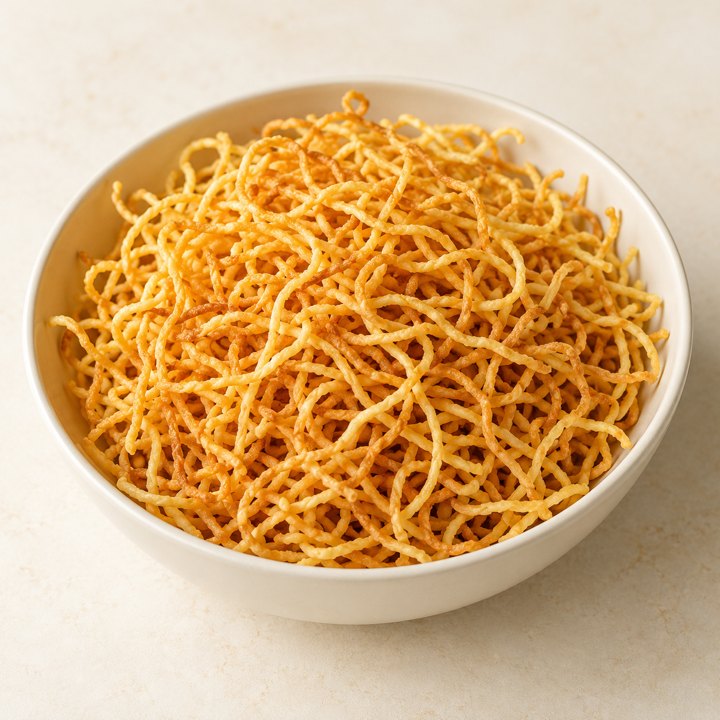
Crisp fried noodles are cooked or prepared noodle strands fried until dry and crunchy. They are a topping, unlike soft noodles intended to absorb soup.
What it is and names used in Pakistan
Crisp fried noodles are cooked or prepared noodle strands fried until dry and crunchy. They are a topping, unlike soft noodles intended to absorb soup.
Origin and historical context
They are associated with several Chinese and South Asian Chinese serving traditions; the soup garnish should not be confused with the origin of noodles generally.
Types, manufacture and buying
Suitable wheat noodles are separated, drained and fried in manageable batches. Commercial ready-to-eat packs avoid the need to fry at home; raw dried noodles are not necessarily ready-to-eat.
Identify whether the pack is dry, fresh, precooked or instant before planning the recipe. These forms can look similar after cooking but have quite different preparation requirements. Check strand thickness, ingredient list and any separate seasoning sachets. A plain noodle can be comparatively simple while its accompanying powder introduces salt, sugar, milk or seafood ingredients. Where egg content or gluten matters, use explicit ingredient and allergen information rather than relying on the product’s yellow colour or an informal shop description.
Reference: Roland Foods: Asian noodle and pasta types.
Production, trade and the Pakistani pantry
Restaurant kitchens and snack manufacturers make these toppings in Pakistan and elsewhere; check whether a packaged product requires further cooking.
Cooking uses and practical substitutions
Add to manchow soup at the table so they keep their crunch. For a lighter textural topping, try toasted crumbs or a small quantity of baked tortilla strips, accepting the different flavour.
Use a product explicitly sold as ready to eat when serving straight from the pack. For homemade toppings, drain noodles extremely well before frying; water entering hot oil causes splattering. Fry manageable batches so strands separate and oil temperature remains controlled. Drain on a suitable rack or absorbent surface, then cool fully before storing. Add to the finished soup at the table: immersion immediately softens a dry crisp topping. Baked alternatives can provide crunch but need their own suitable method rather than simply being left raw.
Nutrition, benefits and limitations
Most plain noodles are primarily a carbohydrate food, with protein and fibre determined by the flour and any added egg or pulses. They do not become a complete balanced meal simply because a packet includes vegetable flavouring. Pair them with a meaningful portion of vegetables and a protein source such as lentils, tofu, chicken, fish or eggs as appropriate. Added oil and concentrated sauces can contribute more fat and sodium than the plain strands. Compare nutrition on the same basis, since dry weights and cooked weights differ greatly after water absorption.
Frying adds fat; hot oil and residual water can cause dangerous splattering. Wheat and egg allergens depend on the noodles.
Practical notes and common mistakes
The point of a crisp noodle garnish is contrast, so store and serve it separately from the soup. A communal topping bowl should use a dry spoon; a wet spoon quickly creates softened patches in the pack. If making a topping for children or anyone who finds hard shards difficult, use shorter lighter pieces and serve a small amount. Re-crisping a merely stale dry topping may improve texture, but it is not a method for rescuing rancid oil or a product that has become damp and mouldy.
Storage and safe handling
Protect dry ready-to-eat crisp noodles from humidity in an airtight container, following the label’s date and opened-pack guidance. Cool homemade fried noodles completely before sealing, otherwise condensation destroys the crunch and shortens keeping quality. A rancid or stale-oil aroma is a reason to discard them. Do not return noodles from a soup bowl to the storage pack. If they have become wet or mixed into soup, handle them as cooked perishable leftovers, cooling promptly and refrigerating at 4°C or below rather than leaving them in a snack container.
Recipes and related pantry reading
Use the form and quantity specified in each recipe, then adjust for the concentration, salt and moisture of the product you have bought. These dishes show where the ingredient fits in a complete preparation.
For related local names and pantry ingredients, see the Pakistani ingredients and spices guide.
Names and forms used in our recipes
View the recipe names covered by this guide
- ready-to-eat crisp fried noodles
Frequently Asked Questions
When should crisp noodles be added to soup?
At serving, so the dry topping retains its texture.
Are uncooked dried noodles automatically ready to eat?
No. Use a product explicitly intended as a ready-to-eat topping or prepare it properly.
Keep Exploring
Related places and stories on DailyLife.pk

How we know this
- Type Explainer
- Sources 2 (1 official/academic)
- Reviewed November 2026
- Disputed points None
