
Ingredients & Spices · The complete guide
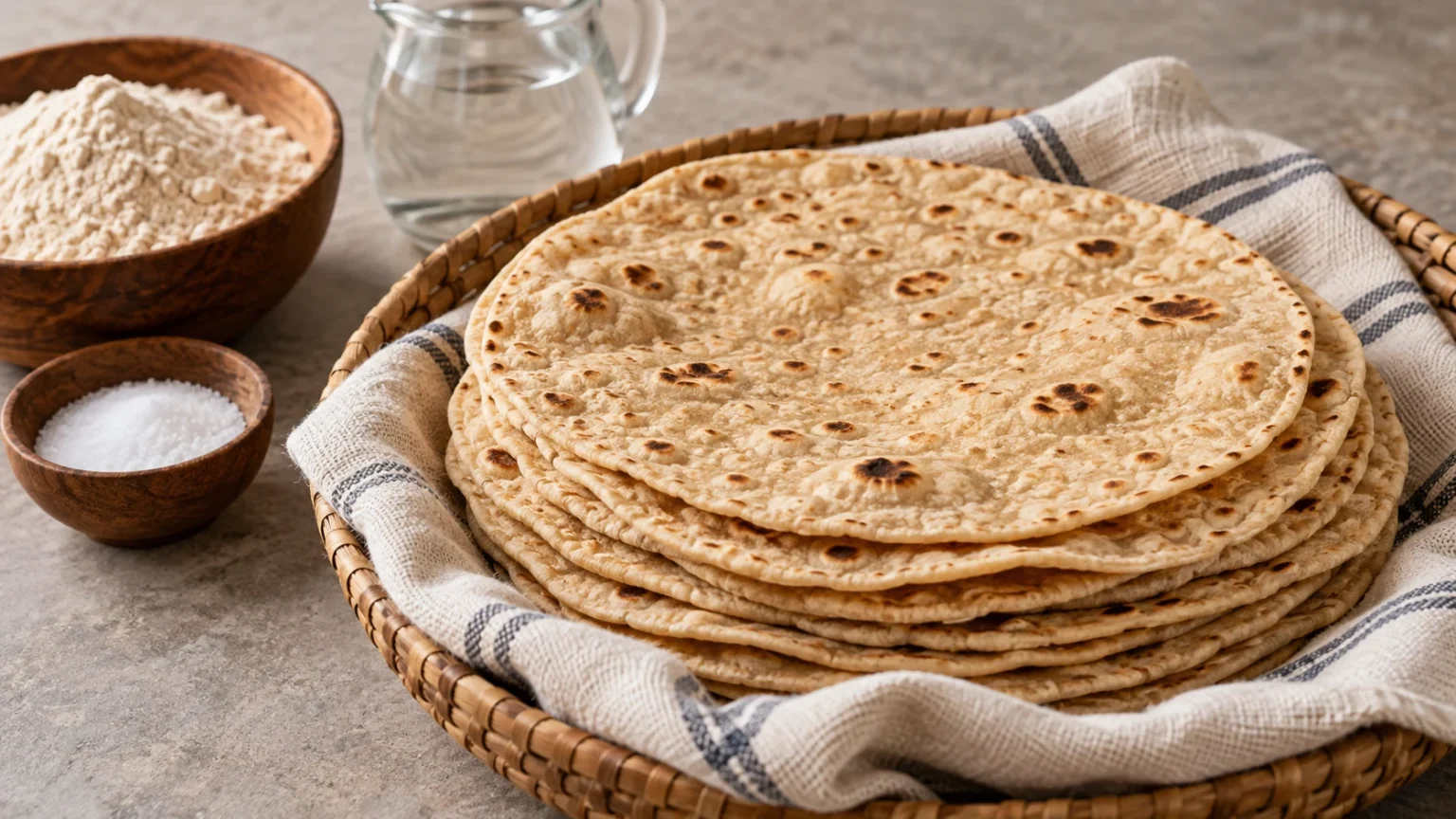
Cooked chapati
Cooked chapati is a prepared wholemeal wheat flatbread, also called roti or phulka in overlapping usage. Here it means plain cooked bread rather than raw atta.
What it is and names used in Pakistan
Cooked chapati is a prepared wholemeal wheat flatbread, also called roti or phulka in overlapping usage. Here it means plain cooked bread rather than raw atta.
Origin and historical context
Flatbreads have a long South Asian history, with many regional forms. A precise first chapati cannot be established from a modern recipe name.
Types, manufacture and buying
Atta and water are kneaded, rested, rolled and cooked on a tawa; some breads puff over a flame. Oil-free and lightly oiled versions absorb later sauces differently.
Choose the bread by crumb and crust rather than by the shape alone. A roll for a juicy filling needs enough structure to hold together, whereas a lightly filled sandwich can use a softer crumb. Compare the weight of pieces: a large bakery roll may be several times the size of a small dinner roll. Wholemeal versions can provide more fibre, but brown colour alone is not evidence of wholegrain flour. If buying loose bread for someone with an allergy, ask the baker about the full dough recipe and shared equipment.
Reference: Dawn Frozen Foods Pakistan: Wheat and dough products.
Production, trade and the Pakistani pantry
Chapati is primarily made locally in Pakistan, India and neighbouring countries; packaged and frozen rotis extend the trade beyond fresh bakeries.
Cooking uses and practical substitutions
Sound leftover chapati is useful in Sindhi seyal maani, where pieces soak up seasoned liquid. Cut into manageable pieces and add gradually. Wholemeal tortillas may substitute, though their fat and elasticity alter the result.
Warm bread briefly rather than heating until the crumb dries out. Toasting the cut face makes a useful barrier against moist fillings, but it does not make a completed sandwich safe for prolonged room-temperature storage. Drain wet salad and sauces before assembly. When scaling a recipe, account for the size of the bread as well as the number of pieces: one very large roll can need considerably more filling than the recipe assumes. Add strong sauces in thin layers so the bread remains manageable to eat.
Nutrition, benefits and limitations
Wheat bread supplies carbohydrate for energy and some protein; its fibre depends mainly on how much wholegrain flour it contains. Fortification, where used, changes vitamin and mineral content, so the packet is the best guide. Refined bread can fit into an ordinary diet, especially beside vegetables, pulses, eggs or meat, but it should not be presented as a special health food. Added fat, sugar and salt vary with the recipe. Buttering, frying or filling the bread can change the finished meal more than a small difference between plain loaves.
Once moistened with gravy, treat the dish as a perishable cooked meal rather than dry bread.
Practical notes and common mistakes
Seyal maani is a particularly useful way to understand the difference between leftover bread and spoiled bread. A sound slightly dry chapati can absorb seasoned liquid while remaining in pieces; mouldy or badly stored chapati should be discarded. Add the pieces in stages so the pan does not become either soupy or a dense lump. Breads made with more oil can feel different after soaking. Taste the finished mixture before adding extra salt, especially if the original chapatis or the cooking liquid were already seasoned.
Storage and safe handling
Cool cooked plain chapatis promptly before packing, so trapped steam does not leave them wet. Keep protected from contamination and refrigerate when they will not be eaten promptly in warm conditions. Freeze individual portions separated by food-safe sheets for longer keeping. Once soaked in sauce or mixed with meat, yogurt or vegetables, the dish requires prompt refrigeration at 4°C or below. General cooked-leftover guidance is three to four days, with earlier use often giving better texture. Discard mouldy bread rather than trimming away the visible growth.
Recipes and related pantry reading
Use the form and quantity specified in each recipe, then adjust for the concentration, salt and moisture of the product you have bought. These dishes show where the ingredient fits in a complete preparation.
For related local names and pantry ingredients, see the Pakistani ingredients and spices guide.
Names and forms used in our recipes
View the recipe names covered by this guide
- cooked plain chapatis
Frequently Asked Questions
Can leftover chapati be used for seyal maani?
Yes, if sound and properly stored; slight dryness helps absorption.
Can cooking rescue mouldy chapati?
No. Discard mouldy bread rather than repurposing it in a cooked dish.
Keep Exploring
Related places and stories on DailyLife.pk

How we know this
- Type Explainer
- Sources 3 (2 official/academic)
- Reviewed November 2026
- Disputed points None
