
Ingredients & Spices · The complete guide
Chives
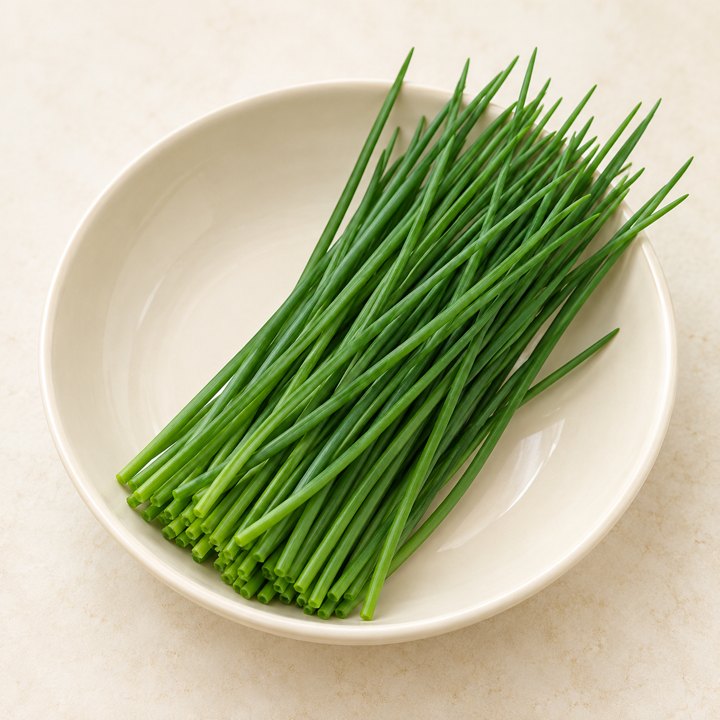
Common chives are Allium schoenoprasum. Their narrow hollow leaves taste gently onion-like and are usually snipped as a garnish.
What it is and names to know
Common chives are Allium schoenoprasum. Their narrow hollow leaves taste gently onion-like and are usually snipped as a garnish. Garlic chives have flat leaves and a stronger garlic scent, so the two should be labelled separately.
Origins, producing regions and Pakistan context
Common chives occur across temperate parts of the Northern Hemisphere and have longstanding kitchen-garden use. A modern botanical naming date is not the date people first ate them.
They are grown widely as a fresh herb, often close to the market because delicate leaves lose quality during transport. In Pakistan they may be sold by specialist growers or supermarkets.
Background: Royal Botanic Gardens, Kew: plant identity and range.

Types and buying advice
Choose hollow common chive leaves for mild onion flavour. Flat garlic chives are a separate herb even when displayed alongside them.
How to cook with it
Snip over eggs, sandwiches, potato salad, cream cheese, soup or yoghurt dip. Add at the end of cooking; prolonged frying loses the subtle onion aroma and can dry the leaves.
Use scissors to make even fine pieces and dry washed leaves before cutting. If using flowers, make sure they are edible chive flowers from plants grown for food.
For a sandwich, chop chives finely enough to distribute through the filling rather than leaving long strands that pull out in one bite. In an omelette, reserve a little for the surface after cooking so some fresh aroma remains. A washed bunch should be well dried before going into a cream-cheese mixture, which otherwise becomes watery. If common and garlic chives are both available, label them separately; the substitution is noticeable in mild dairy dishes. Keep the green garnish separate until serving when preparing sandwiches ahead, so it stays fresh and evenly distributed.
Try the ingredient in Egg Sandwich. Follow each recipes specified form and quantity, since whole pieces and fine powder season food differently.
For related pantry ingredients, see the Pakistani ingredients and spices guide.
For a cold egg sandwich filling, fold snipped chives through cooked cooled egg and the chosen dressing, then taste the complete mixture. Raw bulb onion can overwhelm a similarly small portion, whereas chives give lighter allium flavour. Keep extra snipped leaves for the surface only if serving immediately. Dried chives are convenient in cooked or hydrated mixtures, but they cannot supply the same crisp green appearance. A packet of mixed dried herbs should not be treated as pure chives.
Nutrition and realistic benefits
Fresh leaves add aroma, variety and some micronutrients to food. The nutritional contribution depends on whether you eat a few garnish leaves or a substantial chopped-herb portion. They cannot replace the volume and diversity of vegetables in a meal. Their most useful everyday role is making ordinary dishes enjoyable with a fresh aromatic finish. Claims based on isolated oils, extracts or laboratory tests should not be transferred to a spoonful of chopped leaves or an everyday homemade tea.
Disadvantages and precautions
Chives are food, not a substitute for a prescribed medicine. People with an allium allergy should not assume this mild herb is automatically suitable.
Clean handling matters even for a small garnish. FDA food-safety guidance explains practical handling. Buying from a traceable food supplier is more dependable than trying to judge safety from appearance alone.
Substitutions and storage
Finely sliced spring onion greens are the most practical local substitute. Use a little less if their flavour is stronger; garlic chives create a more garlicky result.
Choose sound leaves with a clear characteristic aroma, and discard rotten or slimy material. Rinse under fresh running water before use and dry gently; household soap and detergent are unsuitable for washing food. Keep most fresh herbs chilled with their moisture controlled so leaves do not sit wet. Tender basil is particularly sensitive to cold and bruising. Freezing can preserve a surplus for cooked dishes, though thawed leaves usually lose the texture needed for an attractive raw garnish.
Names and forms used in our recipes
View the recipe names covered by this guide
- chives
Frequently Asked Questions
How should I cut chives for a sandwich?
For a sandwich, chop chives finely enough to distribute through the filling rather than leaving long strands that pull out in one bite. In an omelette, reserve a little for the surface after cooking so some fresh aroma remains.
What can I use instead of chives?
Finely sliced spring onion greens are the most practical local substitute. Use a little less if their flavour is stronger; garlic chives create a more garlicky result.
What is the main caution with chives?
Chives are food, not a substitute for a prescribed medicine. People with an allium allergy should not assume this mild herb is automatically suitable.
Keep Exploring
Related places and stories on DailyLife.pk

How we know this
- Type Explainer
- Sources 3 (1 official/academic)
- Reviewed November 2026
- Disputed points None
3 sources
Photo credits (1)
- I-11 Sabze Mande, Islamabad.jpg, Pakieditor, CC BY-SA 4.0, via Wikimedia Commons
