
Ingredients & Spices · The complete guide
Chilli oil
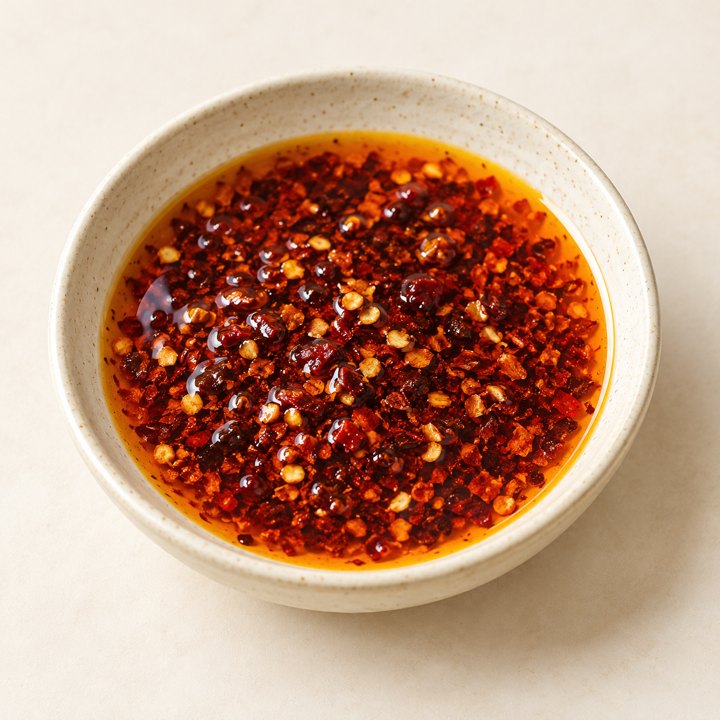
Chilli oil is oil flavoured with chillies and sometimes spices, garlic, sesame or crisp solids. It may be a simple red infusion or a condiment with a large sediment of crunchy ingredients.
What it is and what to ask for
Chilli oil is oil flavoured with chillies and sometimes spices, garlic, sesame or crisp solids. It may be a simple red infusion or a condiment with a large sediment of crunchy ingredients.
Read the full ingredient list: sesame, peanuts, soy, wheat and seafood can occur in flavoured versions. A clean red colour does not establish the absence of allergens.
History, production and the Pakistan context
Chilli peppers came from the Americas and entered Asian cooking after transoceanic exchange. Individual chilli-oil traditions then developed regionally; the condiment has no single universal inventor.
China and other Asian countries manufacture traded chilli condiments, and Pakistani cooks can prepare or buy local versions. The oil base, chilli variety and added aromatics define the product.

How to use it successfully
Stir a jar before spooning if the recipe needs both oil and solids. For wontons, add gradually at serving so diners control heat, and check whether the condiment already contains salt or fermented beans.
The solids at the bottom of a jar may carry most of its salt and heat. Spoon from the oil alone for a gentler finish or stir thoroughly for the condiment's intended balance. Use a clean dry spoon; dropping water or food into a jar can shorten its keeping quality and invalidate the producer's opening guidance.
Nutrition, benefits and limits
This remains concentrated cooking fat even when used by the teaspoon. Fresh garlic or herbs stored in oil require a tested safe preservation method; a shelf-stable commercial jar is not a model for leaving homemade wet aromatics at room temperature.
Choosing a replacement
A neutral oil plus chilli flakes can approximate heat but not the flavour of a toasted, spiced condiment. Sesame oil alone supplies aroma without chilli heat.
When changing a cooking fat, compare flavour, water content, solidity and the method of heating. Preserve the recipe’s functional balance rather than only the apparent spoonful size. A substitute should meet the household’s actual dietary requirement, and its own food-grade and storage instructions remain relevant even when the quantity is small.
Safe handling and storage
Choose a sealed food-grade product and store it away from heat, light and damp according to the producer. Keep the bottle capped and use a clean dry measure. A small bottle is often more practical for a specialty finishing oil than a large cheap bottle that remains open long after its aroma has faded.
Refining, roasting and extraction influence flavour and heating suitability. Follow the actual product guidance instead of assigning one smoke point to every oil with the same plant name. Avoid visible smoking and do not regard a smoking step as a method to remove toxins or make a non-food oil edible. Oil used with wet ingredients also needs different preservation precautions from a plain dry bottled oil.
All cooking oils supply concentrated energy. Their fatty-acid profiles differ, but a switch from one oil to another should be considered within the whole diet and the quantity used. Extracted oil does not retain the fibre and protein of the original seed or nut. For allergy, check the source and processing; a culinary oil should not be assumed safe merely because it looks clear. Discard rancid oil rather than attempting to hide stale flavours with spices.
Planning, portions and serving
A chilli condiment can replace some of the seasoning otherwise added at the table, so taste before combining it with a salty soy-based sauce. For noodle bowls, spoon over individual servings so its heat does not dominate the whole pot. If crisp solids are included, add at the end to preserve their texture. Make allergens visible to guests: a small garnish can still contain sesame, peanuts or shellfish in a substantial enough amount to matter.
Recipes and pantry links
Use chilli oil according to the form specified in the linked recipe: raw versus cooked, bone-in versus boneless, sweetened versus plain, and the stated cut or processing style all affect the result. The ingredient discussion above explains which differences matter most here. Read the complete recipe before shopping, then measure the prepared usable quantity rather than assuming every package has the same yield.
For related ingredient names, local terminology and flavour pairings, browse the Pakistani ingredients and spices pantry guide.
Names and forms used in our recipes
View the recipe names covered by this guide
- chilli oil
Frequently Asked Questions
Can I leave homemade garlic chilli oil in the cupboard?
Do not copy the storage behaviour of a commercially preserved jar. Wet garlic or herbs in oil need a tested safe preparation and storage method; strong chilli and a layer of oil do not make them shelf-stable.
What should I check before buying chilli oil for these recipes?
Read the full ingredient list: sesame, peanuts, soy, wheat and seafood can occur in flavoured versions. A clean red colour does not establish the absence of allergens. Match the stated plain or flavoured form and read the storage directions before opening the pack.
What is a practical substitute for chilli oil?
A neutral oil plus chilli flakes can approximate heat but not the flavour of a toasted, spiced condiment. Sesame oil alone supplies aroma without chilli heat. Make a small test where binding, melting or a delicate final texture is central, and adjust the recipe rather than treating different ingredients as identical.
Keep Exploring
Related places and stories on DailyLife.pk

How we know this
- Type Explainer
- Sources 3 (2 official/academic)
- Reviewed November 2026
- Disputed points None
3 sources
Photo credits (1)
- Vegetable oils, plantaardige oliën.jpg, Rasbak, CC BY-SA 3.0, via Wikimedia Commons
