
Ingredients & Spices · The complete guide
Boondi
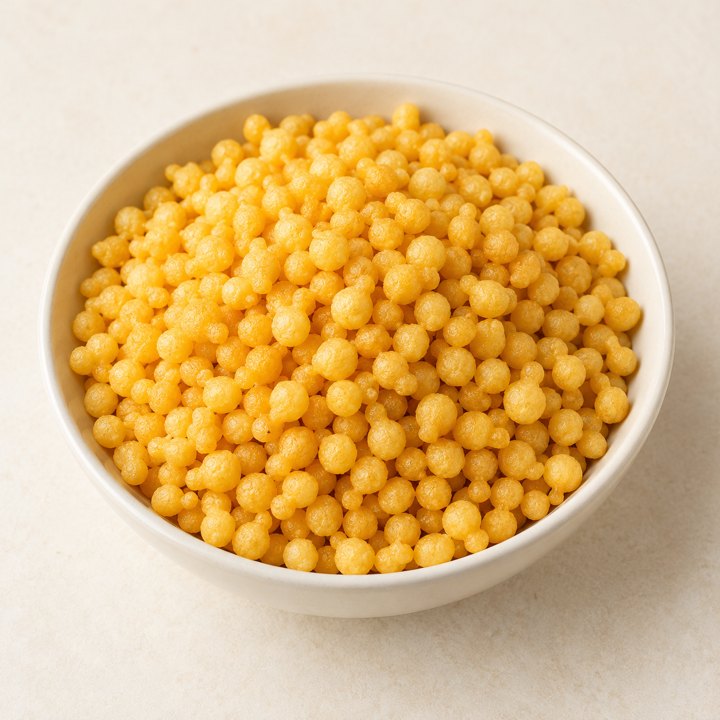
Boondi are small fried droplets of gram-flour batter. The same name is used in Pakistan and northern India.
What it is and local names
Boondi are small fried droplets of gram-flour batter. The same name is used in Pakistan and northern India. Plain or salted boondi belongs in savoury preparations; sweet syrup-soaked boondi is a different purchase and should not be used in chaat by mistake.
Origins and documented history
Boondi belongs to the established South Asian family of gram-flour snacks and sweets. Its descriptive name relates to small drops. A precise earliest surviving recipe or a single inventor is not established by the food standards used here.
Types and manufacture
A fluid besan batter is passed through a perforated ladle into hot oil, producing separate tiny balls. Batter thickness, hole size and oil temperature determine their shape and crispness. Commercial products may add salt, spices, colour or other flours.
Production, trade and Pakistan
Pakistan and India have extensive local snack-making traditions, including fresh and packaged boondi. Trade is mainly in the finished snack and its pulse flour and frying oil inputs. A generic boondi label cannot establish a particular regional origin.
How to use it
Use plain boondi in gol gappay fillings, raita or snack mixtures. For raita, a brief soak can soften it, followed by gentle draining; for a crisp finish, add it just before serving. Sweet boondi has a different syrup contribution.
Nutrition, benefits and limits
Gram flour contributes some protein, but frying raises energy density and salted versions contribute sodium. Small quantities add useful texture; boondi should not be presented as nutritionally interchangeable with boiled chickpeas.
Drawbacks, allergens and precautions
Chickpea allergy is possible. Other flour, spice and shared-fryer allergens require checking. Rancid oil, stale aroma or dampness are reasons to reject a batch rather than covering it with yogurt.
Substitutions and storage
Use fine sev or toasted chickpeas for a different crunch, recognizing the shape changes. For a soft yogurt preparation, cooked chickpeas can replace bulk but will not give the same tiny spongy texture.
Keep dry boondi sealed after fully cooling. Refrigerate soaked boondi and assembled raita promptly; the dry snack’s shelf life no longer applies after water or yogurt is added.
Planning the texture of chaat
A prepared crisp ingredient can soften very quickly when it touches yogurt, chutney or cooking liquid. Decide which part of the dish should remain crisp and which part should absorb flavour. Keep dry garnishes separate until serving, and assemble only the number of portions that will be eaten shortly. Drain cooked chickpeas and other wet components well before combining them. If the dish must travel, pack the wet and dry parts in separate containers so that the intended contrast survives the journey.
Buying prepared ingredients carefully
Choose a supplier with clean covered displays, fresh turnover and clear information about ingredients. Fried foods absorb flavours from old or poorly managed frying oil, and no amount of chutney reliably hides rancidity. Ask whether the batch contains wheat, gram flour, milk, nuts or shared-fryer ingredients if an allergy matters. A traditional name describes a style of food rather than a guaranteed recipe. A packaged version may be baked, fried, salted or seasoned differently from the loose product normally used at home.
Balancing the finished dish
A small amount of a fried topping can give a large improvement in texture, so it need not dominate the serving. Balance a chaat with the pulse, vegetable or yogurt component specified by the recipe and taste before adding more salt. Commercial masalas, chutneys and snack mixtures may all supply sodium. Keep nutrition claims proportionate: the presence of a pulse ingredient does not make a deep-fried snack equivalent to a bowl of boiled lentils. Use fresh portions and avoid repeatedly warming a large communal batch over several days.
Storing components for repeat use
Dry fried snacks and moist cooked dumplings need different storage. Let a dry freshly fried snack cool fully before sealing it so that trapped steam does not soften it. A cooked filling or soaked pulse preparation should be chilled promptly in a covered shallow container. Keep these components separate from chutney and yogurt until required. When reheating a filled item, heat the centre thoroughly and restore crispness with dry heat if appropriate. A quick surface browning cannot demonstrate that a cold filling is heated through; the filling and shell need separate consideration.
Recipes and the Pakistani pantry
Use this ingredient in Gol Gappay. Explore related ingredients in the Pakistani ingredients and spices pantry.
Names and forms used in our recipes
View the recipe names covered by this guide
- boondi
Frequently Asked Questions
What should I check when buying boondi?
Buy plain or salted boondi for chaat, with a fresh oil aroma. Syrup-soaked sweet boondi is a different ingredient.
What can replace boondi in a recipe?
Use fine sev or toasted chickpeas for a different crunch, recognizing the shape changes. For a soft yogurt preparation, cooked chickpeas can replace bulk but will not give the same tiny spongy texture.
How should boondi be stored?
Keep dry boondi sealed after fully cooling. Refrigerate soaked boondi and assembled raita promptly; the dry snack’s shelf life no longer applies after water or yogurt is added.
Keep Exploring
Related places and stories on DailyLife.pk

How we know this
- Type Explainer
- Sources 5 (3 official/academic)
- Reviewed November 2026
- Disputed points None
