
City guide
Khanpur Katora: Railway Town of the Bahawalpur Plains
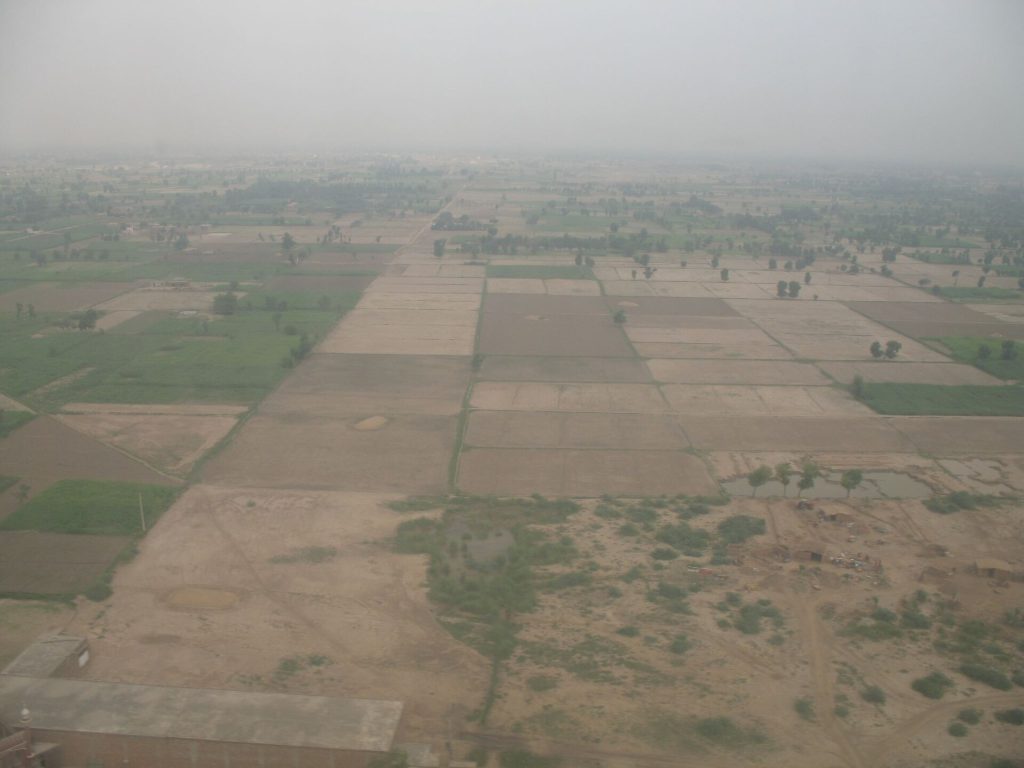
A farming and railway town of Rahim Yar Khan District, set in the 'bowl' that gives it the name Katora, with Khwaja Ghulam Farid's Chachran on the Indus to the west.
- Rahim Yar Khan District, southern Punjab
- Railway junction since the 19th century
- Near Chachran, home of Khwaja Ghulam Farid
- Best season: November–February
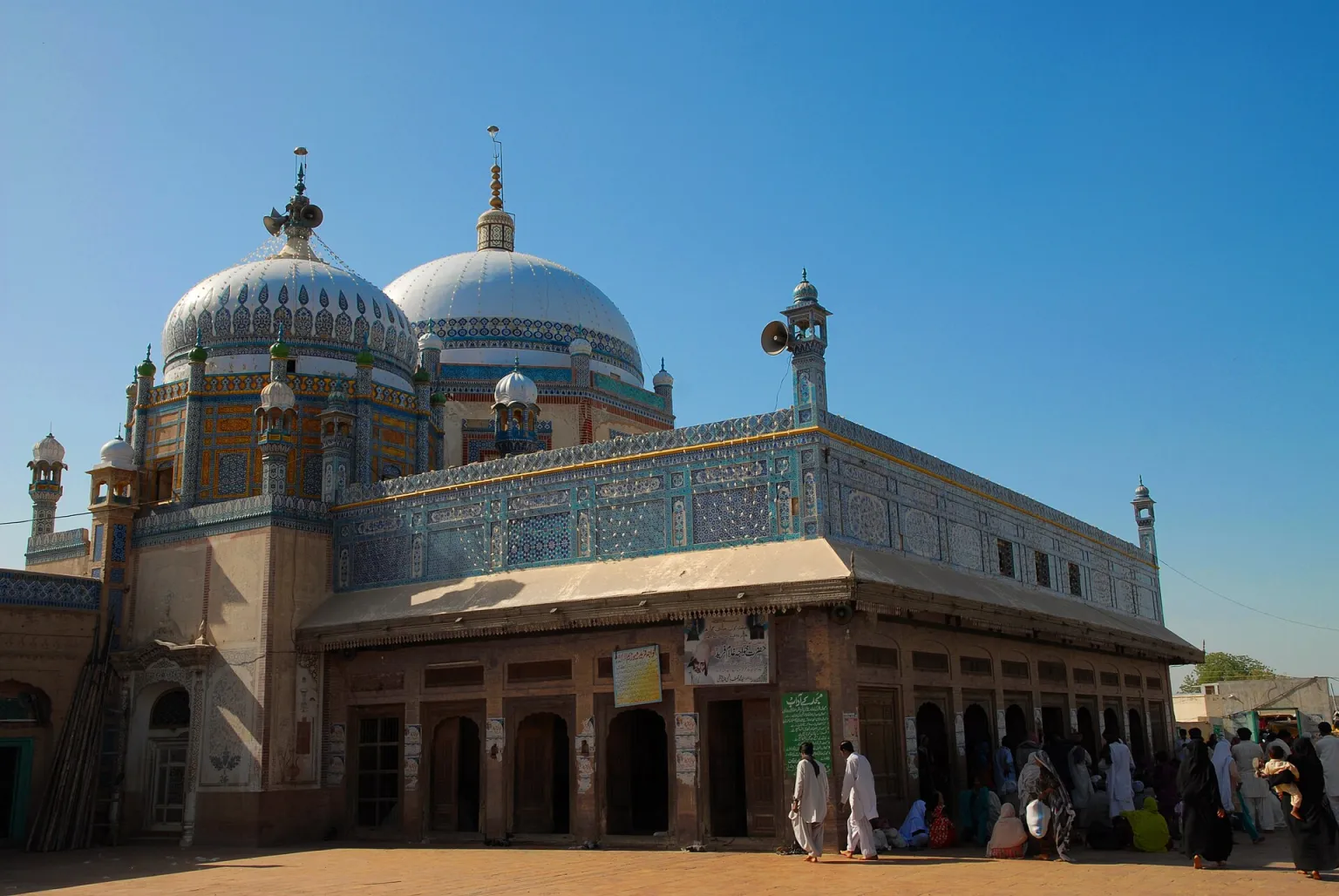
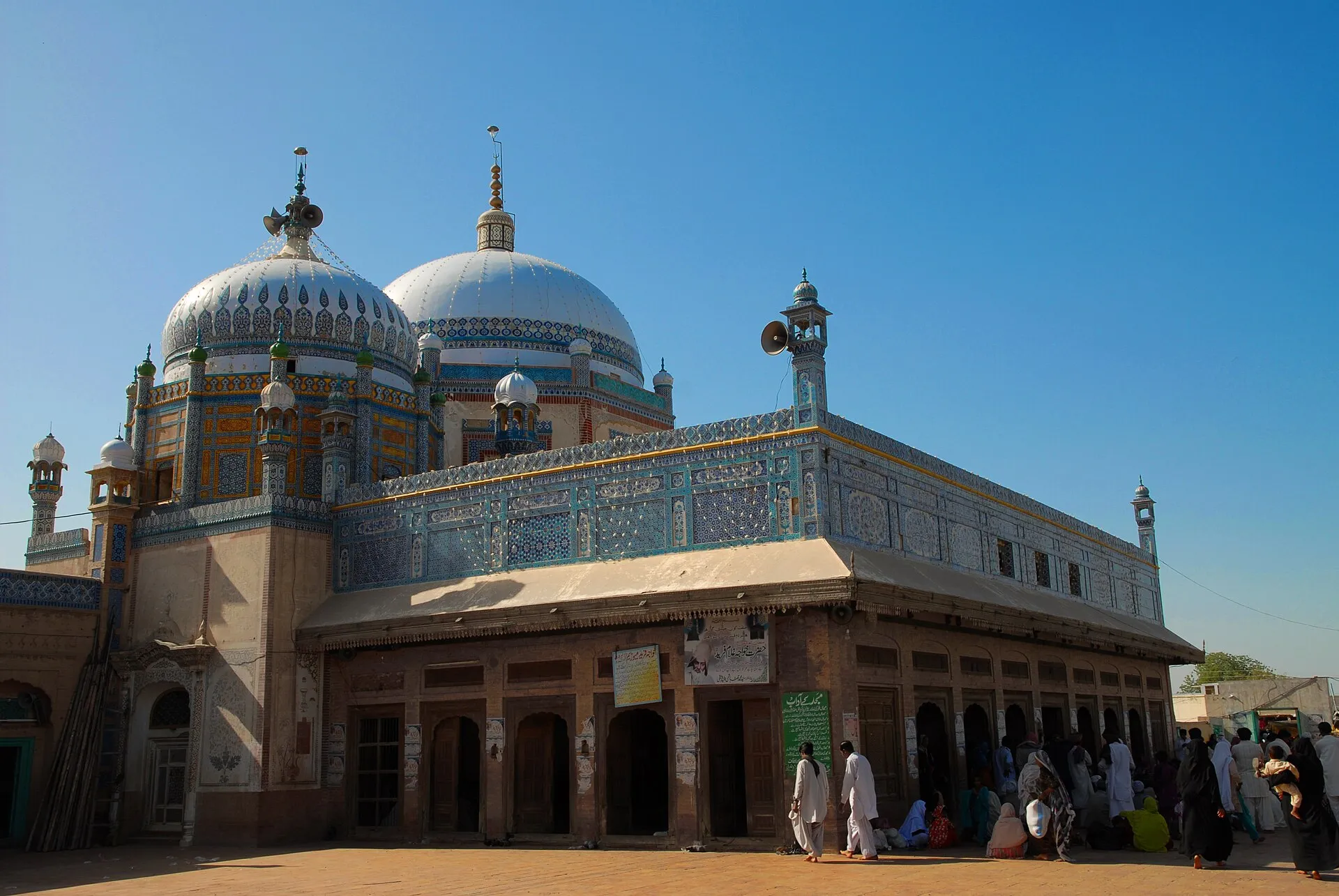
Shrine of Khwaja Ghulam Farid, Kot Mithan, across the Indus from Chachran, near Khanpur
Khanpur at a Glance
About Khanpur
Khanpur, usually called Khanpur Katora to tell it apart from other Khanpurs, is a city and tehsil headquarters in Rahim Yar Khan District, in the former Bahawalpur State. Katora means a bowl; the name is traditionally linked to the town's bowl-like lie of the land and to its old pottery trade.
The town has grown quickly. The 2023 Census counted 247,170 people in the city, up from 184,374 in 2017, and 1,169,138 in Khanpur Tehsil, which covers 3,190 km². The surrounding district had 5,564,703 people.
Khanpur's story is tied to the railway. Its station dates from 1870, on what became the Karachi–Peshawar main line, and in 1911 a branch financed by Bahawalpur State ran west to Chachran on the Indus, the home town of the beloved Saraiki Sufi poet Khwaja Ghulam Farid. That branch has since been abandoned, but the town remains a stop for main-line trains. Around it, canals water fields of sugarcane, cotton and wheat, and the economy rests on farming and agro-industry.
Khanpur is a town that grew up beside the railway and has never quite stopped moving.
Places to See
A railway heritage town with Sufi country on its doorstep.
 Chachran SharifA small town on the east bank of the Indus in Khanpur tehsil, where Khwaja Ghulam Farid was born and lived. Its old saran (rest house) and the Indus riverbank draw visitors.
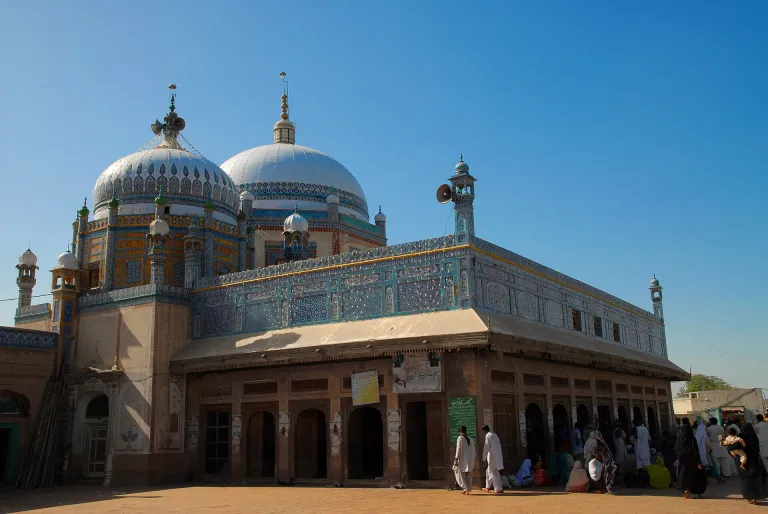 Khwaja Ghulam Farid's shrineThe poet's tomb stands at Kot Mithan, across the Indus from Chachran in Rajanpur District, and his kafis are sung at the annual urs. The Benazir Bridge spans the Indus nearby.
 Bahawalpur's palacesThe former state capital, with Noor Mahal and Darbar Mahal, is a straightforward trip by rail or road.
Food and Local Produce
Dairy sweets, cane country and Saraiki home cooking.
 MangoesRahim Yar Khan District's orchards supply mangoes to the local markets in early summer.
 Saraiki and Punjabi staplesDaal, vegetables, roti and rice at home; karahi and tikka in the evening.


A Short History
18th century
Chachran's saran
An 18th-century rest house is built at Chachran on the Indus.
19th century
Khwaja Ghulam Farid
The Sufi poet is born at Chachran and lives there; his Saraiki verse becomes beloved across the region.
1870
The railway arrives
Khanpur station is built on the line through the Bahawalpur plains.
1911
Bahawalpur Royal Railway
A state-financed branch opens from Khanpur to Chachran.
1947
Into Pakistan
Bahawalpur State accedes to Pakistan; the railway becomes part of Pakistan Railways.
Late 1990s
Branch closed
The Khanpur–Chachran line is abandoned and its track later removed.
2023
Fast growth
The census counts 247,170 people in the city.
Getting There and Around
By air
Rahim Yar Khan or Bahawalpur
There is no airport in Khanpur; Rahim Yar Khan and Bahawalpur have airports with limited schedules, and Multan has more flights.
By rail
Karachi–Peshawar main line
Khanpur is a main-line station with trains towards Karachi, Multan and Lahore; book with Pakistan Railways.
By road
Coaches via Rahim Yar Khan and Bahawalpur
Intercity coaches and vans link Khanpur with Rahim Yar Khan, Bahawalpur and Multan.
To Chachran
Hire a car
Chachran and Kot Mithan are easiest by hired car; combine them in one day.
Plan Your Visit
Best time to visit
November to February
Pleasant winter weather and the cane-crushing season.
Weather
Hot desert climate
Summers are very hot with low rainfall, most of it in the July–September monsoon.
Where to stay
Khanpur or Rahim Yar Khan
Khanpur has simple hotels; Rahim Yar Khan and Bahawalpur offer more choice.
Shrine etiquette
Modest dress
Remove shoes, cover your head at shrines and ask before photographing devotees.
Frequently Asked Questions
What is the population of Khanpur?
The 2023 Census counted 247,170 people in Khanpur city and 1,169,138 in Khanpur Tehsil of Rahim Yar Khan District.
Why is it called Khanpur Katora?
Katora means bowl. The name is traditionally linked to the town's bowl-shaped setting and its historic pottery, and it distinguishes this Khanpur from other towns of the same name.
Is Khanpur a railway junction?
Khanpur has been a main-line station since 1870. It was also the junction for a branch to Chachran, opened in 1911 as the Bahawalpur Royal Railway and abandoned in the late 1990s.
What is the connection with Khwaja Ghulam Farid?
The Saraiki Sufi poet was born and lived at Chachran, a town on the Indus in Khanpur tehsil. His shrine is at Kot Mithan, just across the river.
What is Khanpur known for?
Its railway history, its farmland of sugarcane, cotton and wheat, its dairy sweets and its closeness to Chachran Sharif.
Keep Exploring
Related places and stories on DailyLife.pk
BahawalpurBahawalpur city guide: Noor Mahal, Darbar Mahal, Central Library, Lal Suhanra National Park, Derawar Fort MultanMultan city guide: Shah Rukn-e-Alam and other Sufi shrines, the walled city, blue pottery, sohan halwa
 SukkurSukkur city guide: Sukkur Barrage, Lansdowne Bridge, Sadh Belo, Masum Shah minaret, Rohri, Indus dolphinsSufi Shrines of PakistanVisit Pakistan's great Sufi shrines: Data Darbar, Shah Rukn-e-Alam, Lal Shahbaz Qalandar, Bhit Shah
 Poetry and Literature of PakistanPakistan's poetry and literature: Bhittai, Bulleh Shah, Rahman Baba, Khushal Khan Khattak, Ghalib's legacy, Iqbal, Faiz
 The British Colonial EraBritish rule in Pakistan 1843–1947: conquest of Sindh and Punjab, the North-West Frontier, railways, canal colonies
How we know this
- Type Place guide
- Sources 7 (1 official/academic)
- Reviewed October 2026
- Disputed points None
7 sources
- Table 1: Area, population by sex, sex ratio, density, urban proportion: Punjab districts (Census 2023), Pakistan Bureau of Statistics
- Pakistan: Provinces and Major Cities: 2023 Census, City Population (Thomas Brinkhoff), from PBS data
- Punjab (Pakistan): Urban Localities: 2023 Census, City Population (Thomas Brinkhoff), from PBS data
- Khanpur, Rahim Yar Khan (overview used to locate primary sources), Wikipedia
- Khanpur Katora railway station (overview used to locate primary sources), Wikipedia
- Chachran Sharif (overview used to locate primary sources), Wikipedia
- Khanpur Katora Tehsil (overview used to locate primary sources), Wikipedia
Photo credits (6)
- A picture of Shrine of Hazrat Khwaja Ghulam Farid by Usman Ghani.jpg, Usman.pg, CC BY-SA 3.0, via Wikimedia Commons
- Fields of Faisalabad Pakistan.jpg, Farhan from Karachi, Pakistan, CC BY 2.0, via Wikimedia Commons
- A plate full of mangoes.jpg, Kskhh, CC BY-SA 4.0, via Wikimedia Commons
- Chicken Karahi in Pakistan.jpg, Kskhh, CC BY-SA 4.0, via Wikimedia Commons
- Shah Rukn-e-Alam Tomb.jpg, Junaidali88z, CC BY-SA 3.0, via Wikimedia Commons
- Front Elevation of Noor Mahal.jpg, Muhammad Ashar, CC BY-SA 3.0, via Wikimedia Commons
