
Ingredients & Spices · The complete guide
Garam masala
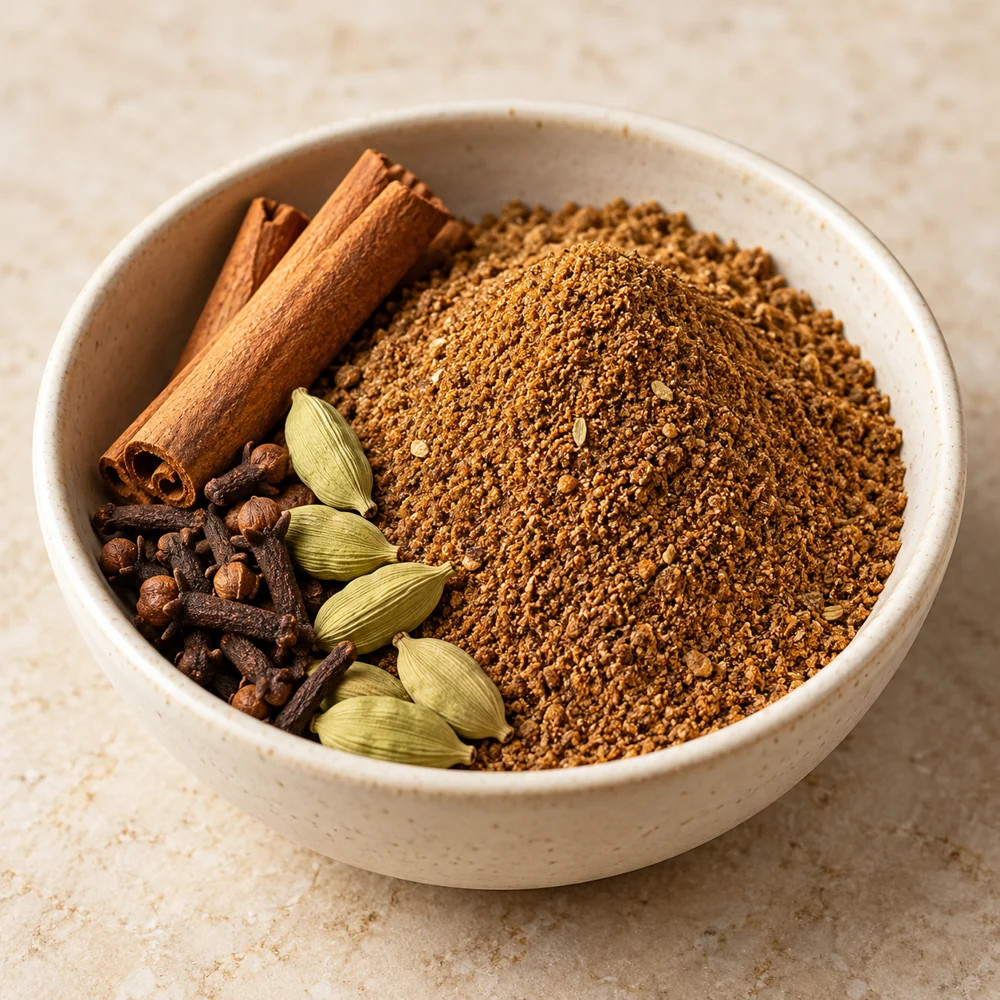
Garam masala is a family of warm aromatic spice blends. Pakistani versions commonly feature cumin, coriander, pepper, cinnamon, cloves and cardamom, with many regional and household variations.
What it is and names to know
Garam masala is a family of warm aromatic spice blends. Pakistani versions commonly feature cumin, coriander, pepper, cinnamon, cloves and cardamom, with many regional and household variations. Garam describes warming flavour, not necessarily chilli heat.
Origins, producing regions and Pakistan context
The mixture belongs to the layered spice traditions of South Asia. It has no single canonical formula and no responsibly documented sole inventor. Different dishes can require different balances of the same familiar spices.
It is blended commercially in Pakistan and India and by cooks worldwide. Pepper, cinnamon and cardamom may come from different growing countries before they enter one Pakistani packet. The finished blend can be exported separately from its raw ingredients and imported for retail sale. A Pakistan-made pack and an imported finished masala can therefore have similar recipes but different supply chains.
Background: Spices Board: crop and ingredient reference.

Types and buying advice
Check which warm spices dominate and whether the packet contains salt. Whole garam masala means selected whole spices, not the same measure of powder.
How to cook with it
Add a little near the end of a curry or use as directed in a kebab mixture. Whole garam masala usually means selected unground spices, not a spoon-for-spoon replacement for the powder.
Smell the blend before choosing a dose. Half a teaspoon can finish a family pan; a clove-heavy blend may need less. Add more only after the gravy has rested briefly.
A blend for biryani may reasonably differ from one for everyday dal or a milk-rich sweet. Keeping a small general-purpose mixture and adding individual spices to a particular dish provides flexibility. Before grinding, let any warmed spices cool fully. A blend dominated by one ingredient can be corrected while still dry by mixing in more of the other components. After it has entered a finished gravy, extending the unsalted base is usually the more practical correction.
Try the ingredient in Chicken Biryani, Bombay Biryani, Aloo Matar. Follow each recipes specified form and quantity, since whole pieces and fine powder season food differently.
For related pantry ingredients, see the Pakistani ingredients and spices guide.
For a late finishing addition, scatter a small quantity across the surface, stir thoroughly, cover briefly and then taste. This distributes the aroma more evenly than leaving a visible mound in the centre. The finished gravy should still taste of its main ingredients.
Nutrition and realistic benefits
A blend takes its nutritional composition from the specific ingredients and their proportions. At normal seasoning quantities it is primarily a flavouring, not a substantial source of protein or vitamins. The most useful label details are often sodium, allergens and added ingredients rather than claims about antioxidants. If a blend improves a simple vegetable or lentil dish, that benefit comes through the completed meal. It does not cancel a large amount of salt, butter or frying oil.
Disadvantages and precautions
Too much can make a gravy dark, dusty or bitter. Check commercial packs for salt, fillers and declared allergens; a familiar name does not guarantee an identical formula.
Dry spices are not sterile foods. FDA food-safety guidance explains practical handling. Buying from a traceable food supplier is more dependable than trying to judge safety from appearance alone.
Substitutions and storage
Use a small selection of the whole spices already in the dish, or combine freshly ground cumin, pepper, cinnamon and cardamom. The aim is balanced aroma, not a fixed long list.
Close the pack promptly and store it cool, dry and away from light. A mixture is only as fresh as its most vulnerable component; ground spices lose aroma, and oily seeds can develop stale flavours. Use a dry spoon, label homemade blends with the date and ingredients, and make a small batch first. Follow any packet instruction to refrigerate after opening. Do not mix a fresh batch into a damp or dirty container, and discard mouldy or musty seasoning.
Names and forms used in our recipes
View the recipe names covered by this guide
- garam masala
- garam masala powder
- garam masala, optional
- garam masala, optional finish
- garam masala, total
Frequently Asked Questions
Can I use one garam masala for every dish?
A blend for biryani may reasonably differ from one for everyday dal or a milk-rich sweet. Keeping a small general-purpose mixture and adding individual spices to a particular dish provides flexibility.
What can I use instead of garam masala?
Use a small selection of the whole spices already in the dish, or combine freshly ground cumin, pepper, cinnamon and cardamom. The aim is balanced aroma, not a fixed long list.
What is the main caution with garam masala?
Too much can make a gravy dark, dusty or bitter. Check commercial packs for salt, fillers and declared allergens; a familiar name does not guarantee an identical formula.
Keep Exploring
Related places and stories on DailyLife.pk

How we know this
- Type Explainer
- Sources 3 (1 official/academic)
- Reviewed November 2026
- Disputed points None
3 sources
Photo credits (1)
- Spice market @ Walled City @ Lahore (15449651456).jpg, Guilhem Vellut from Annecy, France, CC BY 2.0, via Wikimedia Commons
