
Ingredients & Spices · The complete guide
Green cardamom (Hari elaichi)
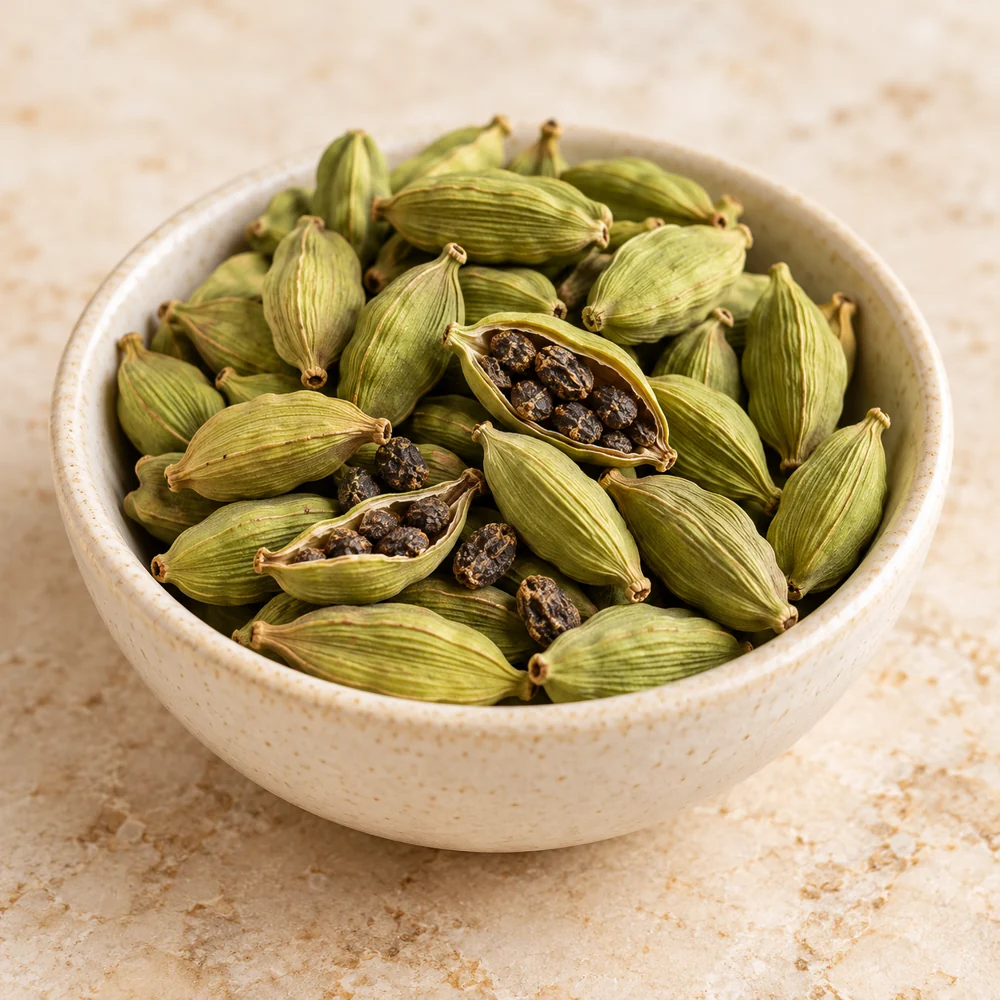
Green cardamom is Elettaria cardamomum, called chhoti or sabz elaichi. Its green capsules surround dark aromatic seeds with citrus, floral and eucalyptus-like notes.
What it is and names to know
Green cardamom is Elettaria cardamomum, called chhoti or sabz elaichi. Its green capsules surround dark aromatic seeds with citrus, floral and eucalyptus-like notes. Bleached white cardamom is a processed form, not the same spice as smoky black cardamom.
Origins, producing regions and Pakistan context
The crop is closely associated with the Western Ghats of southern India. It has travelled through Asian and Middle Eastern spice commerce and is also established in Scandinavian baking. Those diverse uses cannot be reduced to one inventor.
India and Guatemala are well-established commercial sources; smaller cultivation exists elsewhere in the tropics. In Pakistan whole capsules and ground seeds are sold for both sweets and savoury masala. CBI identifies Guatemala and India as exporting suppliers to European buyers. That is a different role from an importing or repacking market, including the Pakistani retail trade.
Background: Spices Board: crop and ingredient reference.
Trade context: CBI: spice production and trade context.

Types and buying advice
Choose full pods with fragrant dark seeds. Green colour alone does not establish freshness, and ground seed should be distinguished from ground husk.
How to cook with it
Lightly crack pods for chai, kheer, sheer khurma, zarda or rice. For thandai and fine sweets, remove the husk and grind the seeds with a little sugar from the recipe.
Crack only the quantity needed: intact pods protect the seeds aroma. One or two pods can perfume a small teapot; use a modest amount so it does not eclipse the tea.
For a smooth sweet, grind the seeds with a little sugar already allocated to the recipe: this helps the grinder handle a tiny amount without changing the overall sweetness. For chai, a cracked pod is easier to strain. The papery shell contributes less intense flavour and can make a fine powder fibrous. Do not increase the quantity simply to obtain visible green flecks; choose the dose by the aroma of the finished food.
Try the ingredient in Chicken Biryani, Daal Ka Halwa, Siri Paye. Follow each recipes specified form and quantity, since whole pieces and fine powder season food differently.
For related pantry ingredients, see the Pakistani ingredients and spices guide.
For kheer, infuse lightly cracked pods in the milk and remove the shells before serving, or add finely ground seed near the end. The latter creates a more evenly distributed aroma. Do not use both full doses automatically when adapting from one method to the other.
Nutrition and realistic benefits
At the quantities usually used in a household dish, the main benefit is flavour rather than a large contribution of protein, vitamins or minerals. Composition tables often describe 100 grams, far more than an ordinary serving. A small seasoning quantity should not be advertised as a practical way to meet a daily mineral requirement. Aromatic food can help make simple lentils, vegetables and rice appealing, but the whole meals balance of ingredients, salt and fat still matters.
Disadvantages and precautions
Do not confuse a culinary infusion with cardamom oil or high-dose supplements. Cardamom contributes flavour in tiny amounts, not a meaningful treatment dose for digestive or metabolic conditions.
Dry spices are not sterile foods. FDA food-safety guidance explains practical handling. Buying from a traceable food supplier is more dependable than trying to judge safety from appearance alone.
Substitutions and storage
A little cinnamon or vanilla can be pleasant in a dessert but creates a different dish. Black cardamom is a poor substitution where floral sweetness is central.
Keep in a clean, tightly closed food container in a cool dry cupboard, away from the cooker and direct sun. Whole pieces generally retain aroma better than the same spice left ground. Date the jar when opened and buy an amount you can use while fragrant. Crush a small sample periodically: fading aroma means weaker flavour, while dampness, insects or a musty smell are reasons to discard it. Never tip a wet spoon into a dry-spice jar.
Working with other forms of this ingredient
Cardamom seeds
Green cardamom is Elettaria cardamomum, called chhoti or sabz elaichi. Its green capsules surround dark aromatic seeds with citrus, floral and eucalyptus-like notes. Bleached white cardamom is a processed form, not the same spice as smoky black cardamom.
Cardamom seeds are the dark seeds removed from green cardamom capsules. They are ideal for fine sweet mixtures because no papery husk remains. Store in a very small airtight container and grind shortly before use.
Lightly crack pods for chai, kheer, sheer khurma, zarda or rice. For thandai and fine sweets, remove the husk and grind the seeds with a little sugar from the recipe.
Crack only the quantity needed: intact pods protect the seeds aroma. One or two pods can perfume a small teapot; use a modest amount so it does not eclipse the tea.
For a smooth sweet, grind the seeds with a little sugar already allocated to the recipe: this helps the grinder handle a tiny amount without changing the overall sweetness. For chai, a cracked pod is easier to strain. The papery shell contributes less intense flavour and can make a fine powder fibrous. Do not increase the quantity simply to obtain visible green flecks; choose the dose by the aroma of the finished food.
Try the ingredient in Thandai, Arabic Coffee. Follow each recipes specified form and quantity, since whole pieces and fine powder season food differently.
For related pantry ingredients, see the Pakistani ingredients and spices guide.
Ground cardamom
Green cardamom is Elettaria cardamomum, called chhoti or sabz elaichi. Its green capsules surround dark aromatic seeds with citrus, floral and eucalyptus-like notes. Bleached white cardamom is a processed form, not the same spice as smoky black cardamom.
Ground cardamom is usually finely milled green cardamom seed. Some cheaper powders include husk, changing strength and texture. It is useful in kheer, biscuits and thandai, but loses fragrance faster than intact pods; buy small packs.
Lightly crack pods for chai, kheer, sheer khurma, zarda or rice. For thandai and fine sweets, remove the husk and grind the seeds with a little sugar from the recipe.
Crack only the quantity needed: intact pods protect the seeds aroma. One or two pods can perfume a small teapot; use a modest amount so it does not eclipse the tea.
For a smooth sweet, grind the seeds with a little sugar already allocated to the recipe: this helps the grinder handle a tiny amount without changing the overall sweetness. For chai, a cracked pod is easier to strain. The papery shell contributes less intense flavour and can make a fine powder fibrous. Do not increase the quantity simply to obtain visible green flecks; choose the dose by the aroma of the finished food.
Try the ingredient in French Toast, Lassi. Follow each recipes specified form and quantity, since whole pieces and fine powder season food differently.
For related pantry ingredients, see the Pakistani ingredients and spices guide.
Names and forms used in our recipes
View the recipe names covered by this guide
- cardamom
- cardamom pods
- cardamom seeds
- green cardamom
- green cardamom pods
- green cardamom pods, cracked
- green cardamom pods, gently cracked
- green cardamom pods, lightly cracked
- green cardamom pods, lightly crushed
- green cardamom seeds
- ground cardamom
- ground green cardamom
- whole green cardamom pods
Frequently Asked Questions
How can I grind a tiny quantity of cardamom seed?
For a smooth sweet, grind the seeds with a little sugar already allocated to the recipe: this helps the grinder handle a tiny amount without changing the overall sweetness. For chai, a cracked pod is easier to strain.
What can I use instead of green cardamom?
A little cinnamon or vanilla can be pleasant in a dessert but creates a different dish. Black cardamom is a poor substitution where floral sweetness is central.
What is the main caution with green cardamom?
Do not confuse a culinary infusion with cardamom oil or high-dose supplements. Cardamom contributes flavour in tiny amounts, not a meaningful treatment dose for digestive or metabolic conditions.
Keep Exploring
Related places and stories on DailyLife.pk

How we know this
- Type Explainer
- Sources 4 (1 official/academic)
- Reviewed November 2026
- Disputed points None
4 sources
Photo credits (1)
- Spice market @ Walled City @ Lahore (15449651456).jpg, Guilhem Vellut from Annecy, France, CC BY 2.0, via Wikimedia Commons
