
Places to visit
Pakistan Museum of Natural History: a practical visitor guide
Visit Pakistan Museum of Natural History: what to see, historical context, getting there, a realistic plan, families and official access checks.
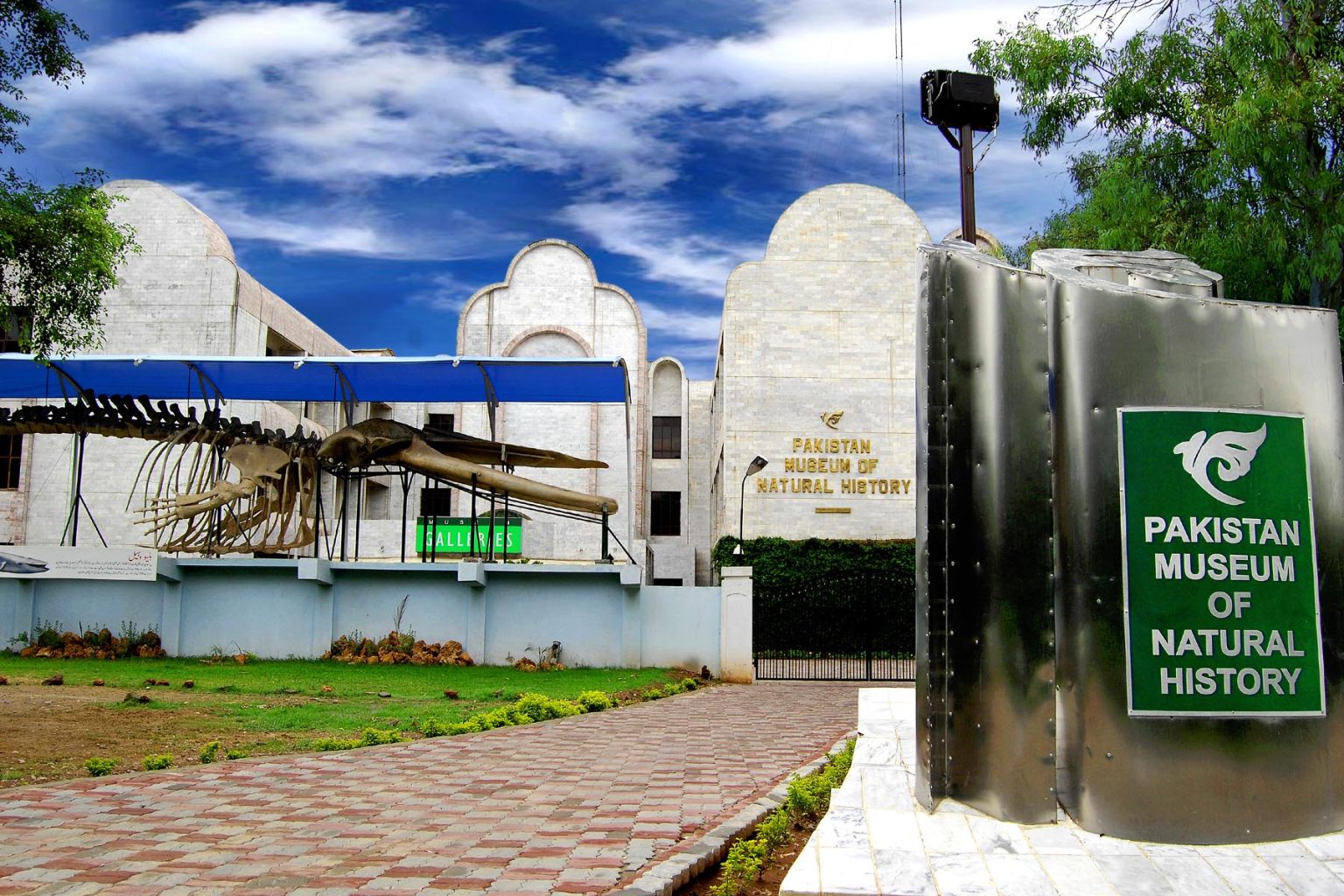
Front entrance of the Pakistan Museum of Natural History in Islamabad
A science-focused Islamabad outing
Pakistan Museum of Natural History is an Islamabad attraction for visitors who want animals, rocks, fossils and scientific questions rather than another political or architectural memorial. Its official location is Garden Avenue in Shakarparian. Allow roughly two hours for a selective first visit as an editorial estimate, with extra time if children enjoy reading and comparing displays. The museum's research divisions and public displays have different functions, so a public visit should not be mistaken for access to laboratories or reference collections. Plan around the galleries and exhibits confirmed open on your date.
Research and public education belong together
The museum's official introduction identifies botanical sciences, earth sciences and zoological sciences divisions, alongside public services responsible for communicating natural history. That structure helps explain why one visit can move from mineral material to animal forms without being an arbitrary collection of curiosities. A research collection and an exhibition selection are not the same thing. Some scientifically valuable specimens may be kept for study rather than public display, and a model may be used to explain something too large or fragile to exhibit directly. Read labels for those distinctions before deciding what a display represents.
Whales, whale sharks and accurate names
The official exhibits page distinguishes a blue-whale display from a whale-shark specimen. The names make a productive family question: a whale shark is a fish, while a whale is a mammal. The page also explains the preservation and mounting of the large whale-shark specimen associated with Pakistan's coast. Do not treat a model, mounted specimen and skeleton as interchangeable terms. Ask the label what you are actually seeing. The most interesting observation may be a structural difference rather than sheer size, and claims about global records or conservation status should be checked against current specialist sources rather than repeated from an older exhibit description.
Explore the places and guides mentioned
Photographs show the linked places or guide subjects. Open each page for its own visiting and planning information.

A model and a specimen answer different questions
The extinct-mammal model and the mounted marine specimen create a useful comparison. A model communicates a scientific reconstruction and scale; a preserved specimen retains physical material from an organism. Neither is simply a less impressive version of the other. Ask what evidence supports the reconstruction and what preservation changes about the specimen you see. The museum's labels should guide those answers rather than an adult's confident guess.
The same distinction applies to habitat scenes and skeleton displays. An arranged setting is an interpretation, while bones can reveal structural relationships that a fully covered body hides. This gives children a clear scientific habit: identify what kind of evidence is in front of them before drawing a conclusion. It also helps adults avoid captions that call a model an excavated animal or a reconstructed scene a living habitat. Accuracy can make a striking display more interesting rather than less dramatic.
Rocks and an extinct mammal provide a change of scale
The official exhibits overview identifies a Rock Garden with igneous, sedimentary and metamorphic examples collected from several parts of Pakistan, and a life-size Baluchitherium model associated with fossil discoveries in Balochistan. The model should be captioned as a model, not as a complete fossil skeleton found intact. With rocks, notice texture, grain and layering where the labels invite it, without handling specimens unless permitted. These displays let a visit move between biological and geological time. Keep the distinction between an illustration of an extinct animal and the actual fossil evidence used by scientists to reconstruct it.
A practical Shakarparian approach
Use Pakistan Museum of Natural History, Garden Avenue, rather than simply 'museum at Shakarparian' when booking transport. Lok Virsa and the Pakistan Monument Museum are separate attractions in the broader area, each with its own entrance and schedule. Save the correct location and arrange a return pickup before entering. Do not assume all nearby attractions can be connected through public interior paths. A two-museum day can work if everyone wants it, but a science visit and a heritage visit require different kinds of attention. Leave a meal or outdoor rest between them instead of planning only admission-to-admission movement.
A two-hour route built around comparisons
Begin by asking which galleries are open and whether a current plan is available. Choose one animal display and one earth-science display as anchors, then let a third subject follow the group's curiosity. The official gallery page names Bio, Tethys, Gemstones, Palaeo, Eco and Dino among its headings, but those headings are not a guarantee that every section is fully available. Encourage children to distinguish observation from explanation: what can they see, what does the label say and what remains a question? End with a return to one display after a different gallery has changed how they understand it.
The museum publishes conflicting hours
The official homepage and dedicated timings page reviewed for this guide give different daily schedules. Both identify a Friday prayer break, but their wider opening hours are not consistent. Do not choose the version most convenient to your itinerary. Contact the museum directly for the date, last entry and galleries open. The official contact page gives the reception number as 051-9249248. No current admission tariff is verified here. Ask about photography, bags, group visits and any separate exhibition charge. A phone confirmation is especially worthwhile if travelling across Islamabad for a late-afternoon visit.
Families, access and what to leave for another day
Ask about entrance steps, circulation, accessible toilets and seating if those needs affect the outing. Large specimens do not necessarily mean hands-on exhibits; children should follow the current touching rules and avoid climbing mounts or barriers. Read the Islamabad city guide and DailyLife's existing Lok Virsa guide before adding another stop. A useful finish is to let each person choose one animal or rock question to investigate later. That extends the museum's educational purpose without requiring a worksheet or an exhausting complete circuit. The visit can be successful with three well-understood displays and time left for lunch.
Use the official attraction information as your starting point for the enquiries above.
For related planning, read Lok Virsa Museum.
Continue planning your trip
Frequently Asked Questions
Is this Lok Virsa?
No. Pakistan Museum of Natural History is the science museum on Garden Avenue. Lok Virsa is a separate heritage museum with different access arrangements.
Which official opening hours should I use?
The homepage and dedicated timings page disagree. Contact reception for your date rather than relying on either schedule without confirmation.
Is the large extinct mammal a complete fossil?
The official exhibits page describes a life-size Baluchitherium model. A model should not be labelled as an intact excavated skeleton.
How long should I allow?
Around two hours is an editorial starting allowance for selected galleries. Children’s interests, open sections and reading pace can extend or shorten it.
How we know this
- Type Travel guide
- Sources 5 (5 official/academic)
- Reviewed October 2026
- Disputed points None
Rules and fees change, confirm with the official links below before you act.
5 sources
- Pakistan Museum of Natural History — official information, Pakistan Museum of Natural History, Government of Pakistan
- Exhibits, Pakistan Museum of Natural History, Government of Pakistan
- Gallery subjects, Pakistan Museum of Natural History, Government of Pakistan
- Dedicated visitor timings page, Pakistan Museum of Natural History, Government of Pakistan
- Contact and reception, Pakistan Museum of Natural History, Government of Pakistan
Photo credits (3)
- Front view of the Pakistan Museum of Natural History.JPG, Waqas-anees2014, CC BY-SA 3.0, via Wikimedia Commons
- Faisal Mosque, Islamabad III.jpg, Fassifarooq, CC BY-SA 4.0, via Wikimedia Commons
- (Lok Virsa Museum) Islamabad )By @ibneazhar (5).JPG, Ibnazhar, CC BY-SA 3.0, via Wikimedia Commons
