
Places to visit
Dai Anga’s Tomb: a practical visitor guide
Visit Dai Anga’s Tomb: what to see, historical context, getting there, a realistic plan, families and official access checks.
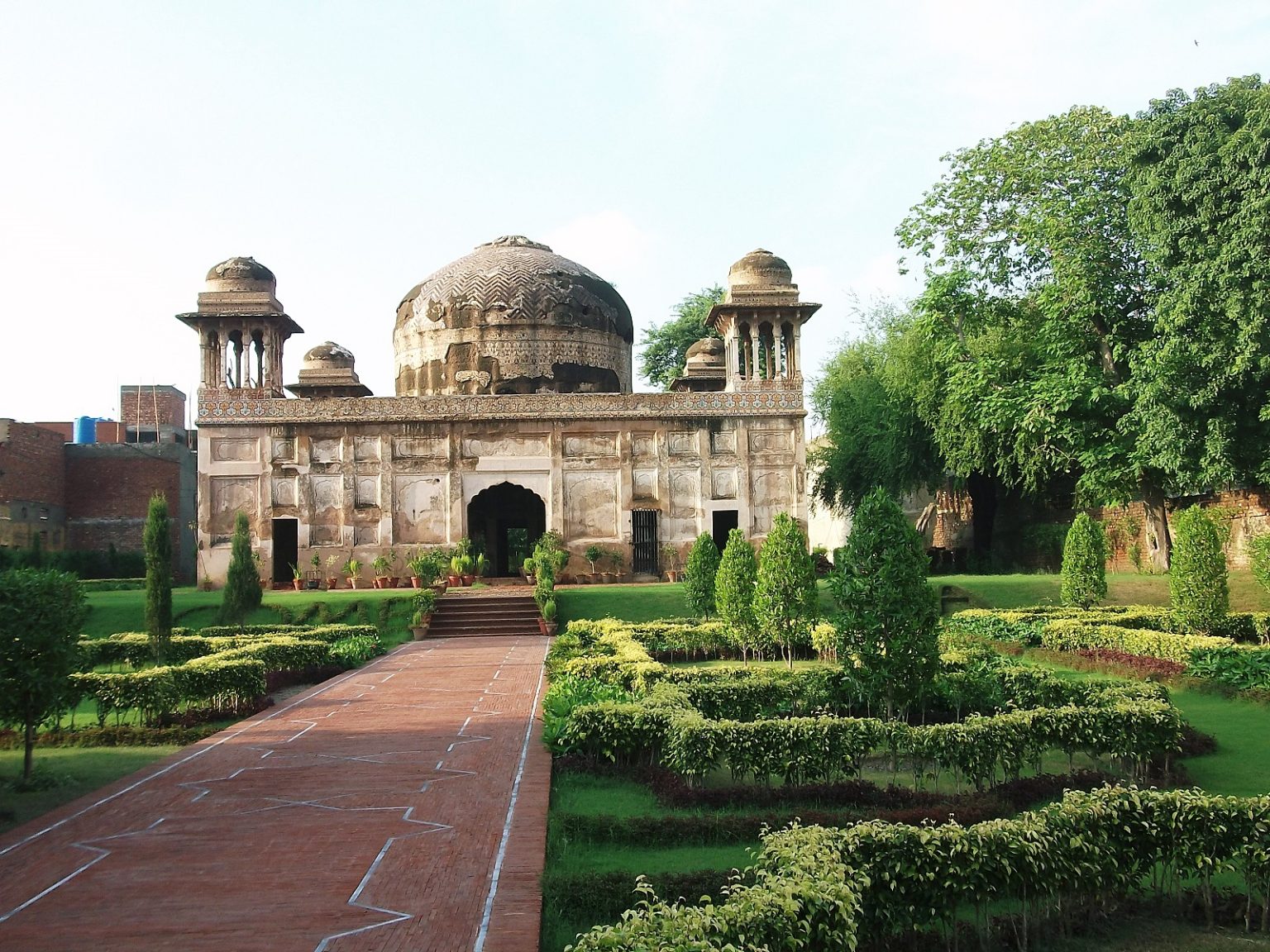
Front view of the Tomb of Dai Anga in Lahore
A quieter-scale Mughal monument
Dai Anga's Tomb offers a focused Lahore visit for people interested in architectural detail beyond the city's largest monuments. The mausoleum is associated with the Gulabi Bagh gateway and the former garden setting in Begampura. It is not the same attraction as Dai Anga's Mosque near the railway station. Allow around forty-five minutes to an hour for an attentive visit if access is confirmed, as an editorial estimate. Its scale encourages close looking rather than a long circuit, but a dedicated journey still needs current entrance and opening information from the responsible heritage authority.
What can be said about Dai Anga
The federal heritage account identifies Dai Anga as the wife of Murad Khan and the founder of the mosque bearing her name. It describes her tomb behind the Gulabi Bagh gateway. Those associations support the visitor connection without requiring an elaborate biography assembled from unsourced anecdotes. The Lahore Division government page identifies the complex as a seventeenth-century Mughal tomb in Begampura and notes its protected status. Protected heritage status is a legal and conservation description; it does not establish a particular visitor timetable, a staffed reception or unrestricted access to every part of the structure.
The architecture rewards a simple plan
The federal account describes a square brick structure on a low platform, with a central chamber and eight surrounding rooms. It identifies mosaic decoration, a low dome on a raised neck and corner kiosks. Rather than memorising that list, compare centre and edge: how does the main chamber differ from the smaller surrounding spaces, and how do the roof elements balance the square plan? View only the parts currently open and visible. An architectural description of a room does not imply permission to enter it, and a low platform is not an invitation to climb onto delicate surfaces.
Explore the places and guides mentioned
Photographs show the linked places or guide subjects. Open each page for its own visiting and planning information.


Mosaic, brick and roof forms should be read together
The tomb's decorative appeal can draw attention away from its plan. Use the official description of a central chamber and surrounding rooms to notice how the exterior communicates hierarchy, where that is visible from the current route. The main dome and corner kiosks create a relationship between centre and perimeter; decoration then works within that structure rather than replacing it.
The Gulabi Bagh gateway provides another scale of movement and framing. Looking from a public viewpoint, compare the experience of approaching a garden entrance with arriving at a funerary building. Keep the distinction between architectural observation and historical reconstruction clear. You can describe how a passage directs your view today without claiming to know every element of an earlier procession or garden layout. This approach gives a small site several concrete questions while preserving uncertainty about features that no longer survive or are not open to visitors.
The gateway and garden relationship
If the authorised route allows both gateway and tomb views, use them to understand a sequence rather than two unrelated photo opportunities. A gateway marks a change of space, while a mausoleum establishes a destination. The earlier garden does not need to survive intact for that relationship to be meaningful. Avoid confidently drawing vanished boundaries or attributing every surrounding wall to the original design. Look for interpretation that distinguishes surviving fabric from later additions. This is also a useful place to notice how a historic monument survives within a growing neighbourhood rather than in a completely separate archaeological landscape.
Find the tomb, not the mosque
Use Dai Anga's Tomb, Gulabi Bagh and Begampura together in your transport notes and confirm the actual public approach. An instruction using only Dai Anga can send a driver to the mosque instead. Arrange a return meeting point before leaving the vehicle, especially if the last portion is on foot. Do not assume the nearest lane is open to visitor vehicles or suitable for waiting. Keep the outing separate from any railway-station visit unless the route genuinely fits. Even two sites associated with one person need distinct access checks and a realistic city transfer.
A calm first-visit sequence
Begin with the gateway and setting if they are part of the current public route. Then take a broader view of the tomb before concentrating on the mosaic and roof forms. Read any available interpretation about repairs or changed cenotaphs; the federal description notes that the original pair of cenotaphs was replaced. This is a reminder that a tomb's visible interior can change over time. Finish with a second overall view after the details make sense. For children, compare the central dome with the corner elements and ask how the building makes the centre feel more important.
Access and condition must be checked directly
This guide does not verify a current fee, regular opening hours, interior access or on-site facilities. Contact the relevant Punjab heritage authority before a dedicated journey and ask about the entrance, current works and whether ordinary visitors are being admitted. Visitors with mobility needs should clarify steps, path surfaces and access to any chamber they hope to see. Do not assume toilets, drinking water or seating at a small protected monument. Photography rules may differ between an exterior view and an interior funerary space, so ask and follow current instructions rather than relying on a previous visitor's pictures.
Use the official attraction information as your starting point for the enquiries above.
Keep the wider outing proportionate
Read the Lahore city guide for broader Lahore planning and treat Dai Anga's Mosque as a separate potential companion if both access and transport are confirmed. The shared association can make the comparison meaningful, but their different functions should remain clear: one is a mausoleum, the other a mosque. Leave time for a meal or rest instead of collecting several small monuments without context. Respect the funerary nature of the place, keep voices considerate and avoid posing on the building. The reward is a closer understanding of a specific monument, including what has survived and what remains uncertain.
For related planning, read Hidden heritage sites in Punjab.
Continue planning your trip
Frequently Asked Questions
Is this Dai Anga’s Mosque?
No. The tomb is associated with Gulabi Bagh in Begampura. The mosque near Lahore railway station is a separate monument.
What is architecturally distinctive?
The federal account describes a central chamber with eight surrounding rooms, mosaic decoration, a raised-neck dome and corner kiosks. Current visibility and entry need confirmation.
Are the cenotaphs original?
The federal description says the original two cenotaphs were replaced. Do not assume every visible element remains exactly as first built.
How long should I allow?
Forty-five minutes to an hour is an editorial estimate if access is confirmed, with extra time for the city approach and pickup.
How we know this
- Type Travel guide
- Sources 2 (2 official/academic)
- Reviewed October 2026
- Disputed points None
Rules and fees change, confirm with the official links below before you act.
2 sources
- Dai Anga’s Tomb — official information, Government of Pakistan
- Tomb of Dai Anga, Lahore attractions, Lahore Division, Government of Punjab
Photo credits (3)
- Front view of the Tomb of Dai Anga.JPG, M Umair Astro, CC BY-SA 3.0, via Wikimedia Commons
- Night View of Badshahi Mosque (King’s Mosque).jpg, Muhammad Ashar, CC BY-SA 3.0, via Wikimedia Commons
- Sohail Gate, Rohtas Fort, Pakistan.jpg, MBNav412, CC BY-SA 4.0, via Wikimedia Commons
