
Places to visit
Quaid-e-Azam House Museum: a practical visitor guide
Visit Quaid-e-Azam House Museum: what to see, historical context, getting there, a realistic plan, families and official access checks.
Quaid-e-Azam House Museum in Karachi
The Jinnah site to choose for a domestic setting
Quaid-e-Azam House Museum, commonly called Flagstaff House, is a historic house attraction in central Karachi. It gives a different perspective from a mausoleum or a national political-history gallery because the building and its furnished rooms frame the visit. Plan about an hour to ninety minutes as an editorial allowance. The Sindh antiquities authority places it at the crossing of Shahrah-e-Faisal and Fatima Jinnah Road in the Staff Lines area. Use that full destination when arranging transport: Karachi has several sites linked to Muhammad Ali Jinnah, and they are not interchangeable stops.
A documented purchase, with no invented residence story
The official Sindh description records Jinnah's purchase of the house from Sorab Kavasji Katrak in August 1943. That is a firmer foundation for the visit than repeating an unsupported claim that he lived continuously in a particular room or spent a fixed number of years here. The building's significance comes from its association, preservation and interpretation. When reading displays, distinguish an item identified as Jinnah's belonging from furniture used to present a period setting. A convincing domestic atmosphere is not by itself proof of an object's provenance or exact position during the owner's life.
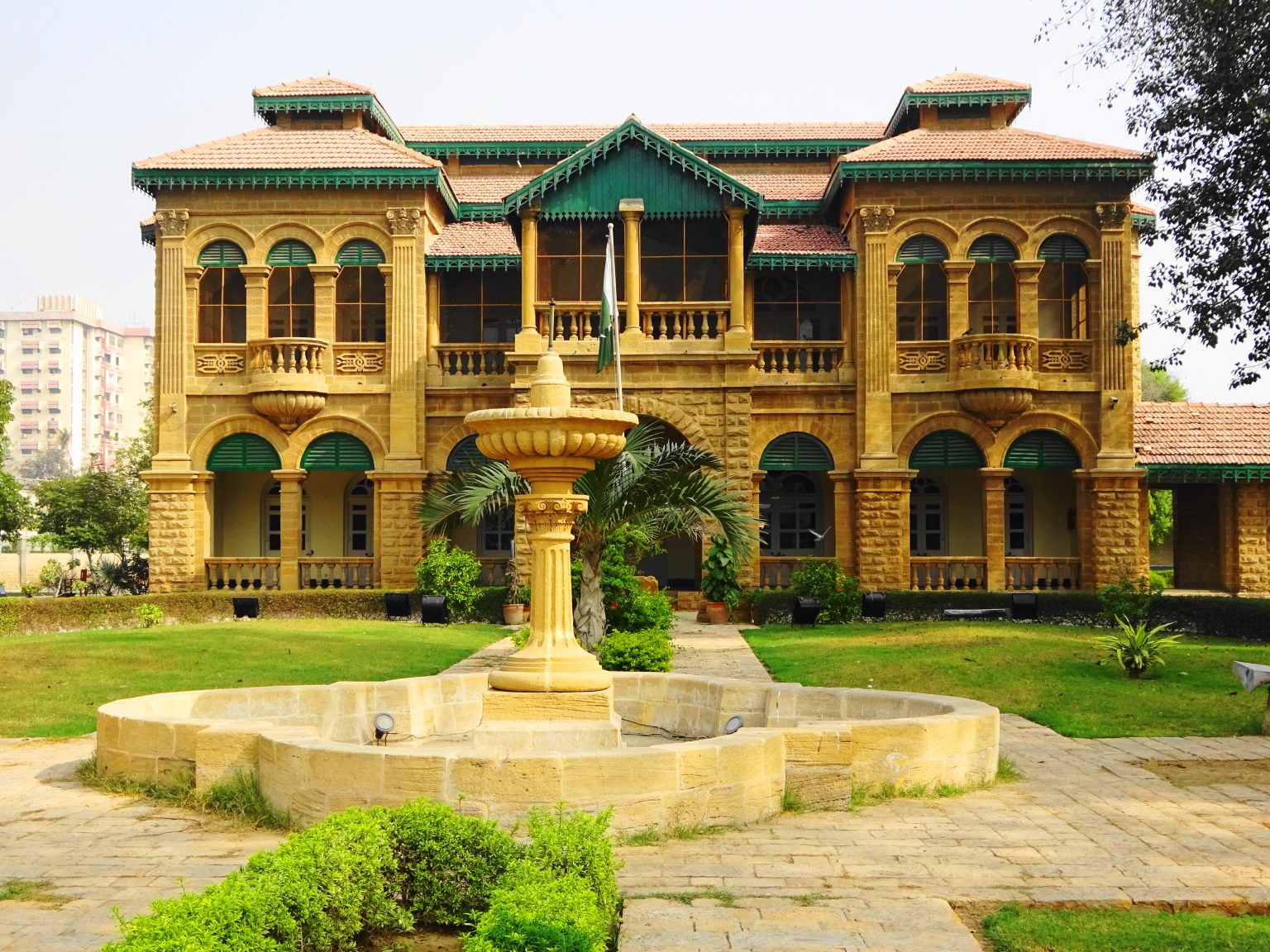
Look at the yellow-stone building as a house
Before moving quickly from case to case, notice the relationship between the facade, verandahs, doors and rooms that are open to visitors. A house museum can communicate the scale of domestic space as well as display personal possessions. Ask which features belong to the historic building and which were introduced during conservation or conversion. Where belongings are labelled, use the label's wording when making notes or captions. Do not claim a particular desk witnessed a famous decision or a chair was used for a specific meeting unless the museum actually provides that evidence.
The yellow stone and two-storey form identified by the Sindh authority offer a clear exterior starting point. Begin with the building as a whole before moving to individual belongings, so the visit retains a sense of a residence rather than becoming a disconnected collection of small historical labels.
Explore the places and guides mentioned
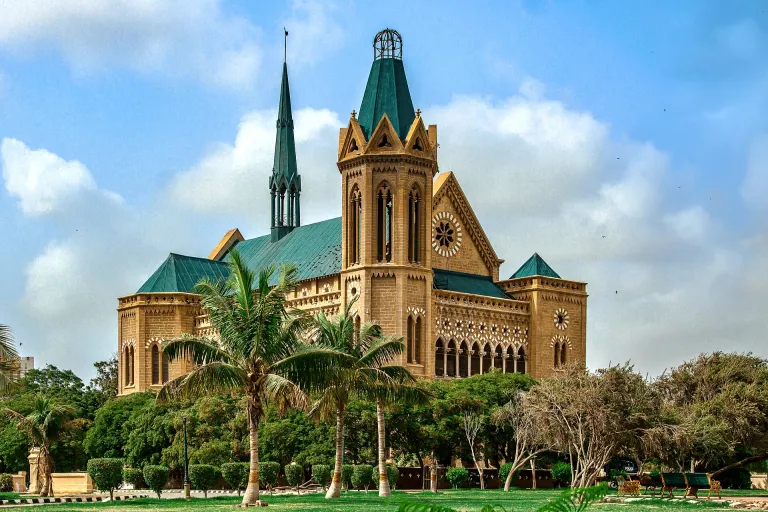
Photographs show the linked places or guide subjects. Open each page for its own visiting and planning information.

The former owner belongs in the account
The Sindh authority identifies the seller as Sorab Kavasji Katrak, a former mayor of Karachi. Including that documented name broadens the building's context beyond its most famous later association. A historic house can connect civic office, private ownership and national remembrance without requiring every phase to remain equally visible. The museum's title directs attention towards Jinnah, but visitors can still ask how ownership and function changed before and after the purchase. An official purchase date is stronger evidence than an undated story that a famous person slept in a particular room every night.
This is also a useful place to distinguish furniture as evidence from furniture as atmosphere. A label identifying an object’s ownership can support a specific association, while a room arranged to communicate domestic scale may serve a broader interpretive purpose. Neither approach is inherently less useful, but they should not be confused. In your own photograph captions, identify a room as displayed in the museum unless the museum establishes the exact historical arrangement. That keeps the record accurate even if displays later change. A careful visitor can enjoy the building's domestic character while recognising that a public museum necessarily selects, protects and explains rather than simply reopening an untouched private home.
A practical central-city approach
Save Flagstaff House and Quaid-e-Azam House Museum together with the road junction in your route notes. A busy junction is not a convenient place for an improvised stop, so ask your driver where visitors can be set down lawfully. Arrange the return meeting point before entering. If combining the visit with Frere Hall, use a current map and assess the actual crossings and footpaths instead of assuming the nearby distance makes an easy walk for everyone. Carry a compact bag and resolve storage elsewhere if arriving from an airport transfer or with shopping.
A short visit with a clear sequence
Ask at the gate which rooms are open and whether there is a directed route. Begin with the exterior and orientation material, then give the furnished interiors your main attention. Select one labelled personal object, one architectural detail and one interpretive panel to remember. Finish by considering how the museum separates private life from public commemoration. Families can share those choices after leaving the rooms so that conversations do not obstruct doorways. If a room is closed for conservation or operations, do not treat an old visitor photograph as a promise that access should be available.
Published hours are a starting point, not a guarantee
The Sindh authority's visitor information publishes 9am to 5pm and a Wednesday closure. Reconfirm the intended date before travelling because holidays, Ramadan, conservation and special events can alter access. This guide does not verify a current ticket tariff. Ask about admission categories, photography, bags and any room-specific restrictions. For mobility needs, request a description of entrance steps and internal circulation and ask how much of the house can be seen without stairs. A building can welcome the public while still presenting physical constraints that matter to an individual visitor.
Use the official attraction information as your starting point for the enquiries above.
A meaningful Karachi pairing
The best companion is a place that adds a different perspective. Frere Hall offers a civic-building comparison, while Wazir Mansion presents another, separate Jinnah association in Kharadar. Avoid fitting both into a rushed chain simply because they share a historical figure. Read the Karachi city guide for broader transport context and allow for a meal between concentrated heritage visits. With children, compare the house's rooms with a modern home and ask what a museum chooses to preserve. That approach can be more engaging than asking for memorised dates and keeps the outing grounded in observable features.
For related planning, read Colonial heritage of Pakistan.
Continue planning your trip
Frequently Asked Questions
Is Flagstaff House another name for this museum?
Yes. The Sindh antiquities authority identifies Quaid-e-Azam House Museum as popularly known as Flagstaff House.
Is this Wazir Mansion?
No. Wazir Mansion is a separate museum in Kharadar. Confirm the correct site when arranging a driver or searching a map.
What opening pattern is published?
The official page publishes 9am–5pm with Wednesday closed. Recheck directly for your date; this is not a guarantee against temporary changes.
Can I expect every room to be open?
No. Ask about current room access, conservation and photography restrictions. Individual displays and routes may differ from older photographs or travel accounts.
How we know this
- Type Travel guide
- Sources 1 (1 official/academic)
- Reviewed October 2026
- Disputed points None
Rules and fees change, confirm with the official links below before you act.
1 sources
- Quaid-e-Azam House Museum — official information, Site operator / Government of Sindh
Photo credits (3)
- Quaid-e-Azam House Karachi.jpg, Miansari66, CC0, via Wikimedia Commons
- Karachi Skyline 1.jpg, Ktownboy103, CC0, via Wikimedia Commons
- Frere Hall Karachi. Pakistan.jpg, Asim Iftikhar Nagi, CC BY-SA 4.0, via Wikimedia Commons
