
Places to visit
National Museum of Pakistan, Karachi: a practical visitor guide
Visit National Museum of Pakistan, Karachi: what to see, historical context, getting there, a realistic plan, families and official access checks.
National Museum of Pakistan in Karachi
A central Karachi introduction to material history
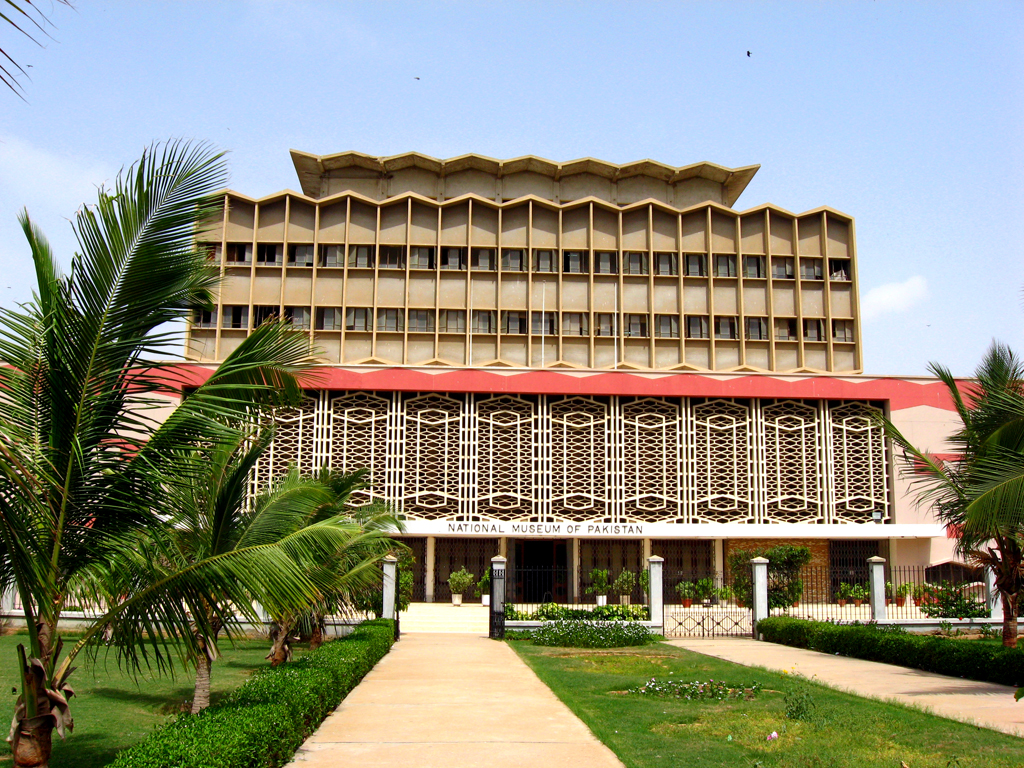
The National Museum of Pakistan is a useful choice when you want archaeology and historical objects rather than an outing centred on a single building. It occupies premises in Burns Garden on Dr Ziauddin Ahmed Road, not Frere Hall, where the institution began. Allow roughly two hours for a first selective visit; this is an editorial estimate. Someone particularly interested in manuscripts, ancient urban life or Gandharan sculpture may want longer. The museum works best as the main indoor attraction in a central Karachi half-day, with a meal or rest break before a second demanding stop.
Separate the museum's origins from its present location
The federal archaeology directory dates the museum's establishment in Frere Hall to 1950 and its move to the current premises to 1970. That relocation matters when following an old description or asking a driver for directions. The institution's wide remit covers several historical periods and collection types. It should not be read as a simple illustrated national timeline in which every object points inevitably towards the present. Look for the object's own date, locality and purpose. Those details often reveal a more interesting and complicated history of movement, exchange and changing use.
The small objects are worth serious attention
The official overview identifies Indus civilisation material, Gandharan sculpture, Islamic art, manuscripts, coins and ethnological displays. It also names material from Mohenjo-daro, including seals and terracotta toys. Begin with objects whose scale is easy to overlook. A seal can invite questions about identification, administration or communication, while a toy invites a different kind of historical attention. Neither object tells a complete story on its own. Compare the caption's evidence with your interpretation and avoid assigning a specific personal owner, purpose or scene unless the museum provides that identification.
The institution’s shift from Frere Hall to Burns Garden is also a useful theme for an architecture-minded visitor. A museum collection can outgrow or leave one public building while retaining its identity. Compare the current purpose-built setting with the older civic hall only after checking access at both.
Explore the places and guides mentioned
Photographs show the linked places or guide subjects. Open each page for its own visiting and planning information.


Manuscripts and coins make a different kind of visit
The federal collection overview identifies a Quran Gallery and a substantial coin collection, alongside the more widely photographed archaeological material. If those galleries are accessible, use them to change the pace of the visit. With a manuscript, notice layout, script and the relationship between the written page and decoration, following the museum's rules about light and photography. Do not mistake a religious manuscript's content for its date: copies can share a text while belonging to very different moments, materials and production contexts. A label is needed to connect the visible page with those specifics.
Coins create a different problem of scale. Their inscriptions and images may be difficult to read unaided, so select a clearly interpreted example rather than trying to decipher every case. A ruler's name, mint or date can support a specific historical claim; a worn unlabelled shape cannot. Compare the public authority represented by a coin with the skill and labour represented by a manuscript. This gives two smaller-scale collections a coherent place in the visit and avoids measuring the museum only by a few celebrated Indus objects. Ask at reception which of these subjects is currently open before deciding the route, since holdings and daily display are not the same thing.
Approach and transport in central Karachi
Set the exact destination as National Museum of Pakistan, Burns Garden. Karachi's several prominent museums are spread across different neighbourhoods, so 'the museum' is not an adequate instruction for a driver. Confirm a lawful drop-off and a return pickup point, particularly if combining the visit with Saddar. A short distance on the map can still involve a circuitous drive. Keep intercity luggage elsewhere unless storage has been confirmed. If walking between attractions, assess the actual pavement and crossings rather than drawing a straight line through traffic on a map.
A manageable two-hour route
At the entrance, ask which galleries are currently open and whether any signature objects are away from display. Select two subjects with a clear contrast, such as Indus material and manuscripts, rather than trying to cover all collections equally. Spend about the first hour with the subject that brought you here. Use the second for a contrasting group and one return visit to a memorable object. A family can agree on a few shared cases and then browse separately. This protects attention and makes the visit less dependent on everyone reading at the same speed.
Access and admission need fresh confirmation
The heritage inventory provides background and collection information, not a live opening calendar or ticket tariff. Confirm the date, closed day if any, last entry and current admission categories with the responsible authority. Ask separately about manuscript-gallery availability, photography and any restrictions on bags. A museum's collection may include objects that are not on permanent public display, so do not organise the whole day around a named piece without checking. Visitors requiring step-free circulation should ask about the specific galleries they intend to see, accessible toilets and available seating rather than accepting a broad accessibility description.
Use the official attraction information as your starting point for the enquiries above.
An outing with a useful Karachi comparison
For children, ask which object was made for everyday handling and which needed special care even when new. Avoid making ancient people sound primitive because a material differs from today's equivalent. After the museum, Frere Hall offers a useful comparison between an institution's earlier home and its present setting, but confirm building access there independently. Read the Karachi city guide for a wider route. DailyLife's Mohenjo-daro guide provides landscape context for an entirely separate trip; seeing an object from a site in a museum is not the same experience as visiting the excavated urban remains.
For related planning, read Mohenjo-daro.
Continue planning your trip
Frequently Asked Questions
Is the museum in Frere Hall?
It began there in 1950, but the federal directory records its move to the present Burns Garden premises in 1970. Use the current museum destination for transport.
What collections can I expect?
The official overview covers Indus material, Gandharan sculpture, manuscripts, coins, Islamic art and ethnology. Current gallery openings and individual object availability need confirmation.
Can I see everything in an hour?
An hour is better used for one chosen subject. Around two hours is an editorial allowance for a more varied introduction without rushing every case.
Are tickets and photography confirmed?
No current tariff or blanket photography permission is asserted here. Ask the museum authority about your date and the galleries you hope to see.
How we know this
- Type Travel guide
- Sources 1 (1 official/academic)
- Reviewed October 2026
- Disputed points None
Rules and fees change, confirm with the official links below before you act.
1 sources
- National Museum of Pakistan, Karachi — official information, Government of Pakistan
Photo credits (3)
- National Museum of Pakistan, Karachi 1.jpg, Shahid1024, Public domain, via Wikimedia Commons
- Karachi Skyline 1.jpg, Ktownboy103, CC0, via Wikimedia Commons
- Mohenjodaro - view of the stupa mound.JPG, Saqib Qayyum, CC BY-SA 3.0, via Wikimedia Commons
