
Pav Bhaji
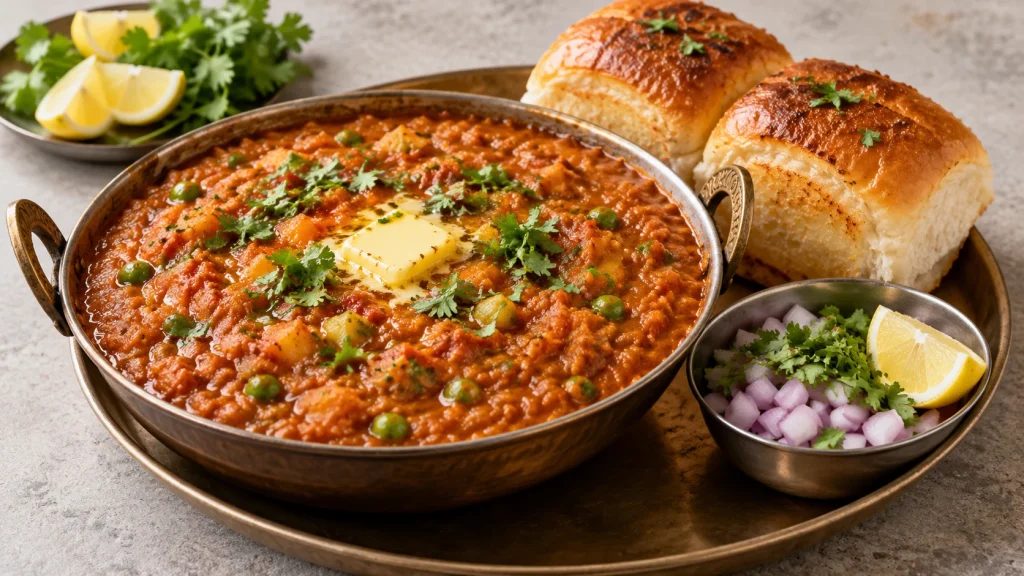
A mashed potato-and-vegetable pav bhaji with tomato, butter and a measured spice blend, served with griddle-toasted bread rolls
A mashed potato-and-vegetable pav bhaji with tomato, butter and a measured spice blend, served with griddle-toasted bread rolls. Vegetables are cooked soft before mashing into a cohesive bhaji.
Plan about 90 minutes including 25 minutes preparation, 65 minutes cooking and 0 minutes of separate resting or chilling. Cooking times are ranges: ingredient thickness, pan width and burner strength alter the endpoint. Preparation is counted separately rather than assuming every task overlaps. One tablespoon = 15 ml; one teaspoon = 5 ml.
About Pav Bhaji
A mashed potato-and-vegetable pav bhaji with tomato, butter and a measured spice blend, served with griddle-toasted bread rolls. Vegetables are cooked soft before mashing into a cohesive bhaji.
Cook cauliflower until it mashes easily; finely chopping raw cauliflower does not replace the softening stage.
Personally cooked and tested by Zohair Fakhar for DailyLife.pk. Cooking times can vary with your stove, cookware and batch size; follow the texture and doneness cues in the method.
Make it work for your kitchen
Original quantities serve 4. Cooking times, pan size and frying-oil depth do not scale, cook in extra batches instead.
Before you start
Prepare the batch
Read the complete method, measure ingredients and keep finishing portions separate. Simmer potato and cauliflower in 500 ml water, covered, 15–20 minutes until very soft.
Mise en placeControl liquid and salt
Do not add a separately marked water or oil allowance automatically; use it only at the stage and for the purpose identified in the method.
Batch controlSet up the equipment
Have the following tools ready before starting: 3 litre vegetable saucepan; Wide heavy bhaji pan and potato masher; Flat griddle for pav; Broad spatula.
Clean workspaceMeasure the ingredients
Measure the ingredient quantities for your selected servings before applying heat. Keep separately listed groups, such as dough, filling, sauce or garnish, in separate containers; keep any optional additions separate.
Use the ingredient list above
Step-by-step cooking method
1 Soften vegetables
Simmer potato and cauliflower in 500 ml water, covered, 15–20 minutes until very soft.
2 Soften vegetables (continued)
Add peas for the last 5 minutes. Mash vegetables into their remaining cooking liquid; retain liquid rather than draining away the measured hydration.
3 Make masala
Heat oil and 40 g butter in a wide heavy pan. Soften onion 8 minutes, add ginger and garlic for one minute, then pepper and tomato.
4 Make masala (continued)
Cook 10–12 minutes until tomato is pulpy. Stir in spice blend, chilli and salt for one minute.
5 Mash together
Add cooked vegetables and mash repeatedly with a potato masher over low heat.
6 Mash together (continued)
Simmer 10–15 minutes, scraping the base. Add measured allowance gradually until the bhaji is soft and spreadable, with no hard cauliflower or potato pieces.
7 Toast rolls
Split rolls without cutting right through. Melt remaining 30 g butter on a griddle and toast cut surfaces in batches until warm and gold, about 1 minute per batch. Do not scorch the butter.
8 Finish
Stir lemon and coriander into bhaji and serve with two rolls per portion. Keep bread separate until serving so it does not become soggy.
Chef’s tips
- Cook cauliflower until it mashes easily; finely chopping raw cauliflower does not replace the softening stage.
Common mistakes & quick fixes
- Why is my bhaji watery around the edges?
- The mashed vegetables and tomato need a gentle uncovered simmer to bind. Stir and reduce before adding more of the allowance.
- Can I leave the vegetables chunky?
- A few small pieces are fine, but pav bhaji is characteristically mashed. Large separate potato cubes make a different vegetable curry.
Variations & serving ideas
Chosen version: A mashed potato-and-vegetable pav bhaji with tomato, butter and a measured spice blend, served with griddle-toasted bread rolls. Vegetables are cooked soft before mashing into a cohesive bhaji.
Seasoning adjustment: Keep the main ingredient and technique unchanged when adjusting chilli or finishing herbs. Substitute packaged sauces only after checking salt content and allergens.
Perfect result check
| Main ingredient | Split rolls without cutting right through. Melt remaining 30 g butter on a griddle and toast cut surfaces in batches until warm and gold, about 1 minute per batch. Do not scorch the butter. |
|---|---|
| Finished batch | Stir lemon and coriander into bhaji and serve with two rolls per portion. Keep bread separate until serving so it does not become soggy. |
Storage & reheating
| Covered and chilled | Refrigerate within 2 hours; use within 48 hours | Divide into shallow portions for rapid cooling and refrigerate within 2 hours. Reheat once until steaming hot throughout; stir soups to eliminate cool pockets. |
|---|---|---|
| Freeze if suitable | Best quality within one month | Freeze in labelled meal portions after prompt cooling. Defrost in the refrigerator and reheat thoroughly once. |
Know when to change the heat
| Stage | Heat | What to look for |
|---|---|---|
| Soften vegetables | Low heat | Simmer potato and cauliflower in 500 ml water, covered, 15–20 minutes until very soft. |
| Make masala | Medium-low heat | Heat oil and 40 g butter in a wide heavy pan. |
| Mash together | Low heat | Add cooked vegetables and mash repeatedly with a potato masher over low heat. |
| Toast rolls | Medium heat | Split rolls without cutting right through. |
| Finish | No heat | Stir lemon and coriander into bhaji and serve with two rolls per portion. |
Helpful answers before you cook
Why is my bhaji watery around the edges?
The mashed vegetables and tomato need a gentle uncovered simmer to bind. Stir and reduce before adding more of the allowance.
Can I leave the vegetables chunky?
A few small pieces are fine, but pav bhaji is characteristically mashed. Large separate potato cubes make a different vegetable curry.
When should I toast the pav?
Toast just before serving so the cut sides stay warm and lightly crisp; storing them against hot bhaji makes them soggy.


