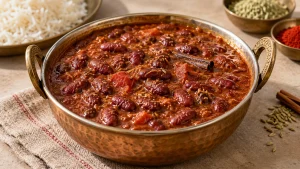
Kashmiri Harissa
Lamb and rice slowly cooked into a soft, cohesive porridge
A home-stove Kashmiri harissa made with boneless lamb shoulder, short-grain rice, ghee, fennel and dry ginger, cooked until the meat and rice bind together.

For the original eight-person batch, plan about 295 minutes: 25 minutes preparation and about 270 minutes across the cooking and handling stages. The listed stage allowances are 180 minutes for the lamb, 15 minutes for shredding and straining, 55 minutes for rice cooking and combining, 15 minutes for beating and 5 minutes for checking and finishing. These total 270 minutes; do not add them again to that figure. Some shredding can overlap the start of rice cooking as described in the method. Heating, straining, tenderness and batch size can extend the plan. Follow the lamb and rice texture rather than the clock alone. These are planning allowances, not measured guarantees; chilling leftovers is not included. One tablespoon = 15 ml; one teaspoon = 5 ml.
About Kashmiri Harissa
A rice-based Kashmiri lamb harissa cooked until the meat and grain become a soft cohesive breakfast-style porridge. This home-stove version is separate from the wheat-based Hunza Harissa draft.
The rice is meant to collapse into the lamb. A separate-grain pilaf texture is not the goal of this version.
Personally cooked and tested by Zohair Fakhar for DailyLife.pk. Cooking times can vary with your stove, cookware and batch size; follow the texture and doneness cues in the method.
Make it work for your kitchen
Original quantities serve 8. Cooking times, pan size and frying-oil depth do not scale, cook in extra batches instead.
Before you start
Prepare the batch
Measure the ingredients for your selected servings before starting. Have the boneless lamb cut into the listed 5 cm pieces and rinse the measured rice. Keep the rice aside until the broth has been strained.
Mise en placeControl liquid and salt
Keep the selected initial water separate from the selected top-up allowance. The initial water starts the lamb simmer; the top-up supply is added only as needed during cooking. Divide the measured salt into two equal portions: one for the lamb and one reserved for the finish, where it is added only as needed.
Batch controlSet up the equipment
Have the heavy pot and lid, ladle, heatproof strainer, clean receiving vessel, two forks, strong spoon, measuring tools and small ghee pan ready. Set up the broth straining area before lifting the hot lamb from the pot.
Clean workspaceMeasure the ingredients
Keep the rice, ground fennel, dry ginger powder and ghee measured separately for their later stages. Keep the lightly cracked green cardamom and cinnamon ready for the initial simmer. Keep the reserved half of the salt and the top-up water separate from the starting quantities.
Use the ingredient list above
Step-by-step cooking method
1 Start lamb
Put the boneless lamb shoulder measured for your selected servings in the heavy pot with the full selected initial water quantity, the selected green cardamom and cinnamon stick, and half of the measured salt. Reserve the other half of the salt for the finish; keep the separate top-up allowance aside.
2 Start lamb (continued)
Bring to a simmer, skim and partly cover. Simmer gently for 2–3 hours until the lamb shreds easily. Check the liquid level and add the separate selected top-up allowance in small increments only as needed to prevent drying; it is not an automatic addition.
3 Shred and strain
Lift the lamb into a clean vessel and remove any tough sinew. Strain the broth through the heatproof strainer into the clean receiving vessel to remove the whole spices, then return it to the pot. Add the short-grain rice measured for your selected servings and return to gentle heat. Shred the lamb very finely with two forks while the rice begins cooking.
4 Cook rice
Simmer the rice in the broth for 25–35 minutes until very soft and beginning to break down. Add the finely shredded lamb, the ground fennel and the dry ginger powder measured for your selected servings. Cook gently for another 20 minutes, stirring along the base frequently as the mixture thickens.
5 Beat porridge
Beat with a strong wooden spoon for 10–15 minutes until meat and rice bind together.
6 Beat porridge (continued)
Melt the ghee measured for your selected servings in the small pan until hot but not smoking, then fold it carefully through the porridge. Add only as much of the reserved half of the measured salt as needed; the other half was added with the lamb.
7 Check finish
Harissa should be smooth enough to spread with a spoon and moist rather than dry.
8 Check finish (continued)
If individual rice grains remain firm, return the pot to gentle heat, add only the needed amount of the remaining top-up allowance and continue cooking until the rice softens. Check the moist, cohesive texture again off the heat. Serve immediately; cool rice-containing leftovers rapidly in shallow portions as described in Storage & reheating.
Chef’s tips
- The rice is meant to collapse into the lamb. A separate-grain pilaf texture is not the goal of this version.
Common mistakes & quick fixes
- The mixture catches at the bottom.
- Lower the heat and stir along the base. If food has scorched, transfer the unburnt portion to a clean pan without scraping the burnt layer into it.
- The final texture is too thick.
- Add the listed top-up liquid in small increments, let it heat through, and check seasoning again. If there is no top-up allowance, use the texture correction specified in the steps.
Variations & serving ideas
Chosen version: A rice-based Kashmiri lamb harissa cooked until the meat and grain become a soft cohesive breakfast-style porridge. This home-stove version is separate from the wheat-based Hunza Harissa draft.
Seasoning adjustment: Keep the main ingredient and technique unchanged when adjusting chilli or finishing herbs. Substitute packaged sauces only after checking salt content and allergens.
Perfect result check
| Meat and rice texture | The lamb is finely shredded and the rice has softened enough to bind with it during beating. Firm rice grains or tough meat fibres mean the texture is not ready for the final finish. |
|---|---|
| Finished harissa | The mixture is moist and cohesive, and spreads with a spoon rather than separating into broth, meat and firm grains. Avoid reducing it to a dry mass. Texture is a cooking cue, not a measurement of finished weight or portion size. |
Storage & reheating
| Rapidly cooled rice-containing leftovers | Cool ideally within 1 hour; refrigerate and use within 24 hours | Divide into shallow portions. Reheat once until steaming hot throughout; do not leave rice in a warm covered pot to cool. |
|---|---|---|
| Freeze if suitable | Best quality within one month | Freeze in labelled meal portions after prompt cooling. Defrost in the refrigerator and reheat thoroughly once. |
Know when to change the heat
| Stage | Heat | What to look for |
|---|---|---|
| Start lamb | Low heat | Small bubbles move gently through the liquid under the partly covered lid. Continue until the lamb shreds easily; check the liquid level and use the separate allowance only as needed. |
| Shred and strain | No heat then low | Lift and shred the lamb off the heat, and strain out the whole spices. Return the strained broth to gentle heat for the rice; the shredding and rice cooking can overlap as the method describes. |
| Cook rice | Low heat | The rice becomes very soft and starts breaking down in the broth. After adding the shredded lamb and powdered spices, stir along the base frequently so the thickening mixture does not catch. |
| Beat porridge | Low heat | The shredded meat and soft rice begin to hold together as one moist mixture while beaten. Keep the heat low and watch the base as it thickens. |
| Check finish | No heat | Check the finished texture off the heat: it should be cohesive and spread with a spoon. If rice grains are still firm, return to gentle heat with only the needed remaining top-up water and continue cooking before serving. |
Helpful answers before you cook
What kind of harissa is this?
This home-stove formulation uses boneless lamb shoulder and short-grain rice, with fennel, dry ginger, cardamom, cinnamon and ghee. The regional reference provides context for meat-and-rice harissa; it does not validate these quantities, timings or the shredded-shoulder method.
Should rice grains stay separate?
The aim is very soft rice that binds with finely shredded lamb. Continue gentle cooking if the rice remains firm; beating is for combining already softened ingredients, rather than a substitute for cooking hard grains.
Why a shorter leftover limit?
This is a rice-containing dish, so follow the rice-specific guidance: divide leftovers into shallow portions, cool quickly, ideally within one hour, then refrigerate and use within 24 hours. Reheat only once until steaming hot throughout. Do not leave the batch in its warm cooking pot to cool.