
Missi Roti
Chickpea flour, wheat and finely cut aromatics
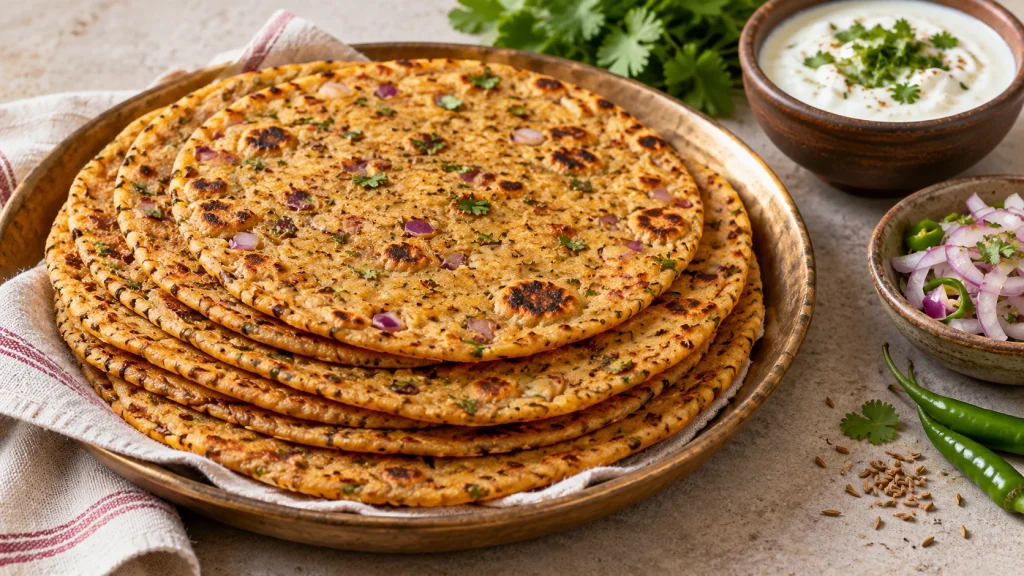
Savoury missi roti with besan, wheat atta, finely minced onion, coriander and chilli. Rest the dough before adjusting its water, then cook on a flat griddle with a little oil. The original four-serving batch makes eight rotis.
About 80 minutes is a planning allowance for the original eight rotis on one griddle: about 25 minutes preparation, 20 minutes rest, up to 32 minutes cooking and a first-roti check. The dry-setting and oil-finishing stages together take about 3–4 minutes per roti; larger batches take longer. One tablespoon = 15 ml; one teaspoon = 5 ml.
About Missi Roti
Missi roti combines besan with wheat flour for a savoury griddle bread that remains rollable. Finely chopped onion, coriander and crushed spices give this version a textured surface and a fuller flavour than a plain roti.
The wheat flour supplies enough stretch to hold the chickpea flour and vegetables together. Onion releases moisture after salting, so the dough starts a little firm and rests before the final adjustment. A thick onion dice punches holes; mince it to about 3 mm.
Personally cooked and tested by Zohair Fakhar for DailyLife.pk. Cooking times can vary with your stove, cookware and batch size; follow the texture and doneness cues in the method.
Make it work for your kitchen
Original quantities serve 4. Cooking times, pan size and frying-oil depth do not scale, cook in extra batches instead.
Before you start
Measure before mixing
Set out the flour, initial liquid and top-up separately. Flour brands absorb differently, so the allowance is a correction rather than an instruction to use every drop. Keep the finishing flour separate from the dough flour.
HydrationPrepare a cooking station
Keep the rolling surface dry, the uncooked portions covered and a cloth-lined plate close to the stove. Cook one bread first and inspect its middle before shaping the whole batch; this catches a cold griddle or overly thick rolling early.
WorkflowSet up the equipment
Have the following tools ready before starting: Digital kitchen scales; Mixing bowl and close-fitting cover; Rolling pin; Heavy flat griddle; Spatula; Clean cloth.
Clean workspaceMeasure the ingredients
Measure the ingredient quantities for your selected servings before applying heat. Keep separately listed groups, such as dough, filling, sauce or garnish, in separate containers; keep any optional additions separate.
Use the ingredient list above
Step-by-step cooking method
1 Mix the dough
Mix besan, the dough portion of atta, cumin, lightly crushed carom and salt. Rub in minced onion, coriander and chilli, then add the listed dough oil and initial water gradually. Keep the separate top-up water, dusting atta and griddle oil aside.
2 Mix the dough (continued)
Knead 5–6 minutes to a firm but coherent dough. Cover 20 minutes so the besan hydrates and onion releases liquid; only then add reserve water if the dough still cracks.
3 Divide and roll
Make equal balls allowing two rotis per selected serving (eight for the original four-serving batch). Roll with a light dusting of the separate dusting atta to 14 cm and about 4 mm thick. Move the pin gently over visible onion pieces; if an edge tears, press it together before continuing.
4 Dry-set the bread
Place on a medium-hot griddle. Cook 45–60 seconds until small bubbles and dull patches appear; flip and cook 60 seconds on the second side. The besan should lose its wet yellow look.
5 Brown with a little oil
Use the measured finishing oil in small amounts across both faces.
6 Brown with a little oil (continued)
Turn and press the edges gently with a spatula for another 1–2 minutes, until brown freckles appear and the middle is cooked.
7 Check the first roti
Tear a small section from the first bread.
8 Check the first roti (continued)
If the torn centre has a damp yellow band or sticky, uncooked dough, reduce the heat and extend cooking before eating. Do not taste undercooked dough to judge doneness. Keep fully cooked breads briefly under a cloth, allowing excess steam to escape.
Chef’s tips
- Keep portions covered while working; a dry skin makes seams and edges split.
- Brush away surplus dusting flour before cooking so it does not burn and taste bitter.
- Scale ingredient weights for a different yield, but keep individual bread size, pan capacity and cooking cues the same.
Common mistakes & quick fixes
- The bread tears or cracks while shaping.
- Cover and rest the dough for another 10 minutes. If it still fractures, knead in a little of the measured top-up; do not bury sticky dough under repeated handfuls of flour.
- Outside browns before the middle cooks.
- Reduce the heat slightly and check the specified thickness. Cook a little longer, turning as needed; do not increase the heat to compensate for thick rolling.
- Bread becomes tough before serving.
- Avoid prolonged cooking after the raw patches disappear. Hold only briefly in the suggested covering and serve the first batch promptly.
Variations & serving ideas
Serving adjustment: Make smaller breads by dividing the same dough into more portions. Keep the stated thickness and reduce cooking only when the centre is cooked; portion count is not a reliable timing formula.
Perfect result check
| Shape | The bread has an even centre and edges, without torn seams or a heavy ridge. |
|---|---|
| Interior | A cooled test piece tears cleanly, with no sticky raw flour line in the middle. |
| Eating texture | Serve warm, when the bread bends without feeling gummy or leathery. |
Storage & reheating
| Refrigerate | Up to 48 hours | Cool the cooked onion-and-herb rotis promptly, then wrap or close in a container and refrigerate within 1–2 hours at 0–5°C. Eat within 48 hours or freeze. Reheat until steaming hot throughout, only once. |
|---|---|---|
| Freeze | Up to 1 month for best texture | Freeze cooled rotis promptly, separated with baking paper and sealed in a labelled bag or container. One month is the existing texture recommendation, not a tested safety deadline. Defrost in the refrigerator and use within 24 hours of full defrosting; reheat until steaming hot throughout only once. |
Know when to change the heat
| Stage | Heat | What to look for |
|---|---|---|
| Preheat | Medium; preheat the heavy flat griddle | Dry-set the first side for 45–60 seconds and the second for about 60 seconds before adding finishing oil. Lower the heat if onion pieces or flour scorch before the centre sets. |
| Cook | Medium, lowered if the centre needs longer | After dry-setting, share the separate griddle oil across the batch and cook another 1–2 minutes, turning. Check a torn centre for sticky dough or a damp yellow band before eating. |
Helpful answers before you cook
Why mince the onion so finely?
Large pieces puncture the dough and remain wet while the surface cooks. A roughly 3 mm mince distributes moisture and makes rolling easier.
Why adjust water after resting?
Salted onion releases liquid while besan hydrates. Adjusting too early can give an overly soft dough after the rest.
Is missi roti gluten-free?
This version includes atta for rollability and is not gluten-free. Its besan content does not remove wheat allergens.


