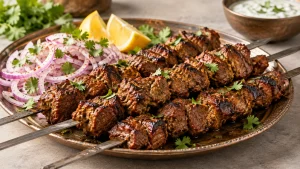
Chicken Wings
Cook wing centres before applying the final finish
Rack-roasted chicken flats and drumettes with paprika, garlic and lemon zest, finished with lemon juice and parsley. Dry the skin well and space the pieces so they roast evenly; no sugary glaze is used.

Allow 30 minutes preparation, approximately 60 minutes cooking and 35 minutes nonoverlapping waiting. Use similarly sized prepared drumettes and flats. Drying the skin and leaving space on the rack or grill matter more than adding extra oil. Cooking ranges are guides: retain the stated doneness checks when your pan, meat age or portion thickness changes. One tablespoon = 15 ml; one teaspoon = 5 ml.
About Chicken Wings
Chicken wings here are a dry-roasted lemon-pepper version with no sticky glaze. A rack allows fat to drain and air to reach the skin, while a little oil helps the measured spices adhere. The broad catalogue name is given a specific oven method so it can be reproduced without assuming a commercial wing sauce.
Personally cooked and tested by Zohair Fakhar for DailyLife.pk. Cooking times can vary with your stove, cookware and batch size; follow the texture and doneness cues in the method.
Make it work for your kitchen
Original quantities serve 4. Cooking times, pan size and frying-oil depth do not scale, cook in extra batches instead.
Before you start
Prepare the batch
Use similarly sized prepared drumettes and flats. Drying the skin and leaving space on the rack or grill matter more than adding extra oil.
Cut and portion before heatingKeep the work area ready
Measure the centre of the thickest piece, avoiding bone. Set aside a clean serving dish and clean utensils before handling raw protein. Do not return cooked food to the unwashed raw-food plate. Measure spices separately so they can enter the pan at the intended stage rather than burning while you find the next jar.
Food handlingSet up the equipment
Have the following tools ready before starting: Digital kitchen scale; Measuring jug and 5 ml / 15 ml spoons; Sharp knife and separate raw-protein board; Heavy pan sized for the stated batch; Instant-read food thermometer; Oven, rimmed roasting tray and heatproof rack as specified.
Clean workspaceMeasure the ingredients
Measure the ingredient quantities for your selected servings before applying heat. Keep separately listed groups, such as dough, filling, sauce or garnish, in separate containers; keep any optional additions separate.
Use the ingredient list above
Step-by-step cooking method
1 Joint and dry the wings
Cut through the natural joints to separate flats and drumettes, removing tips for a separately handled stock batch. The 1.4 kg weight is the prepared flats and drumettes, not whole wings before trimming. Pat thoroughly dry and keep in the refrigerator while measuring seasonings; do not rinse raw poultry under the tap.
2 Season evenly
Toss wings with oil, salt, black pepper, garlic powder and paprika and lemon zest. Mix in a large bowl so every joint gets a light coating rather than a thick spice clump. Keep any finishing sauce separate from the raw-poultry bowl and brush. Refrigerate covered for 30 minutes while preparing the cooking setup.
3 Set up controlled heat
Preheat oven to 220°C conventional or 200°C fan. Set an oiled wire rack over a foil-lined rimmed tray and arrange wings in one layer. Leave space between wings so hot air can circulate. A deep crowded pile will steam and cook unevenly; use two trays or batches if necessary. Put clean finishing tongs and a serving dish beside the cooking area before handling raw chicken.
4 Cook before glazing
Roast 40–50 minutes, turning after 25 minutes and rotating the tray if one side browns faster. Keep wings on the rack rather than sitting in collected fat.
5 Cook before glazing (continued)
Check at least 74°C in several of the thickest drumettes, inserting the probe clear of bone. Flats may finish earlier. Move cooked smaller pieces to a clean warm area while thick joints finish rather than extending all pieces to the same arbitrary clock time.
6 Apply the final finish
No sugary glaze is used. Once centres reach 74°C, turn the oven grill on for 2–3 minutes only if extra surface colour is needed, watching constantly.
7 Apply the final finish (continued)
Toss with lemon juice and parsley just before serving so the acid does not soften the skin during a long hold. Sugary coatings darken quickly, so monitor closely and lower heat or move away from direct flame when necessary. Use a clean brush that has never touched raw chicken; discard any contaminated leftover seasoning mixture.
8 Rest and serve
Rest on a clean platter for 5 minutes, keeping pieces in a loose layer rather than trapping steam under a tight lid. Divide into four main-course or six snack portions. Warn diners about wing bones and provide a discard bowl. Serve promptly for the best skin texture.
Chef’s tips
- Use similarly sized prepared drumettes and flats. Drying the skin and leaving space on the rack or grill matter more than adding extra oil.
- For snack portions keep the same joint size and doneness endpoint but divide the finished batch into six servings. Increase capacity with another tray rather than piling wings deeper.
- A 5 ml teaspoon and 15 ml tablespoon are used throughout. Weigh salt where possible because crystal sizes vary. Add any top-up water in the listed small increments and stop once the required texture is reached.
Common mistakes & quick fixes
- Outside darkens before joints cook
- Reduce surface heat or use indirect heat, and keep checking beside the thickest joints. A browned skin does not prove 74°C at the centre.
- Uneven finish between pieces
- Sort by thickness before cooking and check the largest piece separately. Move smaller finished pieces to a clean warm dish while thicker ones finish; do not assume colour alone proves that the centre is cooked.
Variations & serving ideas
A practical adjustment: For snack portions keep the same joint size and doneness endpoint but divide the finished batch into six servings. Increase capacity with another tray rather than piling wings deeper.
Perfect result check
| Texture and structure | Reduce surface heat or use indirect heat, and keep checking beside the thickest joints. A browned skin does not prove 74°C at the centre. |
|---|---|
| Final seasoning | Taste only after the protein is fully cooked. The named principal ingredient should remain distinct, with no scorched spice bitterness or raw garlic edge. |
Storage & reheating
| Refrigerate | Within 2 hours; use within 48 hours | Divide into shallow portions promptly; refrigerate at 5°C or colder. Do not leave a deep cooking pot on the counter to cool. |
|---|---|---|
| Freeze | Up to 2 months for quality | Pack cooled portions airtight, label and freeze. Thaw in the refrigerator. Reheat one portion once to 74°C throughout; add a small measured splash of water only where a sauce needs loosening. |
Know when to change the heat
| Stage | Heat | What to look for |
|---|---|---|
| Roast the spaced wings | 220°C conventional / 200°C fan | Keep wings on the rack in one layer; turn and rotate the tray as described. Check several thick drumettes rather than relying on browned skin. |
| Optional colour, then fresh finish | Brief oven grill if needed; then off heat | Use the optional grill only after the centre checks. Watch continuously, then toss with the reserved lemon juice and parsley just before serving. |
Helpful answers before you cook
Do I need baking powder?
Not in this formulation. Thorough drying, a rack and adequate spacing provide the intended roast-wing texture without an additional alkaline coating.
Can I cook wings from frozen?
This formulation assumes fully thawed chilled wings. Thaw safely in the refrigerator and dry thoroughly; frozen clusters cook unevenly and do not follow this timing.
Can I make them ahead?
Cook completely, cool promptly and refrigerate within 2 hours. Reheat once to 74°C, preferably on a rack; the skin will not be identical to freshly cooked wings.