Fish Curry
Finish the sauce before introducing fish
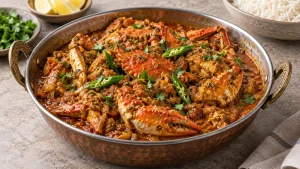
Firm white fish is gently simmered in an onion, tomato and coconut-milk sauce scented with curry leaves. The sauce is cooked before the fish goes in, with fresh ginger, coriander and lemon added at the end.

Allow 25 minutes preparation, approximately 40 minutes cooking and 3 minutes nonoverlapping waiting. Make the complete aromatic sauce first and keep the fish chilled until needed. A broad pan allows a single layer, minimizing handling after the flesh becomes fragile. Cooking ranges are guides: retain the stated doneness checks when your pan, meat age or portion thickness changes. One tablespoon = 15 ml; one teaspoon = 5 ml.
About Fish Curry
Fish curry here is a coconut-milk and tomato version with boneless white-fish portions. The broad catalogue name is intentionally qualified: it is not presented as a universal South Asian fish curry. A restrained spice base and gentle final simmer keep the coconut sauce smooth and the fish in intact pieces. Curry leaves supply aroma but are not a substitute for curry powder.
Personally cooked and tested by Zohair Fakhar for DailyLife.pk. Cooking times can vary with your stove, cookware and batch size; follow the texture and doneness cues in the method.
Make it work for your kitchen
Original quantities serve 4. Cooking times, pan size and frying-oil depth do not scale, cook in extra batches instead.
Before you start
Prepare the batch
Make the complete aromatic sauce first and keep the fish chilled until needed. A broad pan allows a single layer, minimizing handling after the flesh becomes fragile.
Cut and portion before heatingKeep the work area ready
Keep raw seafood chilled until its cooking step; thaw frozen seafood in the refrigerator and pat it dry. Set aside a clean serving dish and clean utensils before handling raw protein. Do not return cooked food to the unwashed raw-food plate. Measure spices separately so they can enter the pan at the intended stage rather than burning while you find the next jar.
Food handlingSet up the equipment
Have the following tools ready before starting: Digital kitchen scale; Measuring jug and 5 ml / 15 ml spoons; Sharp knife and separate raw-protein board; Heavy pan sized for the stated batch; Instant-read food thermometer.
Clean workspaceMeasure the ingredients
Measure the ingredient quantities for your selected servings before applying heat. Keep separately listed groups, such as dough, filling, sauce or garnish, in separate containers; keep any optional additions separate.
Use the ingredient list above
Step-by-step cooking method
1 Prepare fish before heating
Portion the fish as specified and pat dry; remove pin bones from boneless cuts and wipe loose fragments from steaks. Keep chilled while preparing the sauce. Fish enters only after the aromatic base is properly cooked, because its short cooking time cannot finish raw onions or harsh garlic without overcooking the flesh.
2 Develop the distinctive base
Heat oil and cook onion for 8–10 minutes until soft and lightly golden. Add curry leaves, then ginger and garlic for 1 minute. Add coriander, cumin, turmeric and chilli, followed by tomatoes.
3 Develop the distinctive base (continued)
Cook 8–10 minutes until tomato pieces collapse and the oil stains orange. Add the 15 g base ginger and all the garlic at the stated aromatic stage. Stir in salt with the ground spices so it disperses through the sauce rather than sitting on the fish surface.
4 Set the sauce consistency
Add 150 ml water and coconut milk. Simmer gently 5–8 minutes so the sauce tastes cooked and lightly coats a spoon; avoid a fierce rolling boil.
5 Set the sauce consistency (continued)
Scrape the bottom carefully before adding fish so no concentrated paste remains underneath to burn. Taste only the cooked sauce, using a clean spoon, and keep raw-fish utensils separate from the final serving spoon.
6 Cook fish gently
Lower the four fish portions into the sauce and spoon liquid over exposed surfaces. Cover loosely and simmer 9–13 minutes, depending on thickness.
7 Cook fish gently (continued)
Keep the pan at a quiet simmer and turn pieces at most once with a broad spoon. Check the thickest piece reaches 63°C, avoiding backbone or pan contact with the thermometer. Opaque edges can appear before a thick centre is ready; check the centre directly.
8 Finish without breaking pieces
Turn off heat, add lemon, the 5 g ginger julienne and coriander. Rest 3 minutes. Spoon sauce around the fish rather than stirring vigorously through it, then lift pieces carefully into a shallow serving bowl. Bone-in steaks should be identified clearly to diners, because simmering does not remove fine bones.
Chef’s tips
- Make the complete aromatic sauce first and keep the fish chilled until needed. A broad pan allows a single layer, minimizing handling after the flesh becomes fragile.
- For a milder curry reduce chilli while retaining the measured aromatic base. If adding more liquid for extra gravy, simmer it into the sauce before the fish goes in.
- A 5 ml teaspoon and 15 ml tablespoon are used throughout. Weigh salt where possible because crystal sizes vary. Add any top-up water in the listed small increments and stop once the required texture is reached.
Common mistakes & quick fixes
- Fish flakes apart in the curry
- Avoid stirring once fish is in the pan; shake the pan gently, spoon sauce over the top and turn no more than once if required.
- Uneven finish between pieces
- Sort by thickness before cooking and check the largest piece separately. Move smaller finished pieces to a clean warm dish while thicker ones finish; do not assume colour alone proves that the centre is cooked.
Variations & serving ideas
A practical adjustment: For a milder curry reduce chilli while retaining the measured aromatic base. If adding more liquid for extra gravy, simmer it into the sauce before the fish goes in.
Perfect result check
| Texture and structure | Avoid stirring once fish is in the pan; shake the pan gently, spoon sauce over the top and turn no more than once if required. |
|---|---|
| Final seasoning | Taste only after the protein is fully cooked. The named principal ingredient should remain distinct, with no scorched spice bitterness or raw garlic edge. |
Storage & reheating
| Refrigerate | Within 2 hours; use within 48 hours | Divide into shallow portions promptly; refrigerate at 5°C or colder. Do not leave a deep cooking pot on the counter to cool. |
|---|---|---|
| Freeze | Up to 2 months for quality | Pack cooled portions airtight, label and freeze. Thaw in the refrigerator. Reheat one portion once to 74°C throughout; add a small measured splash of water only where a sauce needs loosening. |
Know when to change the heat
| Stage | Heat | What to look for |
|---|---|---|
| Complete the aromatic coconut sauce | Moderate heat for the base, then gentle simmer | Soften the onion and cook down the tomato before adding coconut milk and sauce water. Keep the coconut sauce below a fierce rolling boil and settle its consistency before adding fish. |
| Simmer the fish gently | Low, quiet simmer | Keep portions in a single layer and turn at most once with broad support. Check the thickest centre as stated, then finish off heat without vigorous stirring. |
Helpful answers before you cook
Can I use sweetened coconut drink?
No. Use unsweetened culinary coconut milk; a sweetened drink changes flavour and lacks the intended fat and body.
Can frozen fish be used?
Yes, thaw in the refrigerator and pat dry. Do not add frozen blocks to this short simmer: the sauce may dilute and cook unevenly before the centre is safe.
Can I make the gravy ahead?
Yes, cook and chill the gravy separately, then bring it fully back to a simmer before adding freshly prepared fish. Follow the fish endpoint rather than reheating it repeatedly.