Fish Pakora
Dry the fish before applying its distinct coating
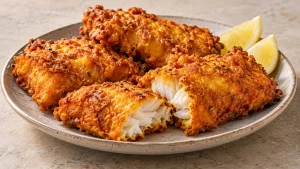
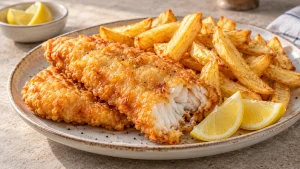
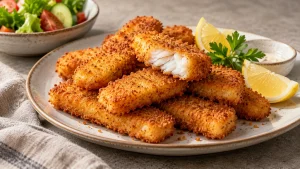
White-fish strips are coated with a gram-flour and rice-flour batter containing ginger, garlic, green chilli and fresh coriander. Cold water is added in stages, and the coated strips are fried in small batches before a lemon finish.

Allow 25 minutes preparation, approximately 25 minutes cooking and 2 minutes nonoverlapping waiting. Cut pin-boned fillets into short strips, keeping the thickest dimension at 1.5 cm so batter and fish finish together. Cooking ranges are guides: retain the stated doneness checks when your pan, meat age or portion thickness changes. One tablespoon = 15 ml; one teaspoon = 5 ml.
About Fish Pakora
Fish pakora uses small strips of fish in a fresh gram-flour batter with chopped coriander and green chilli. The batter has slightly more body than the thin steak coating used for Lahori fish, but it should still let the fish remain the main component. Baking powder is measured sparingly so the shell is light without becoming a hollow puff.
Personally cooked and tested by Zohair Fakhar for DailyLife.pk. Cooking times can vary with your stove, cookware and batch size; follow the texture and doneness cues in the method.
Make it work for your kitchen
Original quantities serve 4. Cooking times, pan size and frying-oil depth do not scale, cook in extra batches instead.
Before you start
Prepare the batch
Cut pin-boned fillets into short strips, keeping the thickest dimension at 1.5 cm so batter and fish finish together.
Cut and portion before heatingKeep the work area ready
Keep raw seafood chilled until its cooking step; thaw frozen seafood in the refrigerator and pat it dry. Set aside a clean serving dish and clean utensils before handling raw protein. Do not return cooked food to the unwashed raw-food plate. Measure spices separately so they can enter the pan at the intended stage rather than burning while you find the next jar.
Food handlingSet up the equipment
Have the following tools ready before starting: Digital kitchen scale; Measuring jug and 5 ml / 15 ml spoons; Sharp knife and separate raw-protein board; Heavy pan sized for the stated batch; Instant-read food thermometer; Frying thermometer and draining rack where hot oil is specified.
Clean workspaceMeasure the ingredients
Measure the ingredient quantities for your selected servings before applying heat. Keep separately listed groups, such as dough, filling, sauce or garnish, in separate containers; keep any optional additions separate.
Use the ingredient list above
Step-by-step cooking method
1 Prepare and portion the fish
Cut pin-boned fillets into short strips, keeping the thickest dimension at 1.5 cm so batter and fish finish together. Work over a clean tray and run fingertips over fillets to locate pin bones.
2 Prepare and portion the fish (continued)
Bone-in cuts remain a diner hazard even after cooking; identify them clearly at serving. Pat every surface dry, because water weakens the coating and makes hot oil spit.
3 Make the measured coating
Mix gram flour, rice flour, baking powder, ginger, garlic, chilli, coriander, cumin, red chilli and salt. Whisk in 130 ml water, reserving 20 ml to adjust. The batter should coat a strip and drip slowly, not run off like milk.
4 Make the measured coating (continued)
Coat the fish evenly and keep chilled only until the oil is ready. Keep separate raw-fish tongs or hands away from the clean draining rack. Acid here provides flavour only; it does not make raw fish safe to eat.
5 Heat and organize the fryer
Use a deep heavy 20 cm pot of at least 4 litre capacity with oil 5–6 cm deep and at least the same empty space above it; never fill beyond halfway. Heat to 175°C using a frying thermometer. Keep the lid nearby for an emergency, but never cover actively frying oil and never add water. Cook in small batches so the oil can recover between additions.
6 Fry by thickness
Fry coated strips at 175°C for 4–6 minutes, separating them gently as the surfaces set. Let excess batter drip into the bowl before lowering each piece into oil.
7 Fry by thickness (continued)
Lower pieces away from you and leave the first surface undisturbed until it sets. Remove loose burnt coating between batches and let the oil recover before adding more fish. Check the thickest piece reaches 63°C, with flesh opaque and separating easily; a golden crust alone does not prove the inside is ready.
8 Drain and serve promptly
Lift with a slotted utensil and drain on the rack for 2 minutes. Do not pile the pieces or trap them under foil: steam softens the coating. Finish with the measured lemon juice and serve immediately, warning diners about bones where applicable. Discard raw leftover coating rather than making it into an uncooked sauce.
Chef’s tips
- Cut pin-boned fillets into short strips, keeping the thickest dimension at 1.5 cm so batter and fish finish together.
- For smaller servings keep the fish thickness unchanged and reduce the number of pieces. Do not halve the safe oil depth in a deep-fry pot or multiply frying time when increasing the batch.
- A 5 ml teaspoon and 15 ml tablespoon are used throughout. Weigh salt where possible because crystal sizes vary. Add any top-up water in the listed small increments and stop once the required texture is reached.
Common mistakes & quick fixes
- Crust browns while the fish centre remains underdone
- Reduce heat slightly and continue cooking to 63°C. Keep the specified thickness; very thick pieces need a separately adjusted cook rather than simply a darker crust.
- Uneven finish between pieces
- Sort by thickness before cooking and check the largest piece separately. Move smaller finished pieces to a clean warm dish while thicker ones finish; do not assume colour alone proves that the centre is cooked.
Variations & serving ideas
A practical adjustment: For smaller servings keep the fish thickness unchanged and reduce the number of pieces. Do not halve the safe oil depth in a deep-fry pot or multiply frying time when increasing the batch.
Perfect result check
| Texture and structure | Reduce heat slightly and continue cooking to 63°C. Keep the specified thickness; very thick pieces need a separately adjusted cook rather than simply a darker crust. |
|---|---|
| Final seasoning | Taste only after the protein is fully cooked. The named principal ingredient should remain distinct, with no scorched spice bitterness or raw garlic edge. |
Storage & reheating
| Refrigerate | Within 2 hours; use within 48 hours | Divide into shallow portions promptly; refrigerate at 5°C or colder. Do not leave a deep cooking pot on the counter to cool. |
|---|---|---|
| Freeze | Up to 2 months for quality | Pack cooled portions airtight, label and freeze. Thaw in the refrigerator. Reheat one portion once to 74°C throughout; add a small measured splash of water only where a sauce needs loosening. |
Know when to change the heat
| Stage | Heat | What to look for |
|---|---|---|
| Heat the frying oil | 175°C before adding fish | Use the frying thermometer and the pot-fill limits in the method. Keep fish dry before coating and add small batches so the oil can recover. |
| Fry and check the centre | Maintain about 175°C | Let excess batter drip into the mixing bowl, then lower strips into the oil separately. Allow the surfaces to set before turning, check the thickest centres as stated and drain on a rack without covering tightly. |
Helpful answers before you cook
Can the batter stand for hours?
Mix it shortly before frying. Long standing changes hydration and weakens the baking powder's lift; keep raw fish chilled separately until needed.
Can frozen fish be used?
Yes, thaw in the refrigerator and drain thoroughly. Pat dry before coating; extra thawing water makes the batter thin and causes oil spitting.
Can I reheat leftovers?
Cool promptly, refrigerate and use within 48 hours. Reheat once to 74°C, preferably on a rack in an oven; the crust will be less crisp than freshly fried fish.