
Entertainment
Pakistani Cinema: From Lollywood to Cannes
Jubilee hits and silver-screen icons, a long decline and a confident revival: the story of film in Pakistan from Teri Yaad to The Legend of Maula Jatt and Joyland.
- First Pakistani feature: Teri Yaad (1948)
- Lollywood = Lahore's film industry
- Cannes Jury Prize 2022 (Joyland)
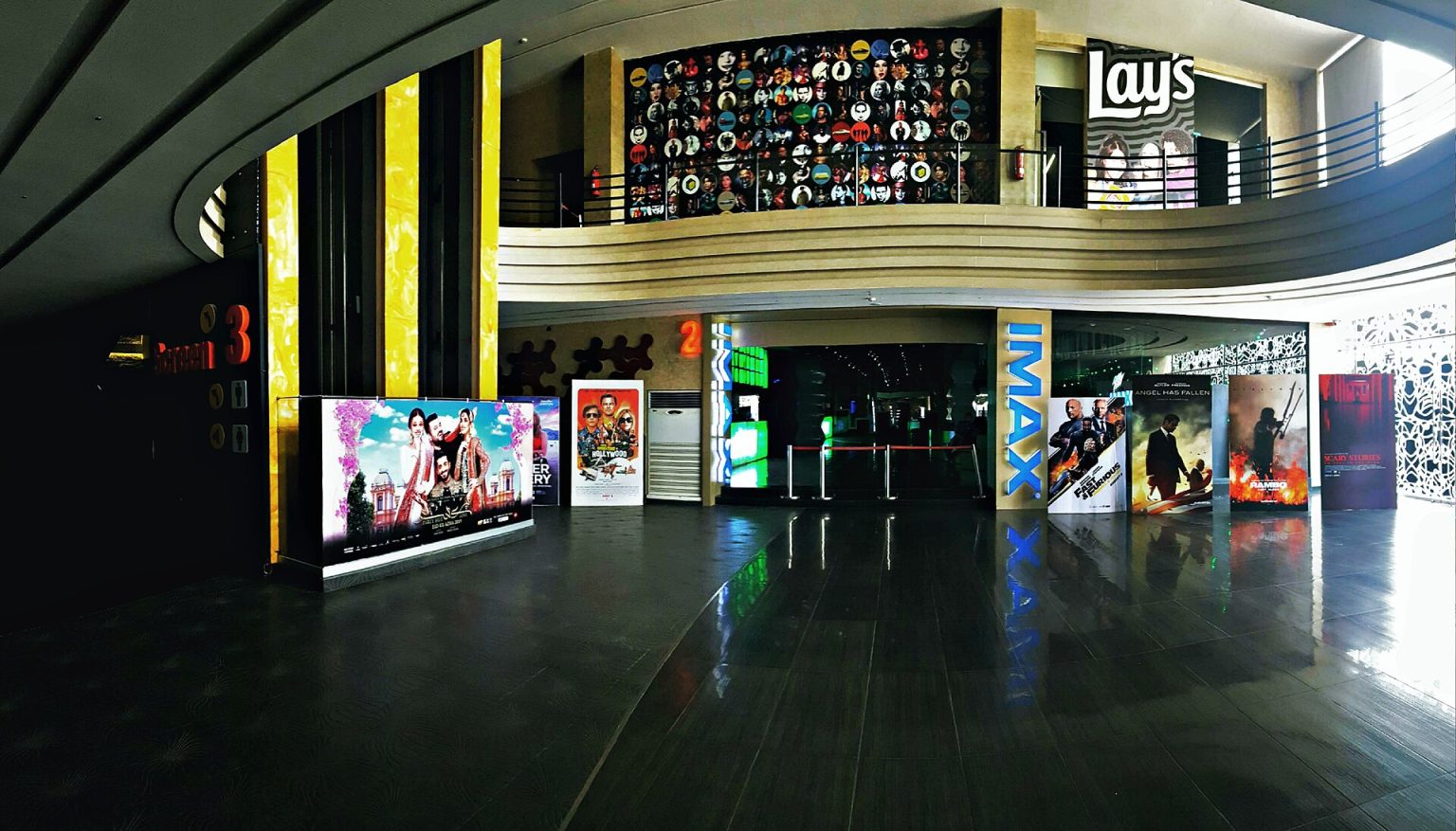
CineStar IMAX, Lahore
A Century of Stories on Screen
Pakistan's film industry is older than the country itself. Lahore had studios before Partition – Husn Ka Daku, a silent film made in 1929, is recorded as the first film produced in the city – and after 1947 it became the centre of Pakistani filmmaking. The nickname Lollywood, a blend of Lahore and Hollywood, is still used for the industry as a whole, even though much modern production is now based in Karachi.
The first Pakistani feature film, Teri Yaad, was released on 7 August 1948. Over the next three decades Lollywood produced romantic melodramas, musicals, social dramas and action films in Urdu, Punjabi, Pashto, Sindhi and other languages, along with a deep catalogue of film songs that remain popular today. Stars such as Noor Jehan, Sabiha Khanum, Santosh Kumar, Waheed Murad, Mohammad Ali, Zeba, Shamim Ara, Nadeem and Sultan Rahi became household names.
From the late 1970s the industry declined sharply, and by the early 2000s only a handful of films were being made each year. Since 2007, a new generation of filmmakers, multiplex cinemas and television-trained talent has driven a revival that has produced record-breaking hits and international festival success.
Lollywood's songs outlived many of its films – and still play at weddings, on radio and on long bus journeys.
Landmarks of Pakistani Film
1929
Lahore's first film
Husn Ka Daku, a silent film from Abdur Rashid Kardar's studio, is recorded as the first film produced in Lahore.
1948
Teri Yaad
Released on 7 August 1948, Teri Yaad is regarded as the first Pakistani feature film.
1951
A woman behind the camera
Chanway, directed by the singer and actress Noor Jehan, became the first Pakistani film directed by a woman.
1957
Nigar Awards
The Nigar Awards, long the industry's best-known film honours, were launched.
1962–1964
Colour arrives
Colour sequences began appearing in 1962 with Azra, and Sangam (1964) is recorded as the first full-length colour feature.
1965
Indian films banned
After the 1965 war, a full ban on Indian films came into force, shaping Pakistani cinema for decades.
1979
Maula Jatt
The Punjabi action film Maula Jatt was released in a year when Pakistani output peaked at 98 films; production fell to 58 the next year.
2007
The revival begins
Shoaib Mansoor's Khuda Kay Liye was a box-office success and, in 2008, became the first Pakistani film released in India in four decades.
2011–2015
A new wave
Bol (2011) broke box-office records, Waar (2013) became the highest-grossing Pakistani film of its time, and 3 Bahadur (2015) was the first Pakistani computer-animated feature.
2022
A record and a red carpet
The Legend of Maula Jatt opened in October and became Pakistan's highest-grossing film; Joyland premiered at Cannes in May and was shortlisted for the Oscars in December.
Lollywood's Golden Age
The 1950s and 1960s are remembered as Pakistani cinema's golden age. Films ran for months in single-screen cinemas, and success was measured in jubilees: Do Ansoo (1950) was the first to complete a 25-week silver jubilee, Armaan (1966) earned a platinum jubilee of 75 weeks, and Dosti (1971) a diamond jubilee of more than 100 weeks. Romantic leads such as Waheed Murad and composers who blended classical ragas with popular melody helped define the period.
Regional-language cinema flourished alongside Urdu films. Umar Marvi is recorded as the first Pakistani film in Sindhi, and Punjabi cinema produced a long run of rural dramas and action films. Maula Jatt (1979), starring Sultan Rahi as the hero and Mustafa Qureshi as the villain Noori Natt, became one of the most famous Punjabi films ever made and inspired a long line of imitators.
Film songs
Music was inseparable from Lollywood. Playback singers such as Noor Jehan, Mehdi Hassan, Ahmed Rushdi and Runa Laila recorded songs that are still widely known, and many older Pakistanis remember films chiefly through their soundtracks.
Decline: Why the Cinemas Emptied
From the late 1970s Pakistani cinema entered a long decline. Historians of the industry point to a combination of causes during the 1978–1988 period of General Zia-ul-Haq's rule: stricter censorship and regulation, new taxes on cinemas, and closures of cinema halls. At the same time, the spread of the VCR and widespread video piracy – including of Indian films, which were banned from cinemas but easy to rent on cassette – drew audiences into their homes.
Many filmmakers turned to formulaic Punjabi action films, and middle-class families stopped going to cinemas, which gained a reputation for being run-down. Output fell steeply, and by the early 2000s Pakistan was producing only a couple of films a year. Many old single-screen cinemas closed or were demolished.
The Legend of Maula Jatt
Directed by Bilal Lashari and released on 13 October 2022, The Legend of Maula Jatt reimagined the 1979 classic as a large-scale Punjabi-language action epic, with Fawad Khan as Maula Jatt, Hamza Ali Abbasi as Noori Natt and Mahira Khan and Humaima Malick in leading roles. It became the highest-grossing Pakistani film and the highest-grossing Punjabi-language film worldwide. Its producer reported a worldwide total of more than Rs 400 crore by August 2023; Box Office Mojo lists a worldwide gross of about US$13.9 million. A planned limited release in India in October 2024 did not go ahead after permission was refused.
Joyland and Pakistan on the World Stage
Joyland, the debut feature by writer-director Saim Sadiq, premiered in the Un Certain Regard section of the Cannes Film Festival on 23 May 2022 – the first Pakistani film to premiere at Cannes. Set in Lahore, it follows a family and a young man who joins an erotic dance theatre troupe, and it won both the Un Certain Regard Jury Prize and the Queer Palm.
Pakistan chose Joyland as its entry for Best International Feature Film at the 95th Academy Awards, and on 22 December 2022 it became the first Pakistani film to be shortlisted in that category. At home, its release was briefly blocked in November 2022 before being cleared with cuts; it opened on 18 November 2022, though it was not shown in Punjab province.
Pakistanis at the Oscars
Documentary filmmaker Sharmeen Obaid-Chinoy has brought Pakistan its most famous Academy Award success, winning Oscars for the short documentaries Saving Face and A Girl in the River: The Price of Forgiveness.
Watching Films in Pakistan Today
Multiplexes
Major cities
Modern multiplex cinemas operate in malls in Karachi, Lahore, Islamabad and other large cities, screening Pakistani, Hollywood and other international releases.
Eid releases
Peak season
The biggest Pakistani films are usually timed for Eid ul-Fitr and Eid ul-Adha, when families go to the cinema together.
Streaming
At home
Many Pakistani films are later available on international and local streaming platforms; availability varies by country.
Languages
Urdu, Punjabi and more
Most releases are in Urdu, with significant Punjabi and Pashto film traditions. Check the language before booking.
Frequently Asked Questions
What is Lollywood?
Lollywood is the popular name for Pakistan's film industry, combining Lahore – its historic home – with Hollywood. Today much production is also based in Karachi.
What was the first Pakistani film?
Teri Yaad, released on 7 August 1948, is regarded as the first Pakistani feature film.
What is the highest-grossing Pakistani film?
The Legend of Maula Jatt (2022), directed by Bilal Lashari. Its producer reported worldwide earnings of more than Rs 400 crore by August 2023.
Has a Pakistani film won at Cannes?
Yes. Saim Sadiq's Joyland won the Un Certain Regard Jury Prize and the Queer Palm at Cannes in 2022, and later became the first Pakistani film shortlisted for the Oscar for Best International Feature Film.
Why did Pakistani cinema decline?
Stricter censorship and taxes in the late 1970s and 1980s, cinema closures, the spread of VCRs and video piracy, and a shift to formulaic films all contributed. A revival began in 2007.
Keep Exploring
Related places and stories on DailyLife.pk
 LahoreLahore travel guide: Badshahi Mosque, Lahore Fort, Shalimar Gardens, the Walled City, food streets, neighbourhoods, metro
 KarachiKarachi travel guide: Mazar-e-Quaid, Mohatta Palace, Clifton, Burns Road, bazaars, neighbourhoods, Green Line BRT
 Pakistani DramasPakistani TV dramas explained: PTV's classic serials since 1964, great writers, the private-channel era
 Music of PakistanExplore Pakistani music: qawwali and Nusrat Fateh Ali Khan, the Sabri Brothers, classical gharanas, Sindhi
How we know this
- Type Explainer
- Sources 6
- Reviewed October 2026
- Disputed points None
6 sources
- Cinema of Pakistan (history and filmography; cites Dawn, Al Jazeera, NYT), Wikipedia
- 'The Legend of Maula Jatt' crosses Rs400 crore worldwide, The Express Tribune
- The Legend of Maula Jatt (release, cast, records; cites BBC and Box Office Mojo), Wikipedia
- The films of the Official Selection 2022, Festival de Cannes
- Joyland becomes Pakistan's first film to make it to Oscar shortlist, Dawn Images
- Joyland (awards, release history; cites Variety and Dawn), Wikipedia
Photo credits (5)
- BADSHAHI MOSQUE LAHORE.jpg, jawad, CC BY-SA 4.0, via Wikimedia Commons
- IMAX cinema in Lahore.jpg, Shahzaib Damn Cruze, CC BY-SA 4.0, via Wikimedia Commons
- Alhamra Art Centre.JPG, Khalid Mahmood, CC BY-SA 3.0, via Wikimedia Commons
- AsadQizilbash.jpg, Clement Rossignol, CC BY-SA 4.0, via Wikimedia Commons
- Night View of Badshahi Mosque (King’s Mosque).jpg, Muhammad Ashar, CC BY-SA 3.0, via Wikimedia Commons
