
Food & Culture
Chapli Kebab: How Peshawar's Famous Flat Kebab Is Made
The story, ingredients and griddle technique behind Khyber Pakhtunkhwa's signature spiced patty.
What Makes Chapli Kebab Different From an Ordinary Kebab
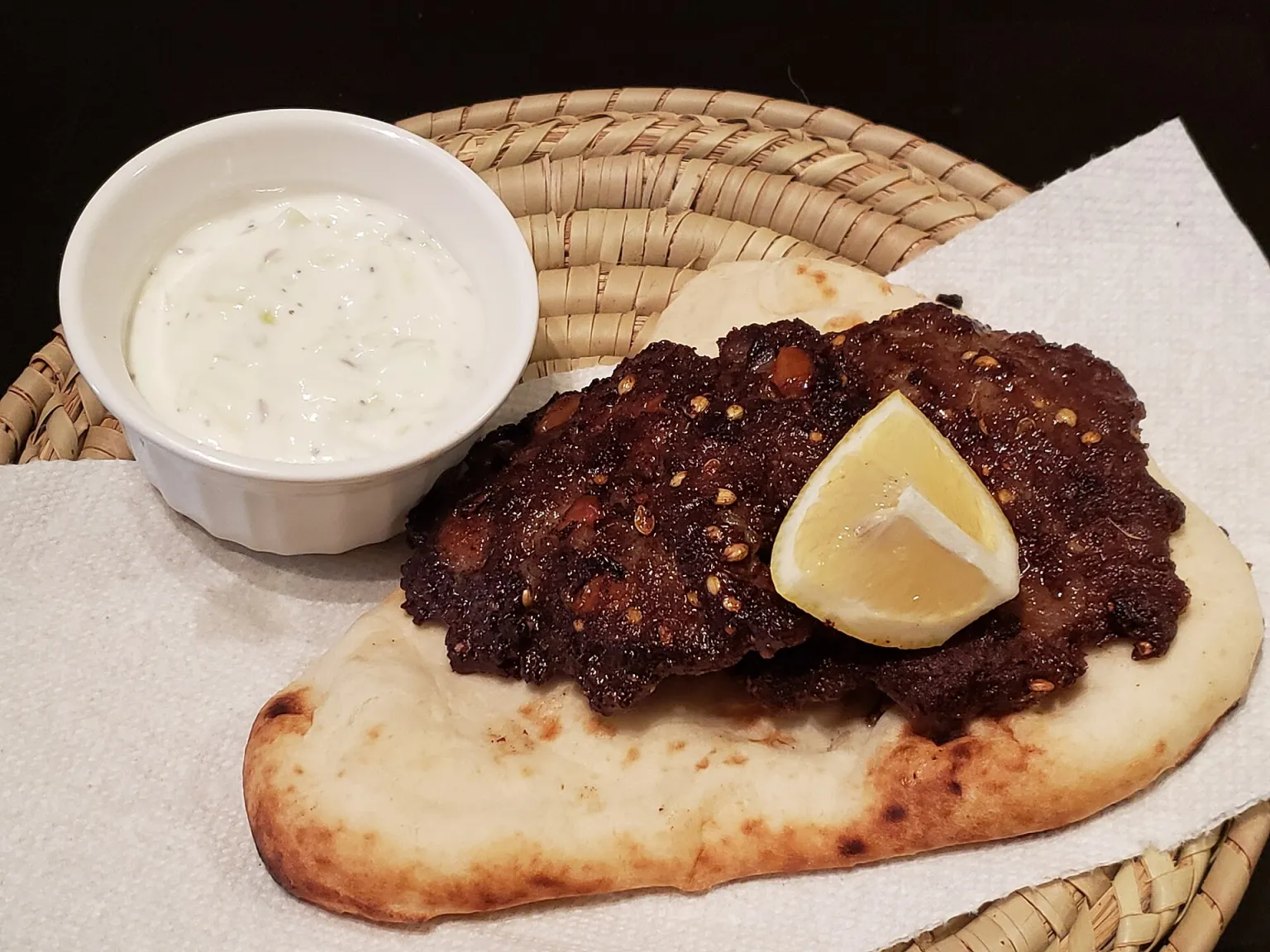
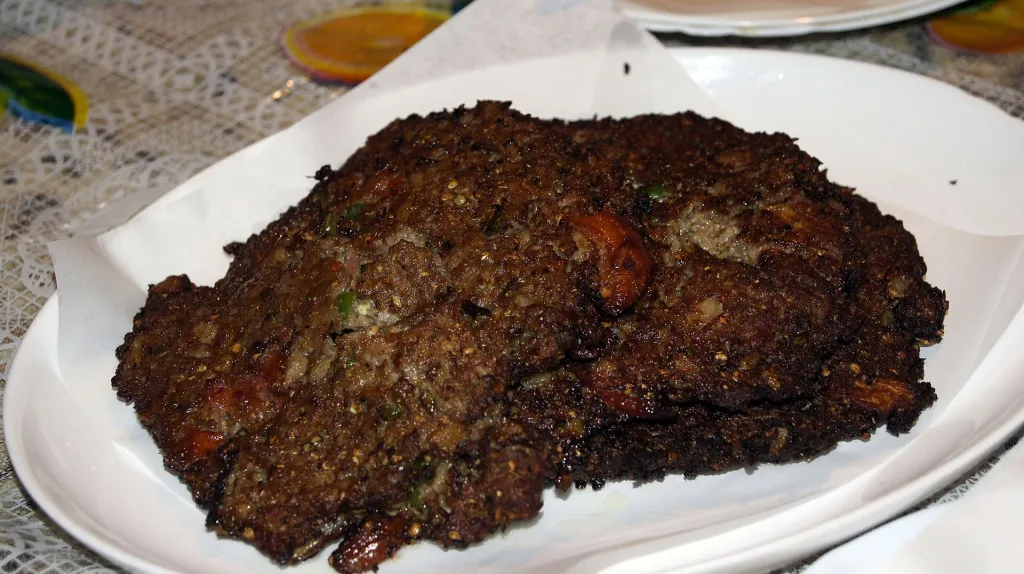
Chapli kebab is often described to outsiders as a Pakistani burger patty, and the comparison is understandable at a glance. It misses what actually defines the dish. A proper chapli kebab is shaped into a wide, thin disc rather than a thick round, so more of its surface touches the hot pan and develops a deeply browned, crisp edge. The seasoning is built from coarsely crushed coriander seed, tangy dried pomegranate seed (anardana), fresh tomato, green chilli and coriander leaf, all of which should still be recognisable as individual textures inside the finished patty rather than blended into a smooth paste.
The result, done well, is a kebab with real contrast: a firm, deeply browned crust on the outside and a juicy, loosely packed interior that still carries whole flecks of spice. That contrast, more than the flat shape alone, is what separates an authentic chapli kebab from a generic minced-meat cutlet.
Where Chapli Kebab Comes From
Chapli kebab is tied closely to Peshawar's food culture, where meat, bread and shared meals have long anchored the city's markets and eating houses. Pakistan's National Register of Intangible Cultural Heritage recognises chapli kebab as a traditional food of Khyber Pakhtunkhwa with its roots in Peshawar, and the dish remains one of the clearest culinary symbols of the wider Pashtun region.
The exact birthplace is debated locally rather than settled. Reporting on Peshawar's food scene has also documented a rival tradition from Takht Bhai, near Mardan, where cooks describe their own distinct approach to meat selection, fat and chilli. Rather than crediting a single town, it is more accurate to treat chapli kebab as a shared regional dish that different communities within Khyber Pakhtunkhwa each developed and still claim a strong connection to.
From Peshawar's kebab houses, the dish spread to Islamabad, Rawalpindi, Lahore and Karachi, carried first by Pashtun cooks and traders and later adopted into the wider national menu. It has also travelled abroad with Pakistani communities, so a version of chapli kebab now turns up in overseas restaurants far from Peshawar's Namak Mandi.
Where Does the Name "Chapli" Come From?
Two explanations circulate, and neither should be treated as definitively settled. The first links the name to the Pashto word for flat, describing the kebab's broad, thin shape. The second connects it to chappal, a sandal, on the idea that a large chapli kebab resembles the sole of traditional footwear. Food writers and heritage researchers more often cite the flatness explanation, while the sandal story remains a popular piece of local folklore. Both are worth knowing; neither cancels the other out.
The Ingredients That Give Chapli Kebab Its Character
A handful of ingredients consistently separate chapli kebab from other Pakistani minced-meat dishes.
- Beef is strongly associated with Peshawar's kebab houses, though mutton is also used. A little fat in the mince keeps the finished kebab juicy rather than dry.
- Lightly toasted and roughly crushed rather than ground to a fine powder, so it bursts with aroma as a distinct texture rather than disappearing into the mince.
- Adds a gentle sour note that balances the richness of the fried meat. Too much can make the mixture unpleasantly tart, so it is used with restraint.
- Chopped into the mixture or laid in a thin slice against the patty before frying, tomato adds moisture, acidity and a familiar visual cue.
- Provide heat and a herbal top note. Many cooks also add a little onion, garlic or ginger, varying by household and region.
- Round out the spicing without burying the coriander and anardana under heavy commercial garam masala.
How Traditional Chapli Kebab Is Cooked
The mince is seasoned and mixed just enough to hold together without being worked into a smooth paste, which would flatten its texture. Portions are shaped by hand into wide, fairly thin, deliberately irregular-edged discs, since that irregular edge is where the most crisping happens.
Traditional cooking happens on a tawa, the flat metal griddle also used for bread, or in a large, slightly concave metal pan that can hold several kebabs at once, the way many Peshawar kebab houses cook in bulk. The kebabs are fried in a shallow layer of fat rather than grilled over an open flame or threaded onto skewers. Historical accounts describe rendered animal fat as the traditional cooking medium, while many modern kitchens use ghee or vegetable oil instead; neither should be treated as the only correct choice.
For home cooks without a large tawa, a wide, heavy-bottomed frying pan works well. Keep the heat moderate and controlled: hot enough to brown the crust before the centre overcooks, but not so fierce that the outside scorches first. For food safety, cook minced beef or mutton to an internal temperature of at least 71°C (160°F), and minced chicken to at least 74°C (165°F), checked with a thermometer rather than judged by colour alone.
What Actually Holds a Chapli Kebab Together
Because onion, tomato and fresh herbs all release moisture, a soft mince can be difficult to shape and fry without falling apart. Documented chapli kebab recipes commonly use a modest amount of wheat flour, maize flour or egg as a binder, just enough to hold the patty together without making it taste bready. A claim sometimes repeated online, that okra (bhindi) or rice husks are traditionally used as a binder, is not well supported by the heritage and culinary sources reviewed for this article, and rice husk in particular should not be treated as a genuine food ingredient. Until that claim is backed by stronger documentation, a small amount of flour or egg remains the more reliable, traditional approach for home cooking.
Regional Variations Across Pakistan
Peshawari chapli kebab is typically associated with beef, bold seasoning and generous, hand-shaped patties fried in bulk on wide metal surfaces. Around Takht Bhai and Mardan, local cooks describe their own distinct methods for meat selection, fat and chilli level, a regional pride that Peshawar's food writers have documented directly from kebab-shop owners.
In Islamabad and Rawalpindi, Peshawari-style kebab houses sit alongside restaurants that adapt the dish for a broader urban audience. Lahore's versions are often served alongside other barbecue dishes and may use finer spicing or smaller patties. Karachi, shaped by migration from across Pakistan, serves chapli kebab in dedicated kebab shops, mixed-grill restaurants and even in burger-style buns, alongside beef and chicken variations.
Where to Eat Chapli Kebab
No single shop can fairly be called the definitive best; quality shifts with the cook, the hour and the batch. These are documented starting points for exploring the dish, not independently verified rankings.
- Long-running names such as Jalil Kabab House and kebab shops along Bara Road are consistently mentioned in Peshawar food guides. Confirm current branch, hours and menu before visiting, since details change.
- Namak Mandi is famous for the city's wider meat-based food culture, though not every restaurant there specialises in chapli kebab specifically; a dedicated kebab house is usually a better bet than a general karahi or tikka restaurant.
- Look for restaurants and kebab houses that specifically identify as Peshawari or Pashtun-style rather than a generic barbecue menu.
- Seek out shops that specialise in chapli kebab rather than assuming a large mixed-grill restaurant will do it justice; neighbourhoods with strong Pashtun culinary traditions in Karachi are a sensible place to start.
Chapli Kebab vs Seekh, Shami and Gola Kebab
Pakistan has several distinct minced-meat kebab traditions, each defined by a different shape and cooking method.
| Kebab | Shape | Cooking method | Distinctive character |
|---|---|---|---|
| Chapli kebab | Broad, flattened patty | Fried on a tawa or wide pan | Crushed coriander and anardana, crisp fried edges |
| Seekh kebab | Long cylinder on a skewer | Grilled over charcoal | Smoky flavour from open-flame grilling |
| Shami kebab | Small, compact round patty | Shallow-fried | Meat cooked with lentils, giving a smoother, denser texture |
| Gola kebab | Rounded or elongated portion | Grilled, often on skewers | Softer, finely minced texture with lighter seasoning |
Chapli kebab's flattened shape and crushed-spice texture are what most reliably distinguish it from the other three at a glance.
How Chapli Kebab Is Traditionally Served
Chapli kebab rarely arrives alone. Fresh naan is its most familiar partner, used to pick up pieces of kebab along with a little onion or chutney, and its mild flavour balances the kebab's spice and richness. Sliced onion, tomato, green chilli and a wedge of lemon are common sides, along with a yoghurt-based or green chutney for a cooler contrast.
Qehwa, a green tea strongly associated with Pashtun hospitality, is a traditional way to round off a rich, meat-heavy meal. Chapli kebab works equally well as a quick street-food purchase or as the centrepiece of a shared family meal, where oversized patties are cut and divided at the table rather than eaten individually.
Common Chapli Kebab Mistakes
- A fine powder loses the texture that coarsely crushed coriander and anardana are supposed to provide.
- Extra moisture weakens the mixture and stops the crust from browning properly.
- A thick kebab can burn on the outside before the centre is cooked through.
- Crowded kebabs steam rather than fry, and never develop a proper crust.
- A heavy hand with flour makes the kebab dense and bready instead of juicy.
- Chapli kebab is best eaten shortly after frying, while the edges are still crisp; holding it covered softens that texture quickly.
Why Chapli Kebab Matters Beyond the Plate
Chapli kebab's place on Pakistan's National Register of Intangible Cultural Heritage reflects more than a popular recipe. It represents a skill passed down through observation and repetition rather than formal training: judging heat by eye, shaping a patty by feel and knowing exactly how a particular cut of meat will behave on a hot pan. That knowledge supports a whole ecosystem of kebab shops, butchers and spice traders built around the dish.
As families and migrants carried chapli kebab out of Khyber Pakhtunkhwa to Pakistan's other major cities and overseas communities, it became a genuinely national dish without losing its clear regional identity. Few Pakistani foods demonstrate that balance, between a strong local story and nationwide popularity, as clearly as chapli kebab does.
Frequently Asked Questions
Where did chapli kebab originate?
Chapli kebab is strongly associated with Peshawar and Khyber Pakhtunkhwa. Reporting on Peshawar's food scene has also documented a rival tradition tracing the dish to Takht Bhai, near Mardan, so it is best understood as a shared regional dish rather than the invention of a single place.
Why is it called chapli kebab?
Two explanations are commonly repeated: a Pashto word meaning flat, describing its shape, or a link to chappal, a sandal, because a large kebab can resemble the broad sole of traditional footwear. Neither is definitively confirmed over the other.
What meat is traditionally used?
Beef and mutton are the most traditional choices, with beef especially strongly associated with Peshawar's kebab houses. Chicken versions also exist in modern restaurants.
Is chapli kebab grilled or fried?
It is fried on a tawa or in a wide metal pan, not grilled over charcoal. That is one of its clearest differences from skewered seekh kebab.
Do chapli kebabs need egg or flour to hold together?
Many recipes use a small amount of wheat flour, maize flour or egg as a binder, since fresh tomato and onion add moisture that can make the mince hard to shape. Claims that okra or rice husks are traditional binders are not well documented and shouldn't be treated as established fact.
Can I make chapli kebab without a large tawa?
Yes. A wide, heavy-bottomed frying pan at home works well; just leave space between patties so they fry rather than steam, and cook the meat to a safe internal temperature.
How is chapli kebab different from seekh, shami and gola kebab?
Chapli kebab is a flattened, fried patty with coarse coriander and anardana. Seekh kebab is a skewered cylinder cooked over charcoal, shami kebab is a small, dense patty made with cooked meat and lentils, and gola kebab is a softer, more finely minced kebab usually grilled on skewers.
What is traditionally served with chapli kebab?
Fresh naan, sliced onion, lemon, green or yoghurt chutney, and qehwa (green tea) are the most traditional accompaniments.
How we know this
- Type Explainer
- Sources 5 (2 official/academic)
- Reviewed October 2026
- Disputed points None
5 sources
- https://heritage.pakistan.gov.pk/SiteImage/Misc/files/ICH%20Pakistan%20Low.pdf, Government of Pakistan
- https://artsandculture.google.com/story/chapli-kebabs-a-khyber-pakhtunkhwa-specialty/8QVxUqbfsErYbg, SOCH Outreach Foundation / Google Arts & Culture
- https://www.dawn.com/news/1196602, Dawn
- https://www.app.com.pk/features/from-chapli-kebab-to-matton-tikka-exploring-peshawar-through-its-mouthwatering-food/, Associated Press of Pakistan
- https://www.fsis.usda.gov/food-safety/safe-food-handling-and-preparation/food-safety-basics/safe-temperature-chart, USDA Food Safety and Inspection Service
Photo credits (2)
- Peshawari Chapli Kabab by Chef Nina.jpg, Sholokov, CC BY-SA 4.0, via Wikimedia Commons
- Chapli Kebab.jpg, Murcotipton, CC BY-SA 3.0, via Wikimedia Commons
