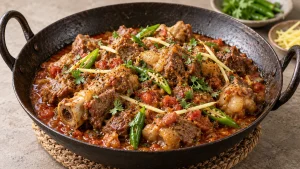
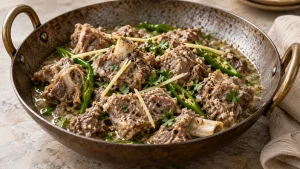
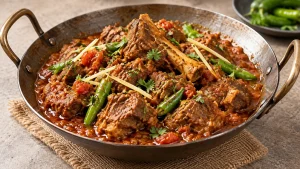
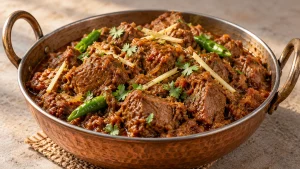
Shinwari Karahi
شنواری کڑاہی
Lightly brown meat, covered-simmer until tender, then reduce fresh tomatoes with black pepper
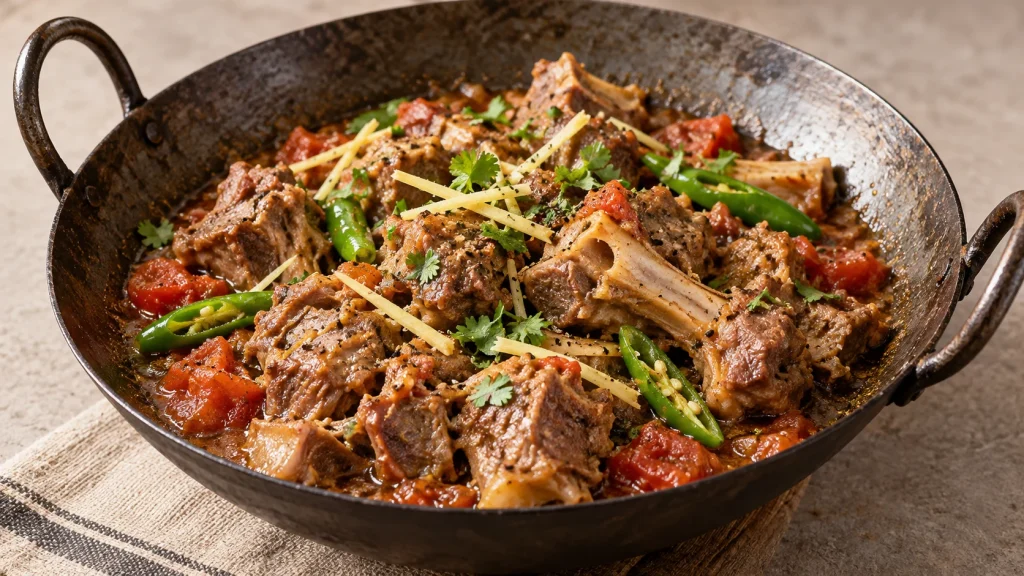
A minimalist Pashtun-region-inspired karahi of mutton, tomatoes, garlic, black pepper and green chillies. Restaurant and household traditions differ in the use of fat and tomato.
Total includes 5 min of passive time described in the preparation and method. One tablespoon = 15 ml; one teaspoon = 5 ml.
About Shinwari Karahi
A minimalist Pashtun-region-inspired karahi of mutton, tomatoes, garlic, black pepper and green chillies. Restaurant and household traditions differ in the use of fat and tomato.
Personally cooked and tested by Zohair Fakhar for DailyLife.pk. Cooking times can vary with your stove, cookware and batch size; follow the texture and doneness cues in the method.
Make it work for your kitchen
Also known as Shinwari Mutton Karahi, Peshawari Shinwari Karahi.
Original quantities serve 6. Cooking times, pan size and frying-oil depth do not scale, cook in extra batches instead.
Before you start
Before you start
Weigh raw bone-in meat, verify its source, trim loose bone fragments and pat dry. Do not wash raw meat. Chop fresh tomatoes if included, slit chillies, crush pepper and divide ginger for the garnish. Use a sufficiently large covered pot so fat and liquid cannot boil over. Keep boiling water available for small top-ups.
Set up the equipment
Have the following tools ready before starting: Deep heavy karahi or wide heavy pot with fitted lid; Kitchen scale, measuring jug and spoons; Food thermometer; Tongs, long spatula and covered cooling containers.
Clean workspaceMeasure the ingredients
Measure the ingredient quantities for your selected servings before applying heat. Keep separately listed groups, such as dough, filling, sauce or garnish, in separate containers; keep any optional additions separate.
Use the ingredient list aboveCheck allergens and substitutions
Check ingredient labels and any substitutions against these notes: No listed major allergens in base ingredients; verify packaged spices and cross-contact
Before cooking
Step-by-step cooking method
1 Set up meat and aromatics
Inspect goat or lamb shoulder pieces, bone-in, raw for bone fragments and pat it dry. Measure neutral cooking oil or rendered sheep fat, hot water for covered simmer, fresh garlic paste, salt and freshly ground black pepper; prepare the finish.
2 Start the fat and meat
Warm neutral cooking oil or rendered sheep fat in a heavy karahi at medium heat; when hot but not smoking add goat or lamb shoulder pieces, bone-in, raw in two batches, turning until lightly coloured.
3 Start the fat and meat (continued)
For dumba, allow small tail-fat pieces to render without burning.
4 Add garlic and seasoning
Add fresh garlic paste, salt and half of freshly ground black pepper; stir so the garlic smells fragrant but does not scorch.
5 Gently tenderise the meat
Add hot water for covered simmer and cover.
6 Gently tenderise the meat (continued)
Bring to a boil, lower to a gentle simmer and check every 20–25 minutes, adding small splashes of hot water only as needed. Continue until bone-in meat is thoroughly cooked and fork-tender; check a thick piece with a thermometer.
7 Reduce tomatoes in the karahi
Add ripe fresh tomatoes, chopped and cook uncovered, stirring often until the tomatoes collapse and the liquid reduces. Continue only once the meat is tender.
8 Finish and check
Add the remaining freshly ground black pepper and green chillies, slit; cook briefly until chillies soften. Check seasoning; finish with fresh ginger julienne and optional fresh coriander leaves, chopped. Remove any loose bones before serving.
Chef’s tips
- Do not judge bone-in doneness solely by the clock; thicker shoulder pieces take longer.
- Season conservatively early; concentration during reduction intensifies salt and pepper.
- For larger portions use two batches or a larger pan; water loss and searing time are not linear.
Common mistakes & quick fixes
- Meat stays chewy
- Add a little hot water, re-cover and continue a gentle simmer before reducing.
- Garlic or spices scorch
- Reduce heat immediately; use a small splash of hot water and scrape only unburnt browned fond.
- Karahi is too watery
- Only after the meat is tender, reduce uncovered with frequent stirring.
Variations & serving ideas
Variation: Use less chilli for a milder version; do not compensate for a lack of flavour by over-salting.
Variation: Serve with naan, roti or plain rice, excluded from this recipe’s nutrition.
Variation: A different animal, bone-in cut or fat blend requires a new yield and timing check; do not silently substitute.
Perfect result check
| Check | Bone-in meat is tender and safety temperature verified for the chosen meat cut. |
|---|---|
| Check | No loose bone splinters remain in the serving gravy. |
| Check | Seasoned juices coat the meat; garnish is fresh rather than boiled away. |
Storage & reheating
| Fridge | Cool promptly in shallow containers and refrigerate within 2 hours (within 1 hour above 32°C). | |
|---|---|---|
| Fridge | 3–4 days | Refrigerate at 4°C or below for 3–4 days; freeze promptly for longer storage. |
| Reheating | Reheat leftovers to 74°C (165°F), stirring any sauce to heat evenly; discard leftovers held too long at room temperature. |
Know when to change the heat
| Stage | Heat | What to look for |
|---|---|---|
| Set up meat and aromatics | No heat | Measure the meat, fat, water and seasonings; reserve half the pepper and the fresh garnish for finishing. |
| Start the fat and meat | Medium heat | Fat is hot but not smoking; lightly colour the shoulder pieces in batches without crowding the pan. |
| Add garlic and seasoning | Medium-low heat | Garlic smells fragrant without darkening or sticking. |
| Gently tenderise the meat | High, then low | Keep a gentle covered simmer with small hot-water top-ups as needed; continue until the shoulder is fork-tender before reducing the sauce. |
| Reduce tomatoes in the karahi | Medium heat | Cook uncovered only after tenderising; tomatoes collapse and excess liquid reduces to a coating sauce. |
| Finish and check | Medium-low heat | Chillies soften briefly; remaining pepper and fresh garnish finish the dish without prolonged boiling. |
Helpful answers before you cook
Why is the meat still tough after the listed simmer time?
Shoulder pieces vary in size and tenderness. Keep the pot covered at a gentle simmer with enough liquid to prevent catching, and continue until a fork enters the meat easily. Do not start the uncovered tomato reduction while the meat is still tough.
Why is my Shinwari karahi watery?
Once the meat is tender, cook the tomatoes uncovered and stir regularly so excess liquid evaporates. Reduce to juices that coat the meat; if the sauce catches, lower the heat and loosen it with a small splash of hot water.
When should I add the black pepper and garnish?
Add half the measured black pepper with the garlic and salt, then add the remainder with the green chillies near the end. Finish with ginger and optional coriander after reducing the tomatoes so the fresh garnish is not simmered away.