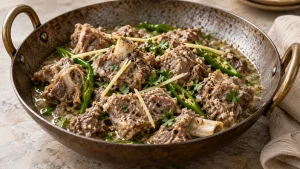
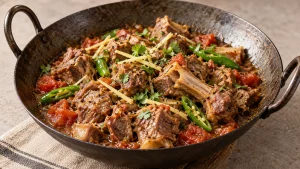
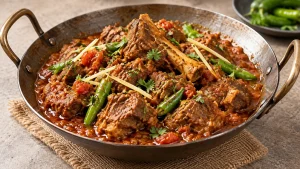
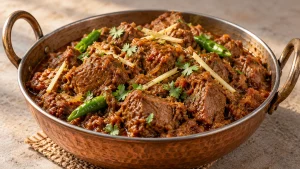
Dumba Karahi
دنبہ کڑاہی
Render tail fat, gently simmer bone-in dumba meat and reduce tomatoes in an open karahi
A rich karahi made with meat from a fat-tailed sheep (dumba), with fresh tomatoes, black pepper and a carefully measured amount of tail fat. Cuts and fat content differ greatly between butchers.

Total includes 5 min of passive time described in the preparation and method. One tablespoon = 15 ml; one teaspoon = 5 ml.
About Dumba Karahi
A rich karahi made with meat from a fat-tailed sheep (dumba), with fresh tomatoes, black pepper and a carefully measured amount of tail fat. Cuts and fat content differ greatly between butchers.
Personally cooked and tested by Zohair Fakhar for DailyLife.pk. Cooking times can vary with your stove, cookware and batch size; follow the texture and doneness cues in the method.
Make it work for your kitchen
Also known as Dumba Gosht Karahi, Dumbe ki Karahi.
Original quantities serve 6. Cooking times, pan size and frying-oil depth do not scale, cook in extra batches instead.
Before you start
Before you start
Weigh raw bone-in meat, verify its source, trim loose bone fragments and pat dry. Do not wash raw meat. Chop fresh tomatoes if included, slit chillies, crush pepper and divide ginger for the garnish. Use a sufficiently large covered pot so fat and liquid cannot boil over. Keep boiling water available for small top-ups.
Set up the equipment
Have the following tools ready before starting: Deep heavy karahi or wide heavy pot with fitted lid; Kitchen scale, measuring jug and spoons; Food thermometer; Tongs, long spatula and covered cooling containers.
Clean workspaceMeasure the ingredients
Measure the ingredient quantities for your selected servings before applying heat. Keep separately listed groups, such as dough, filling, sauce or garnish, in separate containers; keep any optional additions separate.
Use the ingredient list aboveCheck allergens and substitutions
Check ingredient labels and any substitutions against these notes: No listed major allergens in base ingredients; verify packaged spices and cross-contact
Before cooking
Step-by-step cooking method
1 Set up meat and aromatics
Inspect fat-tailed sheep shoulder or leg pieces, bone-in, raw for bone fragments and pat it dry. Measure food-grade dumba tail fat, finely diced, hot water for covered simmer, fresh garlic paste, salt and freshly ground black pepper; prepare the finish.
2 Start the fat and meat
Warm food-grade dumba tail fat, finely diced in a heavy karahi at medium heat; when hot but not smoking add fat-tailed sheep shoulder or leg pieces, bone-in, raw in two batches, turning until lightly coloured.
3 Start the fat and meat (continued)
For dumba, allow small tail-fat pieces to render without burning.
4 Add garlic and seasoning
Add fresh garlic paste, salt and half of freshly ground black pepper; stir so the garlic smells fragrant but does not scorch.
5 Gently tenderise the meat
Add hot water for covered simmer and cover.
6 Gently tenderise the meat (continued)
Bring to a boil, lower to a gentle simmer and check every 20–25 minutes, adding small splashes of hot water only as needed. Continue until bone-in meat is thoroughly cooked and fork-tender; check a thick piece with a thermometer.
7 Reduce tomatoes in the karahi
Add ripe fresh tomatoes, chopped and cook uncovered, stirring often until the tomatoes collapse and the liquid reduces. Continue only once the meat is tender.
8 Finish and check
Add the remaining freshly ground black pepper and green chillies, slit; cook briefly until chillies soften. Check seasoning; finish with fresh ginger julienne and optional fresh coriander leaves, chopped. Remove any loose bones before serving.
Chef’s tips
- Do not judge bone-in doneness solely by the clock; thicker shoulder pieces take longer.
- Season conservatively early; concentration during reduction intensifies salt and pepper.
- For larger portions use two batches or a larger pan; water loss and searing time are not linear.
Common mistakes & quick fixes
- Meat stays chewy
- Add a little hot water, re-cover and continue a gentle simmer before reducing.
- Garlic or spices scorch
- Reduce heat immediately; use a small splash of hot water and scrape only unburnt browned fond.
- Karahi is too watery
- Only after the meat is tender, reduce uncovered with frequent stirring.
Variations & serving ideas
Variation: Use less chilli for a milder version; do not compensate for a lack of flavour by over-salting.
Variation: Serve with naan, roti or plain rice, excluded from this recipe’s nutrition.
Variation: A different animal, bone-in cut or fat blend requires a new yield and timing check; do not silently substitute.
Perfect result check
| Check | Bone-in meat is tender and safety temperature verified for the chosen meat cut. |
|---|---|
| Check | No loose bone splinters remain in the serving gravy. |
| Check | Seasoned juices coat the meat; garnish is fresh rather than boiled away. |
Storage & reheating
| Cooling | Cool promptly in shallow containers and refrigerate within 2 hours (within 1 hour above 32°C). | |
|---|---|---|
| Fridge | 3–4 days | Refrigerate at 4°C or below for 3–4 days; freeze promptly for longer storage. |
| Reheating | Reheat leftovers to 74°C (165°F), stirring any sauce to heat evenly; discard leftovers held too long at room temperature. |
Know when to change the heat
| Stage | Heat | What to look for |
|---|---|---|
| Set up meat and aromatics | No heat | Have even meat pieces and small diced tail-fat pieces ready; check for loose bone splinters. |
| Start the fat and meat | Medium heat | Tail fat should release gently without smoking or burning; colour the meat in uncrowded batches. |
| Add garlic and seasoning | Medium-low heat | Garlic should smell fragrant without turning dark; distribute the first seasoning portion evenly. |
| Gently tenderise the meat | High, then low | Maintain a quiet covered simmer until the meat is fork-tender, topping up sparingly if the pot dries. |
| Reduce tomatoes in the karahi | Medium heat | After tenderising, reduce the tomatoes uncovered until the juices coat the meat rather than pool. |
| Finish and check | Medium-low heat | Warm the final pepper and chillies briefly, then add the fresh finish and inspect for loose bones. |
Helpful answers before you cook
How do I render the tail fat without burning it?
Use finely diced food-grade tail fat and moderate heat in a heavy pan. Let it release fat gradually, stirring as needed; reduce the heat if the pieces darken quickly or the fat smokes. Keep the garlic from scorching when it is added.
Why is the meat still tough when the tomatoes are ready?
Finish the gentle covered meat simmer before adding the tomatoes. The animal age, cut and piece size can extend tenderising time. Keep enough liquid in the pot, then move to uncovered tomato reduction only when the meat yields easily to a fork.
Why do cooking times vary?
Bone size, animal age, meat cut, pan width and simmer intensity alter tenderness and evaporation.