
People
Dr Abdul Qadeer Khan: Nuclear Scientist
A metallurgist who brought centrifuge enrichment expertise from Europe and led Pakistan's uranium enrichment programme, celebrated at home as the father of the bomb, and internationally condemned for running a nuclear proliferation network.
- 1936–2021
- Metallurgical engineer
- Died in Islamabad
Abdul Qadeer Khan was born in Bhopal, British India, in 1936 and moved to Pakistan with his family in the early 1950s. After a science degree from the University of Karachi he studied in West Berlin, at Delft in the Netherlands and at the Catholic University of Leuven in Belgium, where he took a doctorate in metallurgical engineering in 1972.
Working for a Dutch subcontractor of the Urenco uranium enrichment consortium, he gained knowledge of gas-centrifuge technology. After India's 1974 nuclear test he joined Pakistan's secret nuclear effort, returned in the mid-1970s and in 1976 founded the uranium enrichment laboratory later named Khan Research Laboratories (KRL). Highly enriched uranium from KRL was used in Pakistan's nuclear tests of May 1998, and he was hailed at home as a national hero.
In 2004 he confessed on television to transferring nuclear technology to Iran, North Korea and Libya. Britannica describes him as having been involved for decades in a black market in nuclear technology. Pardoned but kept under house arrest until 2009, he later retracted his confession. He died in Islamabad in 2021 and received a state funeral.
Life at a Glance
1 April 1936
Born in Bhopal
Born in Bhopal, then a princely state in British India.
Early 1950s
Migration
Moves to Pakistan after finishing school in Bhopal; studies physics at the University of Karachi (BSc, 1956).
1961–1972
Studies in Europe
Studies in West Berlin, at Delft (engineer's degree, 1967) and at Leuven (PhD in metallurgical engineering, 1972).
1972–1975
Centrifuge work
Works for FDO in Amsterdam, a subcontractor to Urenco, on centrifuge and uranium metallurgy problems.
1976
Kahuta laboratory
Joins Pakistan's nuclear programme and founds the uranium enrichment laboratory later named Khan Research Laboratories.
1983
Dutch case
A Dutch court sentences him in absentia for espionage; the conviction is later overturned on a legal technicality.
28 May 1998
Nuclear tests
Pakistan carries out nuclear tests at Chagai using uranium enriched at KRL.
January–February 2004
Confession and pardon
Removed from his post and debriefed; confesses on television on 4 February to proliferation and is pardoned by President Pervez Musharraf the next day, but placed under house arrest.
6 February 2009
Released
The Islamabad High Court ends his house arrest.
10 October 2021
Death
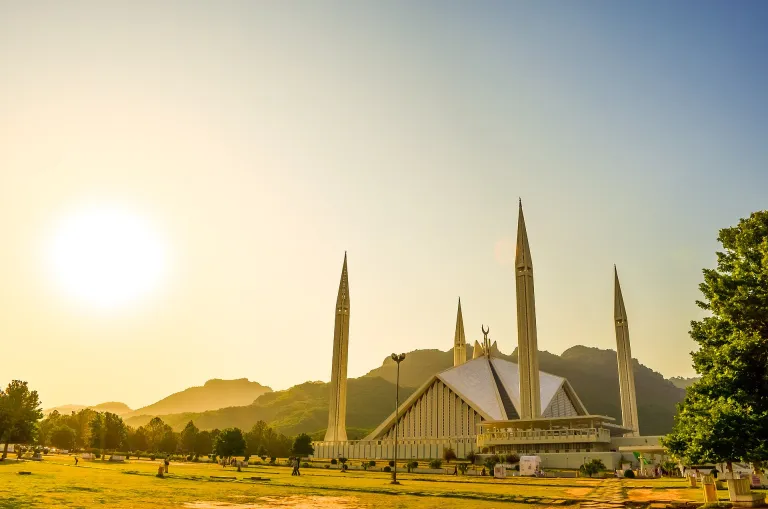
Dies in Islamabad aged 85; state funeral at the Faisal Mosque and burial in the H-8 graveyard.
Role in Pakistan's Nuclear Programme
Pakistan's nuclear programme was a large state effort involving the Pakistan Atomic Energy Commission and many scientists, engineers and military officers. Khan's specific contribution was uranium enrichment by gas centrifuge: drawing on the designs and supplier networks he had encountered in Europe, KRL produced the highly enriched uranium used in the 1998 tests. KRL also worked on missiles, including the Ghauri.
For this he received the Hilal-e-Imtiaz (1989) and was twice awarded the Nishan-e-Imtiaz (1996 and 1999). In Pakistan he was widely called Mohsin-e-Pakistan (benefactor of Pakistan), and the government described him as a national hero on his death.
The Proliferation Network
Internationally, Khan is best known for the network that sold or traded centrifuge components, designs and know-how. In his February 2004 televised statement he admitted transferring technology to Iran, North Korea and Libya and took full responsibility, clearing the military and government, a claim that, as the Atomic Archive notes, many experts doubted. Britannica describes the network as a decades-long black market that supplied centrifuges, warhead designs, missiles and expertise. The confession followed a debriefing over evidence of proliferation supplied by the United States.
After Musharraf left office, Khan retracted his confession, saying he had taken the blame in exchange for assurances. Earlier, a Dutch court had convicted him in absentia in 1983 of espionage, a verdict later overturned on a technicality. Supporters in Pakistan regard him as the man who secured the country's defence and argue that he was made a scapegoat.
Legacy
Few Pakistanis divide opinion inside and outside the country as sharply. At home he was given a state funeral at the Faisal Mosque and described by the government as a national hero. Abroad, he is remembered chiefly as the central figure of a nuclear black-market network.
In Pakistan’s History
Events on DailyLife.pk where Abdul Qadeer Khan played a part.
- 28 and 30 May 1998
Chagai Nuclear Tests
On 28 May 1998, two weeks after India's nuclear tests, Pakistan conducted underground nuclear tests in the Ras Koh Hills of Chagai District, Balochistan, followed by a further test on 30 May. Pakistan became an openly declared nuclear-armed state; the tests drew international sanctions and…
Frequently Asked Questions
What was A. Q. Khan's role in Pakistan's nuclear programme?
He led the uranium enrichment effort at the laboratory later named Khan Research Laboratories, which produced the enriched uranium used in the May 1998 tests.
What did A. Q. Khan confess to in 2004?
On 4 February 2004 he admitted on television to transferring nuclear technology to Iran, North Korea and Libya. He was pardoned but kept under house arrest until 2009, and later retracted the confession.
When did A. Q. Khan die?
On 10 October 2021 in Islamabad, aged 85. His funeral prayers were held at the Faisal Mosque and he was buried in the H-8 graveyard.
Where was A. Q. Khan born?
In Bhopal, in present-day India, on 1 April 1936. He moved to Pakistan in the early 1950s.
Keep Exploring
Related places and stories on DailyLife.pk
 IslamabadIslamabad travel guide: Faisal Mosque, Pakistan Monument, Margalla Hills trails, Saidpur, markets, sectors, Metrobus
 KarachiKarachi travel guide: Mazar-e-Quaid, Mohatta Palace, Clifton, Burns Road, bazaars, neighbourhoods, Green Line BRT
 History of Pakistan since 1947Pakistan's history since 1947: Jinnah and Liaquat, constitutions of 1956, 1962 and 1973, the wars
How we know this
- Type Biography
- Sources 5 (1 official/academic)
- Reviewed October 2026
- Disputed points Yes, see the debates
5 sources
- Abdul Qadeer Khan | Biography, Encyclopaedia Britannica
- Dr. AQ Khan, pioneer of Pakistan's nuclear arsenal, buried in Islamabad, Arab News Pakistan
- Funeral prayers of nuclear scientist AQ Khan offered at Faisal Mosque Islamabad, Aaj News
- Abdul Qadeer Khan, Wikipedia (used to locate primary sources)
- Abdul Qadeer Khan (1936–2021), Atomic Archive
