
Life in Pakistan
Power CutsProsumers and the Solar Boom
Who supplies your electricity, where to find official load-shedding schedules, how NEPRA's 2026 move from net metering to net billing works, and what to know before putting solar panels on your roof.
- Regulator: NEPRA
- Net billing since February 2026
- Complaints: 118 (DISCOs)
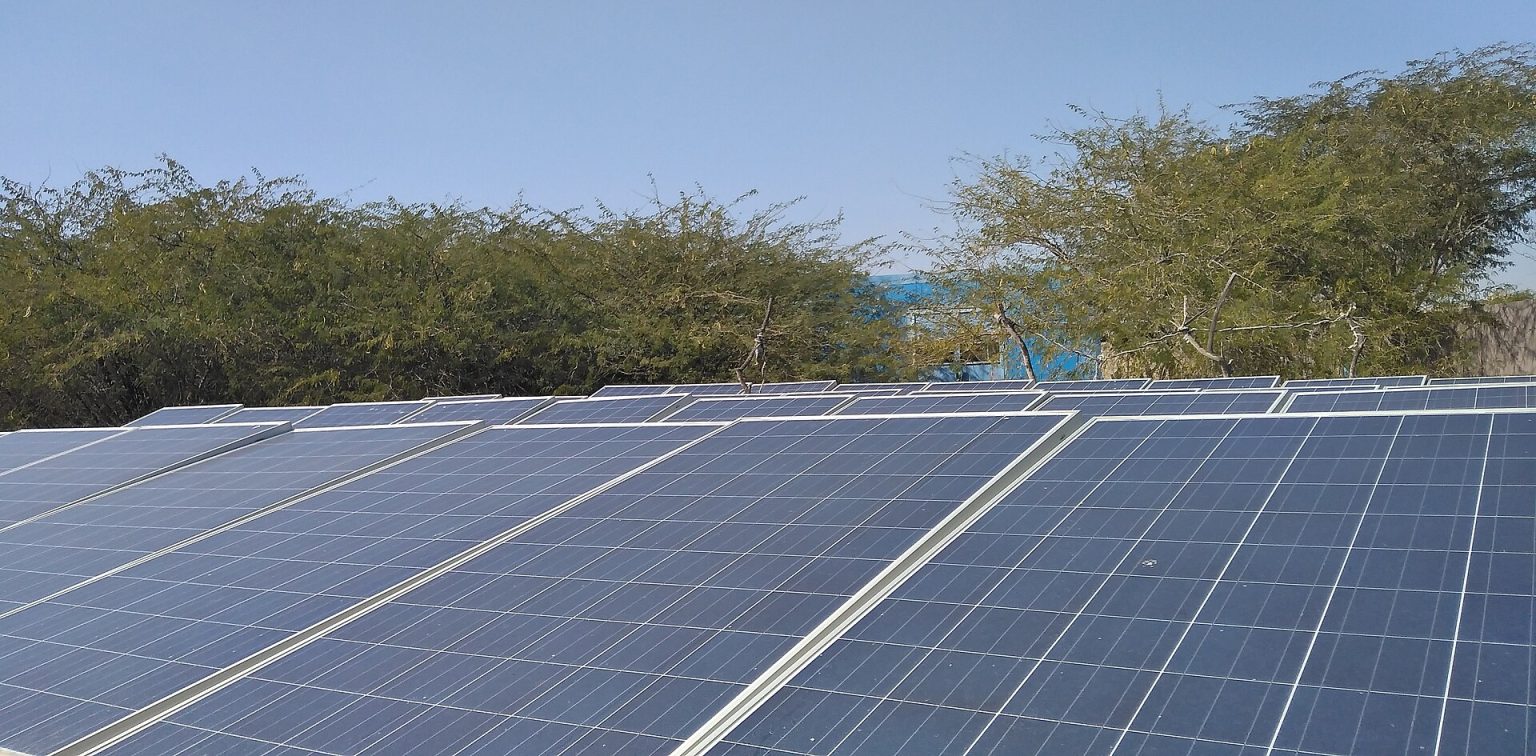
Rooftop solar panels, Pakistan
How Electricity Reaches Your Home
Most Pakistani households buy electricity from a government-owned distribution company (DISCO) responsible for a defined area, LESCO in and around Lahore, IESCO for Islamabad and Rawalpindi, MEPCO across south Punjab, PESCO in Khyber Pakhtunkhwa, HESCO and SEPCO in Sindh, QESCO in Balochistan, and several others. Karachi and some adjoining areas are served instead by K-Electric, a privately owned utility. Azad Jammu and Kashmir and Gilgit-Baltistan have their own power departments.
Tariffs, fuel price adjustments and the rules for people who generate their own power are set through the National Electric Power Regulatory Authority (NEPRA) and federal government decisions. Two everyday realities follow from this system. The first is load-shedding: planned power cuts when supply, network capacity or local losses do not allow an uninterrupted supply. The second, more recent, is the rapid spread of rooftop solar, which has turned hundreds of thousands of homes and businesses into small power producers, and pushed the regulator to rewrite the rules.
This guide explains both. For bills, reference numbers and payment, see how to check electricity and gas bills.

Checking Load-Shedding Schedules
Schedules are set feeder by feeder, so your neighbourhood can differ from the next one.
- 1
Find your company and feeder
Your bill names your DISCO, sub-division and feeder. Load-shedding is usually organised by feeder, and feeders with high losses or low bill recovery tend to see longer cuts, so the feeder name matters when you look up a schedule.
- 2
Check your DISCO's official website
In March 2026 the Power Division told all DISCOs to post feeder-wise load-shedding schedules and real-time outage notices on their official websites, prominently on the homepage, after an order from the Pakistan Information Commission under the Right of Access to Information Act, 2017.
- 3
Karachi: use K-Electric's own channels
K-Electric publishes a load-shed and maintenance schedule under the customer service section of ke.com.pk; its KE Live app also shows account information.
- 4
Report unscheduled outages
For government DISCOs, the 118 helpline registers outages and faults free of charge and gives you a complaint number. K-Electric customers should use KE's helpline and app.
- 5
Plan for maintenance shutdowns
Companies also announce planned shutdowns for line maintenance, often in newspapers and on social media. These are separate from routine load-shedding and can last several hours.
From Net Metering to Net Billing
Since 2015, NEPRA's net metering regulations allowed a consumer with a solar system to export surplus power to the grid and offset it, unit for unit, against the electricity they drew at other times. Cheap panels made this extremely popular, and by early 2026 the Prime Minister's office put the number of solar net-metering consumers at about 466,000.
On 9 February 2026 NEPRA notified the Prosumer Regulations, 2026, repealing the 2015 regulations, according to Business Recorder and Geo News. The main changes reported were:
- Net billing instead of unit-for-unit offset: exported electricity is bought by the distribution company at the national average energy purchase price, reported by Geo News at roughly Rs 11 per unit, while electricity taken from the grid is charged at the normal consumer tariff.
- Shorter agreements: new agreements run for five years instead of seven, renewable by mutual consent.
- Size limits: systems are capped at 1 MW and at the consumer's sanctioned load, removing the earlier allowance to install more than the sanctioned load.
- Grid limits: new connections can be refused once distributed generation on a transformer reaches 80% of its capacity, and larger systems need a load-flow study.
- Costs: prosumers bear interconnection costs plus a non-refundable concurrence fee, reported at Rs 1,000 per kW.
The change was contested. Consumer representatives objected at NEPRA's public hearing on 6 February 2026, and on 11 February 2026 Prime Minister Shehbaz Sharif directed the Power Division to file a review appeal to protect existing solar consumers' contracts, while also asking for a plan so that costs did not shift to grid-only consumers, according to APP. In early April 2026 ARY News reported a NEPRA amendment stating that existing agreements would continue on their previous terms until they expire, and that consumers who change their system capacity lose entitlement to the earlier rates.
What the Rules Mean for You
| Your situation | What applies | Check |
|---|---|---|
| Net metering agreement signed before 9 Feb 2026 | Previous terms until the agreement expires, as reported after NEPRA's April 2026 amendment | Expiry date on your agreement; any change in system size |
| New solar connection after 9 Feb 2026 | Prosumer Regulations 2026: net billing, five-year agreement | Current buyback rate and DISCO approval process |
| Agreement expiring or renewed | New framework on renewal | Ask your DISCO in writing what rate will apply |
| Off-grid system with batteries | No grid export, so no prosumer agreement | Inverter and battery safety, installer warranty |
Summarised from Business Recorder, Geo News (10 Feb 2026) and ARY News (2 Apr 2026). The rules have changed several times in 2025–2026, confirm the current NEPRA notification on nepra.org.pk and with your DISCO before you invest.
Electrical Safety at Home
- Use a qualified installer and insist on proper earthing, correctly rated cables, DC isolators and breakers, poor wiring is a common cause of rooftop fires.
- Mount panels securely: storms and monsoon winds can lift badly fixed frames off roofs.
- Keep inverters and batteries in a shaded, ventilated place away from bedrooms, gas cylinders and anything flammable.
- Never connect a generator or UPS to house wiring without a proper changeover switch; back-feeding can electrocute line workers.
- During monsoon rain stay away from fallen wires, wet electricity poles and flooded streets near transformers; report hazards to your company immediately.
- Do not use illegal hooks (kundas) or tamper with meters, they are dangerous and an offence, and theft raises losses that lengthen load-shedding for the whole feeder.
- Unplug sensitive appliances during voltage fluctuations and use a stabiliser for refrigerators and air-conditioners where supply is unstable.
Beware Fake 'Free Solar' Offers
Messages promising free solar panels under a government scheme, or asking for a registration fee to secure a net metering connection, should be checked against the official source before you pay anything. Government schemes are announced through official websites and the Press Information Department; NEPRA's notifications are on nepra.org.pk. Never share your CNIC images, bill reference number and one-time passwords with an unknown caller.
Frequently Asked Questions
Where can I see the load-shedding schedule for my area?
On your distribution company's official website, in March 2026 the Power Division told all DISCOs to post feeder-wise schedules and real-time outage information there. In Karachi, K-Electric publishes its schedule on ke.com.pk. You need the feeder name printed on your bill.
Has net metering ended in Pakistan?
For new connections, yes: NEPRA's Prosumer Regulations 2026, notified on 9 February 2026, replaced unit-for-unit net metering with net billing. Existing agreements were reported in April 2026 to continue on their previous terms until they expire. Confirm the current position with NEPRA and your DISCO.
At what rate will my DISCO buy my solar electricity?
Under the 2026 regulations, exports are bought at the national average energy purchase price, which Geo News reported at roughly Rs 11 per unit in February 2026. NEPRA can revise it, so check the latest notification.
Does an on-grid solar system work during load-shedding?
Usually not. Without batteries, a grid-tied inverter switches off when the grid goes down so that it does not feed power into lines being repaired. A hybrid system with batteries can keep selected circuits running.
How do I complain about a power outage?
Customers of government DISCOs can call the free 118 helpline and should note the complaint number. K-Electric customers should use KE's own helpline or app. Unresolved complaints can be escalated to NEPRA.
Keep Exploring
Related places and stories on DailyLife.pk
 How to Check Electricity and Gas BillsGet a duplicate electricity or gas bill for any DISCO, K-Electric, SNGPL or SSGC
 Cost of Living in PakistanCost of living in Pakistan: PBS HIES 2024-25 household income (Rs 82,179/month) and spending, budget shares
 Renting a Home in PakistanRenting a house or flat in Pakistan: tenancy agreements, advance and security
 Climate of PakistanPakistan's climate explained: seasons, monsoon, regional weather, record heat at Turbat
How we know this
- Type Practical guide
- Sources 8 (1 official/academic)
- Reviewed October 2026
- Disputed points None
Rules and fees change, confirm with the official links below before you act.
8 sources
- NEPRA notifies prosumer regulations, Business Recorder, 10 February 2026
- No more net metering as govt shifts to net billing, Geo News, 10 February 2026
- PM takes notice of NEPRA's new solar regulations, asks Power Division to appeal, Associated Press of Pakistan, 11 February 2026
- NEPRA issues new net metering rules under Solar Regulations 2026, ARY News, 2 April 2026
- Pakistan plans shift from net metering to net billing for rooftop solar users, Profit / Pakistan Today, 31 January 2026
- Electricity companies begin uploading load-shedding information, Associated Press of Pakistan, 31 March 2026
- K-Electric: load-shed and maintenance schedule (customer service), K-Electric
- 118 helpline: free electricity complaints in seven languages, Press Information Department, Government of Pakistan
Photo credits (5)
- Solar panels & plants.jpg, Ab PrinceGabol, CC BY-SA 4.0, via Wikimedia Commons
- Tarbela Dam USAID.jpg, United States government, Public domain, via Wikimedia Commons
- Anarkali Pakistan.jpg, TheWazir, CC BY 2.0, via Wikimedia Commons
- Bahadurabad Area Karachi City.jpg, King Eliot, CC BY-SA 4.0, via Wikimedia Commons
- 2022 Pakistan Floods - August 27, 2021 vs. August 27, 2022 in Sindh.jpg, NASA, Public domain, via Wikimedia Commons
