

History · Government
The Constitution of Pakistan: 19561962 and 1973
Pakistan has had three constitutions. The third, passed in April 1973, created a federal parliamentary republic and, despite suspensions and many amendments, remains the supreme law.
- Three constitutions: 1956, 1962, 1973
- Federal parliamentary republic
- Bicameral Parliament (Majlis-e-Shoora)
- Fundamental rights: Articles 8–28
Parliament House, Islamabad
About the Constitution
The Constitution of the Islamic Republic of Pakistan is the country's supreme law. It defines Pakistan as a federal republic, sets out the powers of the federation and the provinces, establishes Parliament, the executive and the courts, and guarantees citizens' fundamental rights.
Pakistan took more than eight years to agree its first constitution. From independence in 1947 it was governed under the Indian Independence Act and an adapted Government of India Act of 1935. The 1956 Constitution made Pakistan an Islamic Republic with a parliamentary system but lasted only two and a half years. The 1962 Constitution, issued under Ayub Khan, created a presidential system and ended with his fall in 1969.
The present 1973 Constitution was passed by the National Assembly on 10 April 1973 and came into force on 14 August 1973. It was the first of Pakistan's constitutions drafted and approved by directly elected representatives. It has twice been held in abeyance under military rule and has been amended many times, but it has never been replaced, and its amendment history is in many ways a history of Pakistan's politics.

Constitutional Timeline
1947
Interim order
The Indian Independence Act 1947 and an amended Government of India Act 1935 serve as Pakistan's working constitution, and a Constituent Assembly begins drafting.
March 1949
Objectives Resolution
The First Constituent Assembly adopts the Objectives Resolution, setting out the principles for the future constitution.
1954–1955
Assembly dissolved
Governor-General Ghulam Muhammad dissolves the First Constituent Assembly in October 1954; in 1955 the provinces of West Pakistan are merged into One Unit.
23 March 1956
First constitution
Adopted on 29 February and in force from 23 March 1956, it proclaims the Islamic Republic of Pakistan. President Iskander Mirza abrogates it on 7 October 1958 and imposes martial law.
1962
Second constitution
Ayub Khan promulgates a constitution by executive order, creating a presidential system with indirect elections. It ends when he steps down in March 1969.
1970–1972
Elections and an interim constitution
The first general elections on adult franchise are held in December 1970; East Pakistan secedes in December 1971, and an interim constitution governs in 1972.
1973
The current Constitution
Passed on 10 April, authenticated on 12 April and in force from 14 August 1973.
1977–1985
Suspension and revival
General Zia-ul-Haq suspends the Constitution in July 1977. It is revived in amended form in March 1985; the Eighth Amendment (November 1985) validates martial-law acts and gives the President power to dissolve the National Assembly.
1999–2003
Second suspension
After General Pervez Musharraf's coup in October 1999 the Constitution is again held in abeyance. The Legal Framework Order 2002 restores it with changes, and the 17th Amendment (December 2003) incorporates them.
April 2010
18th Amendment
Restores the parliamentary character of the Constitution and devolves wide powers to the provinces.
Three Constitutions Compared
| 1956 | 1962 | 1973 | |
|---|---|---|---|
| Made by | Second Constituent Assembly | Promulgated by President Ayub Khan | National Assembly elected in 1970 |
| System | Parliamentary; Prime Minister heads government | Presidential; strong executive President | Parliamentary; Prime Minister heads government |
| Legislature | Single house: National Assembly of 300, with 150 seats for each wing | Single house, indirectly elected | Two houses: National Assembly and Senate |
| Federal units | East Pakistan and West Pakistan (One Unit) | East Pakistan and West Pakistan | Four provinces and the federal capital |
| How it ended | Abrogated 7 October 1958 | Lapsed with martial law in 1969 | In force (suspended 1977–85 and 1999–2002) |
Sources: ConstitutionNet; Constitution of Pakistan (National Assembly). The 1956 seat parity between the two wings left East Pakistan, with the larger population, under-represented.
Fundamental Rights
Part II, Chapter 1 (Articles 8 to 28) guarantees rights that laws may not take away, subject to the limits the Constitution sets.
- Security of person and safeguards against arbitrary arrest and detention
- The right to a fair trial and due process (Article 10A, added in 2010)
- Inviolability of human dignity and of the privacy of the home
- Freedom of movement, assembly, association and trade
- Freedom of speech, and the right of access to information on matters of public importance (Article 19A, added in 2010)
- Freedom to profess religion and to manage religious institutions
- Free and compulsory education for all children aged five to sixteen (Article 25A, added in 2010)
- Equality of citizens before the law, and protection of languages, scripts and cultures
Islamic Provisions
Pakistan's constitutions have all described the state as an Islamic Republic, and the 1973 text contains a group of Islamic provisions. Article 2 declares Islam the state religion. Article 2A makes the Objectives Resolution of 1949, reproduced as an annex, a substantive part of the Constitution. The President must be a Muslim.
Part IX, under the heading ‘Provisions relating to the Holy Quran and Sunnah’, commits the state to bringing laws into conformity with Islamic injunctions, and Articles 228 to 230 create an advisory Islamic council, known as the Council of Islamic Ideology, to advise Parliament and the provincial assemblies. The Federal Shariat Court can examine whether a law is repugnant to the injunctions of Islam.
Alongside these, the Constitution guarantees freedom of religion, reserves seats for non-Muslims in the National Assembly, the Senate and the provincial assemblies, and its preamble, drawn from the Objectives Resolution, promises adequate provision for minorities to profess and practise their religions freely. How these principles are balanced has been one of the most debated questions in Pakistani law and politics.
The 18th Amendment and Devolution
The 18th Amendment was passed by the National Assembly on 8 April 2010 and by the Senate on 15 April, and signed by President Asif Ali Zardari on 19 April 2010. It was the most extensive revision of the 1973 Constitution since its adoption.
- Parliamentary balance restored: it removed the President's discretionary power to dissolve the National Assembly, a power added by the Eighth Amendment, and returned executive authority to the Prime Minister and cabinet.
- Devolution: the concurrent legislative list was abolished, transferring many subjects, among them school education, health and agriculture, to the provinces, and the Council of Common Interests was reconstituted under the Prime Minister to settle shared matters.
- New rights: Articles 10A (fair trial), 19A (information) and 25A (education) were added.
- A new name: the North-West Frontier Province became Khyber Pakhtunkhwa.
- Institutions: a judicial commission was given a role in appointing judges, and the Chief Election Commissioner became an appointment by consensus between government and opposition.
Later Amendments
Selected amendments after 2010, as reported by official and reputable sources.
| Amendment | Date | Main changes | Source |
|---|---|---|---|
| 25th Amendment | May 2018 (National Assembly 24 May) | Merged the Federally Administered Tribal Areas into Khyber Pakhtunkhwa; reduced the Senate from 104 to 96 members and the National Assembly from 342 to 336 seats. | Dawn |
| 26th Amendment | October 2024 | Limited the Chief Justice's term to three years; a special parliamentary committee nominates the Chief Justice from among the three most senior Supreme Court judges; ended the Supreme Court's own-motion (suo motu) jurisdiction. | President of Pakistan; EUAA |
| 27th Amendment | Signed 13 November 2025 | Created a Federal Constitutional Court to hear constitutional matters, leaving the Supreme Court with civil and criminal appeals; rewrote Article 243 to create the post of Chief of Defence Forces; gave the President lifelong immunity with some exceptions. | The News; EUAA (citing ICJ and ORF) |
This table lists only amendments whose content we could verify from the sources named; it is not a complete list. The 26th and 27th Amendments were contested by opposition parties, bar associations and international legal bodies. For the authoritative text, consult the National Assembly and the Pakistan Code (pakistancode.gov.pk).
How the Constitution Is Amended
An amendment bill must be passed by a two-thirds majority of the total membership of both the National Assembly and the Senate before the President assents to it. If an amendment would change the limits of a province, it also needs the approval of that province's assembly by a two-thirds majority, which is why the 2018 merger of the tribal areas went to the Khyber Pakhtunkhwa Assembly as well.

Frequently Asked Questions
How many constitutions has Pakistan had?
Three: the constitutions of 1956, 1962 and 1973. The 1973 Constitution is the one in force, although it was held in abeyance under military rule from 1977 to 1985 and again from 1999 to 2002.
When did the 1973 Constitution come into force?
It was passed by the National Assembly on 10 April 1973, authenticated on 12 April and came into force on 14 August 1973.
What did the 18th Amendment do?
Signed on 19 April 2010, it restored a parliamentary system by removing the President's power to dissolve the National Assembly, abolished the concurrent legislative list to devolve many subjects to the provinces, added rights to a fair trial, information and education, and renamed NWFP as Khyber Pakhtunkhwa.
Is Pakistan's Constitution Islamic?
It declares Islam the state religion, makes the Objectives Resolution part of the Constitution, requires the President to be a Muslim and provides for laws to conform to Islamic injunctions. It also guarantees freedom of religion and reserves legislative seats for non-Muslims.
How is the Constitution amended?
By a two-thirds majority of the total membership of each house of Parliament, followed by the President's assent. Amendments altering a province's limits also need a two-thirds vote of that province's assembly.
Keep Exploring
Related places and stories on DailyLife.pk
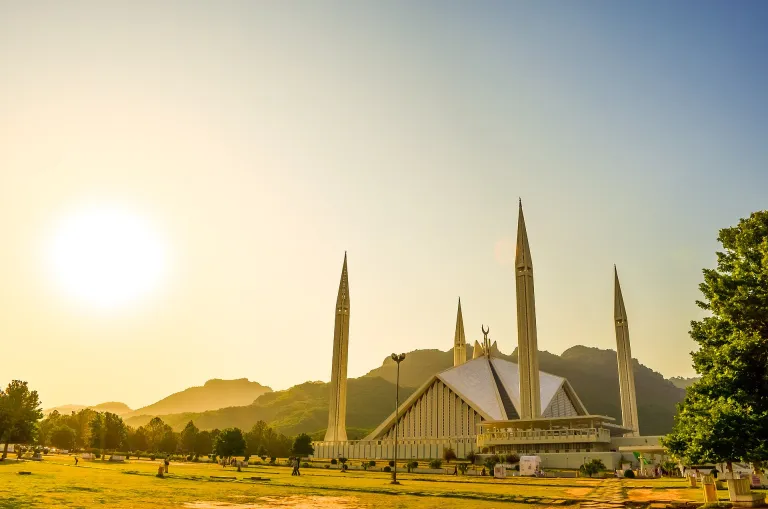
 IslamabadIslamabad travel guide: Faisal Mosque, Pakistan Monument, Margalla Hills trails, Saidpur, markets, sectors, Metrobus
 Government and Administration of PakistanPakistan's government explained: the 1973 Constitution, President and PM, Senate and National Assembly, provinces, courts
 History of Pakistan since 1947Pakistan's history since 1947: Jinnah and Liaquat, constitutions of 1956, 1962 and 1973, the warsProvinces and Territories of PakistanPakistan's federal structure explained: four provinces, Islamabad Capital Territory, Gilgit-Baltistan and AJK, capitals, assemblies
 Muhammad Ali JinnahQuaid-e-Azam Muhammad Ali Jinnah: life, law career, Muslim League, Lahore Resolution, 1947, death in 1948
How we know this
- Type Historical & cultural research
- Sources 9 (4 official/academic)
- Reviewed October 2026
- Disputed points None
9 sources
- The Constitution of the Islamic Republic of Pakistan (as amended to 2012), National Assembly of Pakistan
- Constitutional history of Pakistan, ConstitutionNet (International IDEA)
- Composition of the Senate, Senate of Pakistan
- NA passes bill on Fata–KP merger (24 May 2018), Dawn
- Justice Yahya Afridi sworn in as CJP, President of Pakistan
- President ratifies 27th Amendment after Parliament's nod, The News
- Pakistan – Country Focus (constitutional amendments), European Union Agency for Asylum
- 1956 Constitution of Pakistan (used to locate sources), Wikipedia
- Eighteenth Amendment to the Constitution of Pakistan (used to locate sources), Wikipedia
Photo credits (4)
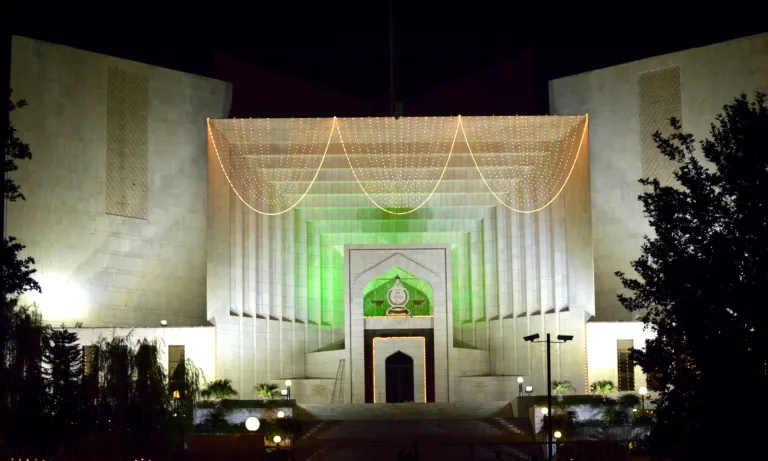
- Parliament House, Islamabad by Usman Ghani.jpg, Usman.pg, CC BY-SA 3.0, via Wikimedia Commons
- Supreme Court of Pakistan illuminated on 14 August 2018.jpg, TahirSultanBhutta, CC BY-SA 4.0, via Wikimedia Commons
- Constitution Avenue (cropped).jpg, Zacharie Grossen, CC BY-SA 4.0, via Wikimedia Commons
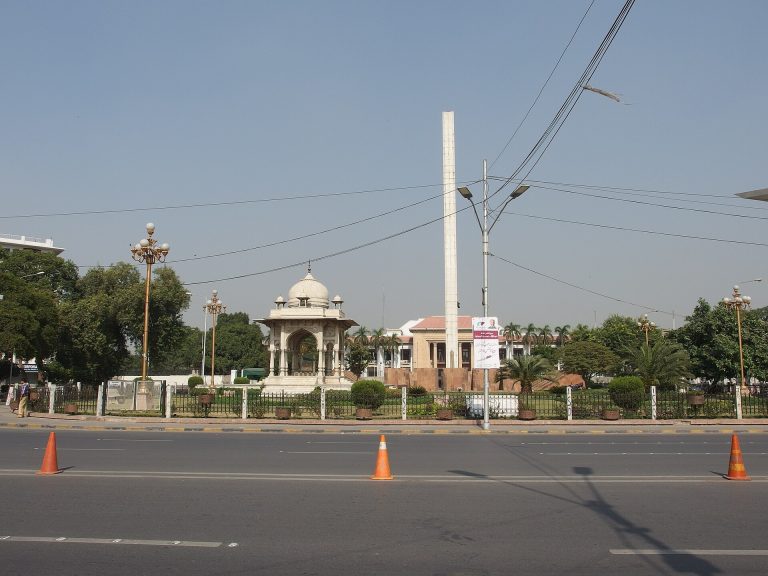
- Punjab Assembly Building @ Mall Road @ Lahore (15507613899).jpg, Guilhem Vellut from Annecy, France, CC BY 2.0, via Wikimedia Commons
